Internet and SIM cards in Morocco: local SIM, eSIM and roaming
Which operator to choose, how to buy a SIM at the airport with your passport, when an eSIM makes sense, where coverage drops out in the Atlas and the desert, and how to avoid a roaming bill.
Published on · 8 min read
The simplest and cheapest way to get online in Morocco is to buy a prepaid SIM when you arrive, at the airport, with your passport and an unlocked phone. If you would rather land already connected, an eSIM bought before you leave works well for short trips. What you should avoid is using data on your home plan without asking first, because Morocco falls outside European roaming and almost all Latin American plans.
In our Morocco travel facts we mention this in a couple of paragraphs. Here we go into the detail people ask us for on WhatsApp in the weeks before their trip: which option suits each type of traveller, what happens step by step at the airport desk, on which stretches of the route you will lose signal and how not to come home to a 200-euro bill.
Which option suits you
If you are coming from Spain
First of all, call your provider. Morocco is not part of the European Union, and the free roaming you get in France or Portugal does not apply. Some Spanish companies offer day data passes for Morocco; others charge per megabyte or per day of use at frightening prices. Ask how much a day of data costs and whether it kicks in automatically when you switch your phone on.
If your provider's pass is reasonable and you are only going to Tangier or Chefchaouen for a weekend, it may be enough. For a week or more, a local SIM nearly always works out cheaper and with far more data.
If you are coming from Latin America
International roaming plans from Mexican, Colombian, Argentine or Chilean operators usually include the United States, Canada and sometimes Europe, but very rarely Morocco. Turning on data when you land in Casablanca without a package can be very expensive. Check with your provider whether you have a "rest of the world" package and, if not, turn off mobile data on the plane and don't switch it back on until you have a Moroccan SIM or the hotel wifi.
There is more on travelling from the Americas in travelling to Morocco from Mexico.
If you are doing a tour of several days
For a route like the 5-day Great South tour from Marrakech, with many hours on the road, valleys and desert, we recommend a local Maroc Telecom SIM with a generous data package. It is the one our drivers use most in rural areas. With 10 or 20 GB you have more than enough for maps, messages, photos and the odd video call.
If you are only spending a few days in one city
For three or four days in Marrakech or Fez, an international eSIM is the easiest option: you buy it at home, install it with a QR code and have data the moment you land. It usually costs more per gigabyte than a local SIM and doesn't give you a Moroccan number, but it saves you the airport queue.
The operators
Morocco has three mobile operators: Maroc Telecom, Orange and inwi. All three have shops in the cities, sales points at the main airports and prepaid packages with data.
In the cities the differences for a traveller are small. On the roads of the south and in the mountains, our experience is that Maroc Telecom reaches more places, followed by Orange, and that inwi is a bit patchier outside the cities. But this changes from one valley to the next and from year to year, because the operators are constantly expanding their networks.
Prices also change with promotions. As of 2026, a top-up of about 100 dirhams usually gets you something like 10 GB or more on any of the three, and the SIM itself costs very little or comes free with the first top-up. Confirm the current offer at the desk before paying.
Buying a SIM at the airport, step by step
In the arrivals halls at Casablanca, Marrakech, Fez, Tangier and Agadir there are usually operator stands, sometimes right after baggage reclaim. This is what to expect:
- They ask for your passport, because the line is registered in your name. They photograph or scan it.
- You choose the data package. Ask them how many gigabytes it is, how many days it lasts and whether it includes minutes for calling Moroccan numbers.
- They give you the SIM and, in many cases, insert and activate it for you.
- Before you leave the desk, check that you have data by opening a web page or sending a WhatsApp message.
- Ask them to write down your Moroccan number; you will need to give it to the riad or the driver.
Your phone has to be unlocked, meaning not locked to your provider. If you bought it on instalments through your provider, check before you leave home.
If you land in the early hours, the stands may be closed. In that case, use the airport or accommodation wifi that first night and buy the SIM the next day at an operator's shop in town; these are usually on the main avenues, not inside the medina.
How to top up
When your data runs out, you don't need to go back to the shop. Any corner shop or kiosk with the operator's sign sells top-ups: you give your number, pay, and within seconds you get a message with your balance. Then you have to activate the data package with a code or through the operator's app; ask the seller to do it with you if you are not sure. Our drivers can also tell you where to top up along the route.
How an eSIM works
An eSIM is a virtual card installed on your phone without touching the physical SIM. You buy it online from one of the international companies that sell packages by country, receive a QR code by email and scan it from your phone's settings. When you arrive, you switch on the eSIM's data line and you're done.
It has two advantages. You arrive already connected, which helps if you need to order a taxi or let the riad know your flight is delayed. And you can keep your home SIM in the phone to receive bank messages with security codes for purchases, which abroad usually arrive free or at low cost; check with your provider.
The drawbacks: not all phones are compatible, especially older models or some bought in Latin America, and an international eSIM usually runs on the network of one of the three Moroccan operators, so coverage is no better than with a local SIM. Check on the provider's website which network it uses in Morocco before buying.
If your phone takes two lines, a very practical option is to use the eSIM or the Moroccan SIM for data and keep your home SIM only for messages and emergency calls, with data switched off on that line.
Coverage along the route
Cities and motorways
In Casablanca, Rabat, Marrakech, Fez, Tangier, Agadir and the other cities, 4G coverage is good. Inside some medinas, between narrow alleys and thick walls, the signal drops, and in the oldest riads the wifi sometimes doesn't reach every room properly. On motorways and the main national roads there is nearly always a signal.
The Atlas
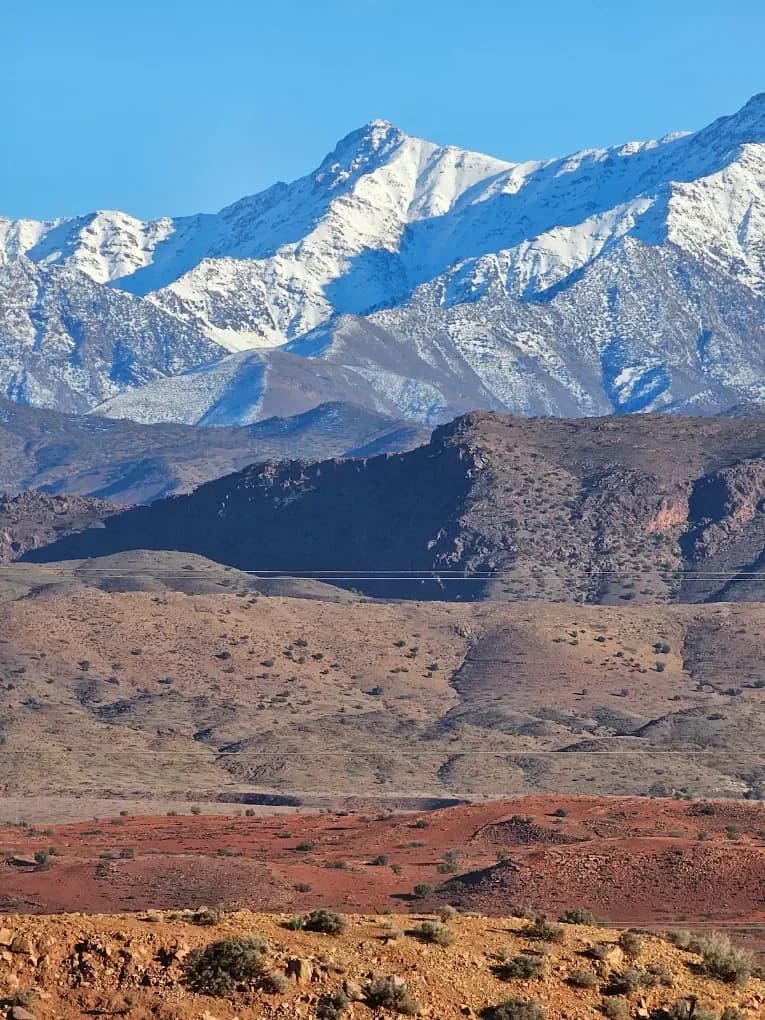
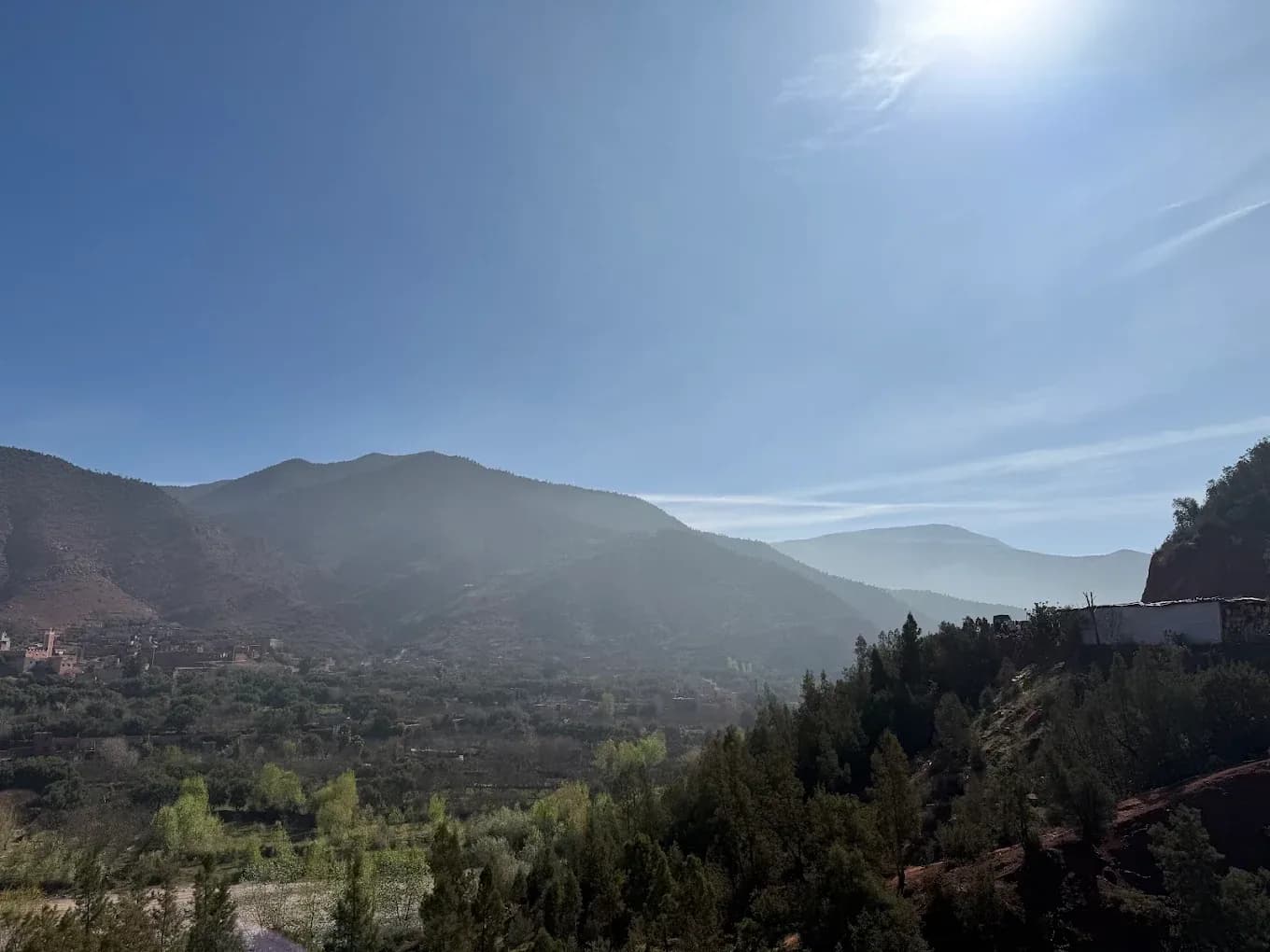
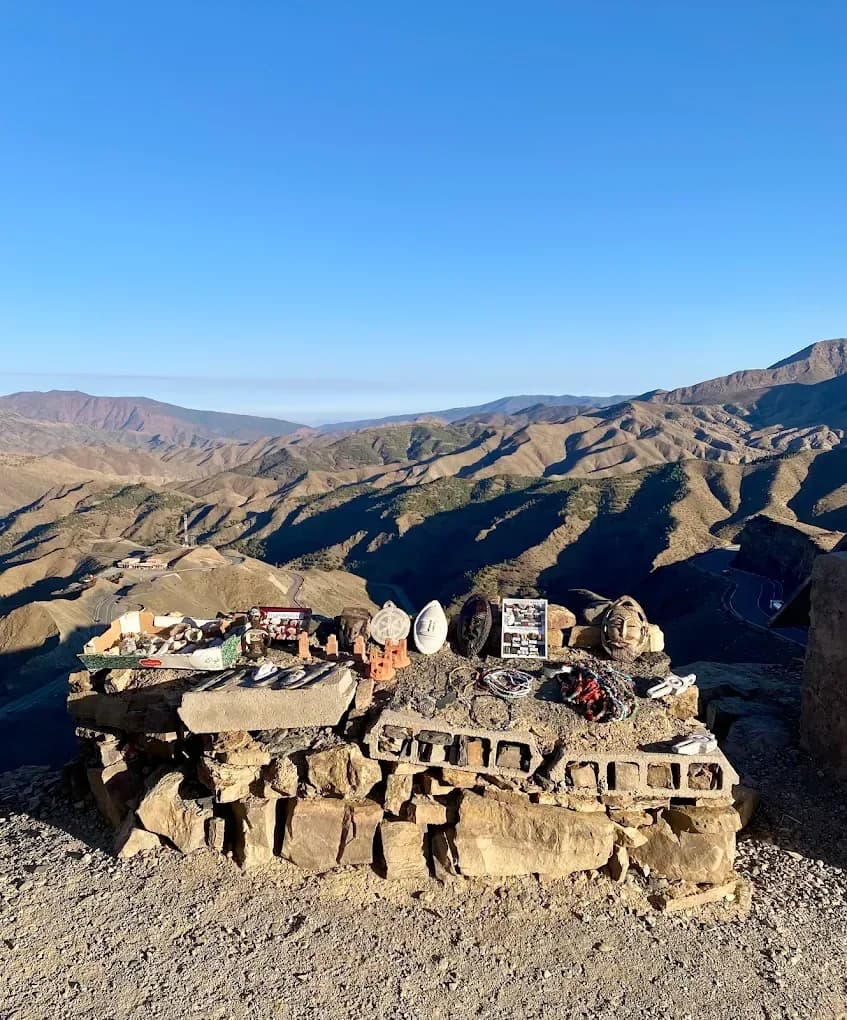
The Tizi n'Tichka road, between Marrakech and Ouarzazate, has stretches with no coverage or a weak signal, especially on the bends near the top. In Imlil there is signal in the village, but on the Toubkal trek it comes and goes, and you shouldn't count on it. If you go walking in the mountains on your own, download the map beforehand and tell someone your route.
Valleys and gorges
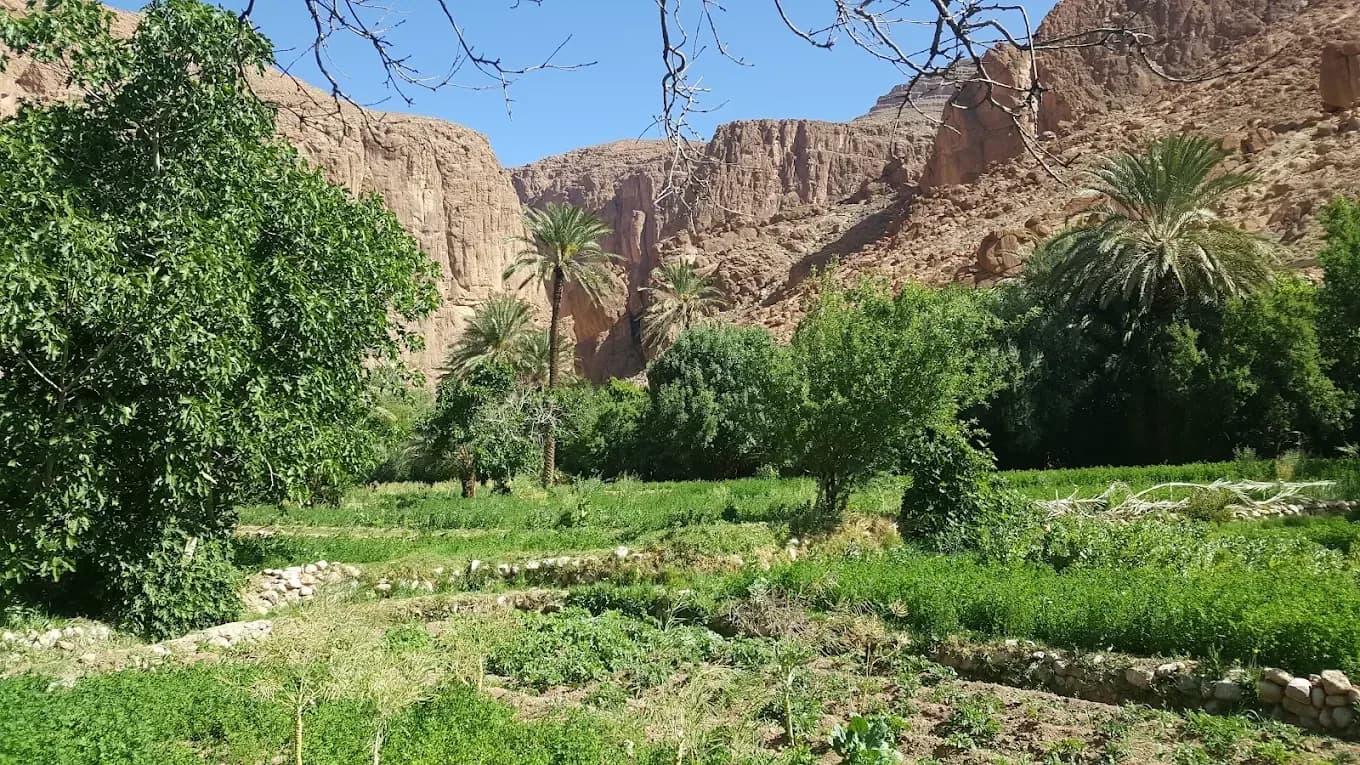
In the Dades Valley and the Todra Gorge there is signal in the villages and along much of the road, but at the bottom of the gorges it can disappear for a few minutes. That is normal, and it comes back as soon as the valley opens out.
The desert
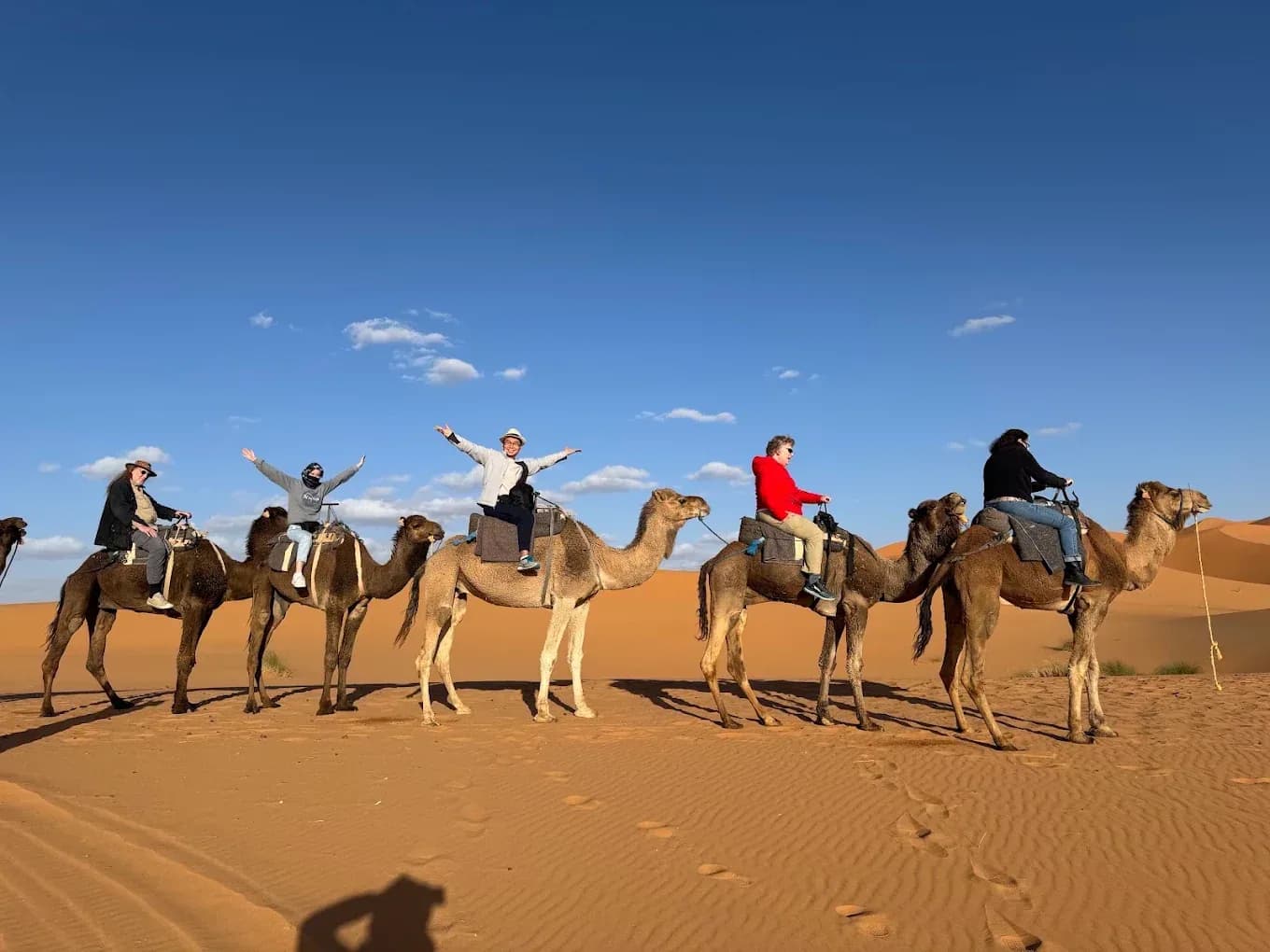
In the village of Merzouga and the hotels around it there is 4G coverage. In the camps in the Erg Chebbi dunes it depends on where the camp is: some have a good signal, others only at the top of a dune, and one or two have nothing. Some camps have wifi, but it is usually slow and drops easily. If you need to stay connected for work, tell us when you book and we will choose a camp with a better signal.
Our view is that on that night it is worth leaving your phone in your bag and looking at the sky, which in the dunes is full of stars. We describe it in sleeping in the Moroccan desert.
Since electricity is also limited in the desert, bring a charged power bank. And before you leave the city, download offline maps of Morocco and the French or Arabic pack for your translation app.
WhatsApp in Morocco
Everyone in Morocco uses WhatsApp: riads, guides, drivers, restaurants and shops. It is how we communicate with our travellers before and during the trip, and how the driver lets you know he is waiting at the airport exit. As of 2026, WhatsApp messages, voice notes and calls work normally on mobile data or wifi.
If you swap your physical SIM, your WhatsApp account stays on your home number. You don't need to change the number in the app; it just needs an internet connection. What you should avoid is deleting the app or changing phones during the trip, because to log back in it will ask for a code by SMS to your home number, which won't reach you if that SIM is in a drawer.
With a weak connection, calls drop. On mountain roads or in the desert, send messages or voice notes and save calls for when you have a good signal.
Before you get on the plane
Call your provider and ask the exact price of data in Morocco. Check that your phone is unlocked and whether it supports eSIM. Turn off data on your home line before you land, not after. Save our WhatsApp, +212 611 24 38 01, and the address of your first accommodation in a note on your phone, in case you arrive without a connection. Download offline maps and the translation app, and put the power bank and charger in your hand luggage.
For the rest of your preparation there is the Morocco travel guide and the list of what to pack for Morocco. If you already have dates, look at our desert tours or message us on WhatsApp: it is the fastest way to reach us, including from your first day in Morocco.
Frequently asked questions
Do I need my passport to buy a SIM card in Morocco?
Yes. Prepaid lines are registered in the holder's name, so at the airport or the operator's shop they will ask for your passport and take a photo or copy of it. It takes a few minutes. If you buy the SIM in a small shop they should also ask for it; if they don't, the line may give you problems when it is activated.
Which operator has the best coverage in the desert?
Among our drivers, the general feeling is that Maroc Telecom reaches more places in rural and mountain areas, and that Orange and inwi work well in cities and on main roads. No operator guarantees a signal on every dune or in every gorge. For a tour of several days, Maroc Telecom is usually the safest choice.
Can I use my Spanish mobile plan in Morocco at no extra cost?
Usually not. Morocco is not in the European Union and EU roam-like-at-home rules do not apply there. Some Spanish operators offer day passes for Morocco and others charge per megabyte at very high prices. Call your provider before you leave and ask exactly how much a day of data costs.
Do WhatsApp calls work in Morocco?
As of 2026, WhatsApp messages and calls work normally with a Moroccan SIM or with your accommodation's wifi. It is how we communicate with our travellers, drivers and riads. With a weak connection, on mountain roads or in the desert, calls drop, so it is better to send messages or voice notes.