How much does a trip to Morocco cost? A detailed budget in euros
Three sample budgets for a week in Morocco, backpacker, mid-range and comfortable, with what you pay to sleep, eat and get around, and why sharing a vehicle changes the bill so much.
Published on · 9 min read
Not counting flights, a trip to Morocco costs from about €40-60 per person per day on a budget up to €100-180 a day at a comfortable mid-range level, with courtyard riads, private transport on the long legs and guides in the medinas. If you want luxury accommodation, budget from about €300 a day. Accommodation and transport take up almost everything; local food and entrance fees are cheap.
These are rough figures, based on what we see each season organising trips. Prices change with the dates, the exchange rate and inflation, so use them to get an idea, not as fixed rates. To show where they come from, below we put together three complete one-week budgets and explain each decision.
Currency and exchange rate
The currency is the Moroccan dirham (MAD). Recently one euro has been worth a little over 10 dirhams; check the day's rate before you leave. For quick sums many people use "10 dirhams, roughly 1 euro", and that is what we do in this article.
Dirhams are not easy to buy outside Morocco, so the usual approach is to change money on arrival, at the airport, at banks or authorised bureaux, or to withdraw from ATMs. There is a limit on how many dirhams you can take out of the country, so change money as you spend it. We explain it in more detail in our practical information about Morocco.
What things cost
Before the budgets, here are the reference prices we use to calculate them.
Accommodation
For a double room per night: simple guesthouses and hostels from €15-30, with dorm beds from about €10; mid-range riads and hotels between €50 and €120, nearly always with breakfast; well-kept riads and boutique hotels between €120 and €250; and luxury accommodation from €250 upwards.
In the medinas of Marrakech and Fez there are very attractive riads in the €50 to €120 range. A riad is a traditional house with an inner courtyard, often with a fountain and a roof terrace, and we think every traveller should spend at least two nights in one, even if the rest of the trip is in hotels.
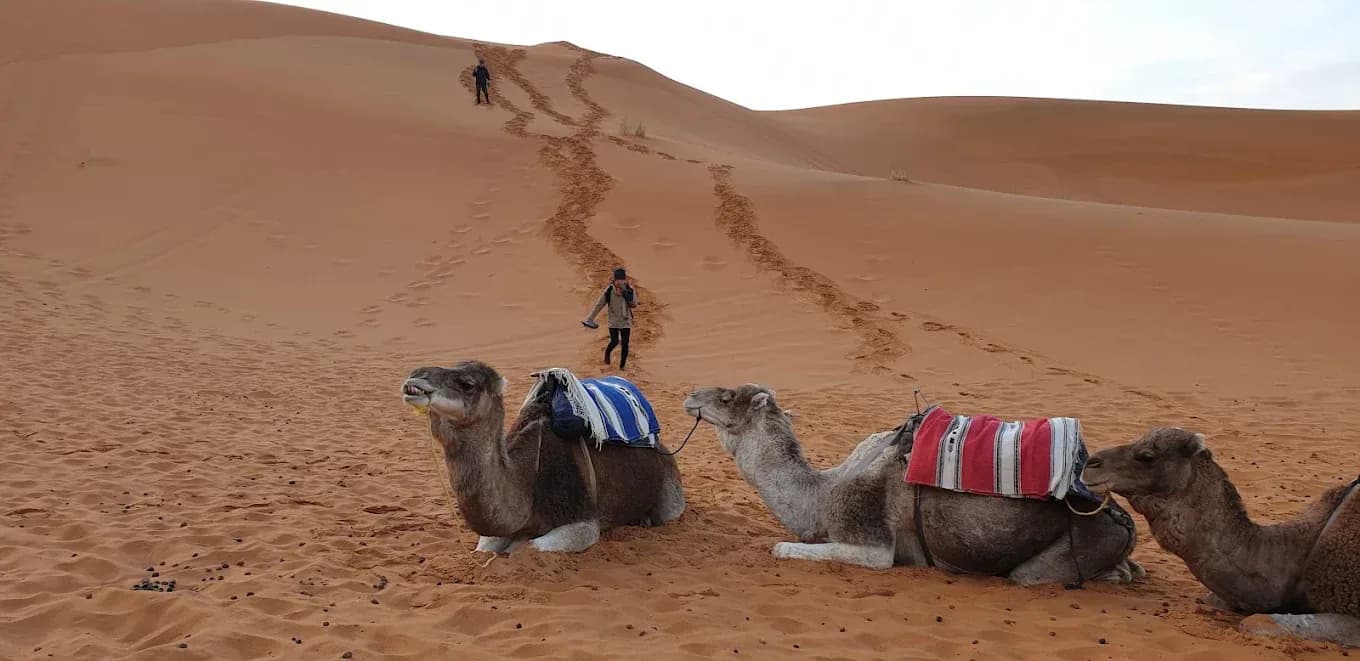
Standard desert camps are usually included in the tours. Superior camps, with a private bathroom inside the tent, carry a supplement.
Food
Eating is cheap if you eat where Moroccans eat. Breakfast is usually included with your room. A tagine or couscous with a drink in a local restaurant costs between €5 and €10, and at the Jemaa el-Fna stalls between €5 and €12 per person depending on what you order, as long as you check the price first. In a mid-range tourist restaurant you'll spend €15 to €30, and in an upmarket one or one with a show, from €40.
Mint tea costs very little in any café, and a large bottle of water is under €1 in shops. Alcohol is sold in some hotels, licensed restaurants and supermarkets, at prices the same as or higher than in Europe. Someone who eats in local places and has the odd treat spends €15 to €30 a day. If you want to know what to order, read our guide to Moroccan food.
Getting around
The petit taxi, the city taxi, costs a few euros per ride if you use the meter or agree the price beforehand. ONCF trains link Tangier, Rabat, Casablanca, Fez, Meknes and Marrakech, and Al Boraq does Tangier–Casablanca in just over two hours, at moderate prices in second class. CTM and Supratours buses go where the train doesn't, such as Chefchaouen, Essaouira or the south. The shared grand taxi is cheap and uncomfortable on long journeys. A small hire car costs from about €25-40 a day plus fuel.
Then there is the private vehicle with a driver, which we cover in the mid-range budget.
Entrance fees and guides
Palaces, madrasas and museums generally cost a few euros. Some very popular places, such as the Majorelle Garden in Marrakech, are a good deal more expensive. Fees are revised often, so check the current ones before you go. An official half-day guide in the medina of Marrakech or Fez is money well spent: you save time, avoid commissions and understand what you are looking at. To prepare your visits, read what to see in Marrakech and what to see in Fez.
Extras
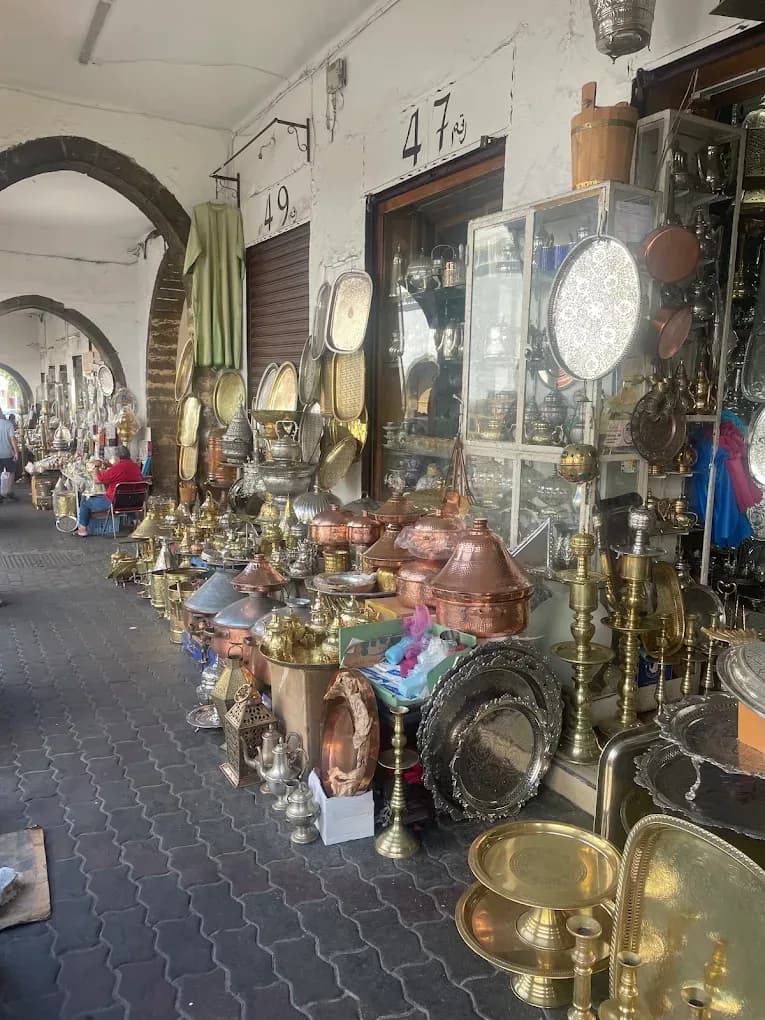
A neighbourhood hammam is very cheap, and one with a scrub at a spa aimed at tourists costs between €20 and €70. A cooking class, between €30 and €60 per person. A hot-air balloon flight over Marrakech is one of the most expensive things you can add, and quad biking or buggies in the desert or the palm grove are paid by the hour. When shopping for rugs, ceramics, leather and spices, the final price depends on how well you haggle.
Backpacker budget, €40 to €60 a day
Picture one person travelling alone for eight days: Marrakech, the desert, Fez and Chefchaouen.
They sleep in hostels or simple guesthouses in the medina, in a dorm or a small room. They eat in local restaurants and at stalls, with a €5 tagine at lunchtime and dinner on the square. They travel by bus and train, and between Marrakech and Merzouga they join a shared departure, because getting to the desert independently by public transport means many hours on buses, changes and waits. They hire an official guide only in Fez, which is where it makes the biggest difference.
Why it works: accommodation and food drop a lot and everything else stays the same. Where the budget breaks: taxis without a meter, impulse buys in the souk and commissions paid to fake guides. Carry small notes and decide beforehand how much you want to spend on souvenirs.
What we don't recommend cutting: travel insurance and bottled water. A day lost to an upset stomach costs more than any saving.
Mid-range budget, €100 to €180 a day
This is the trip we organise most. A couple, eight days, with Marrakech, the Merzouga desert, Fez and Chefchaouen, on a private tour with a Spanish-speaking driver, mid-range riads and official guides in Marrakech and Fez.
This is how we price our multi-day private tours: the vehicle with a Spanish-speaking driver has a price per day, and that price is split between the people travelling. Then we add accommodation per person per night, in the Standard or Superior option. There is no fixed per-person price that works for every group, which is why we don't publish euro prices for our tours here: we work it out for your dates and the number of travellers.
This has a practical consequence. For that couple, the car is the big part of the bill. If another couple joins, the vehicle cost per person halves and the accommodation stays the same, so the whole trip comes out quite a lot cheaper per head. The same happens with a family of four, and on our tours children pay 3% less than an adult.
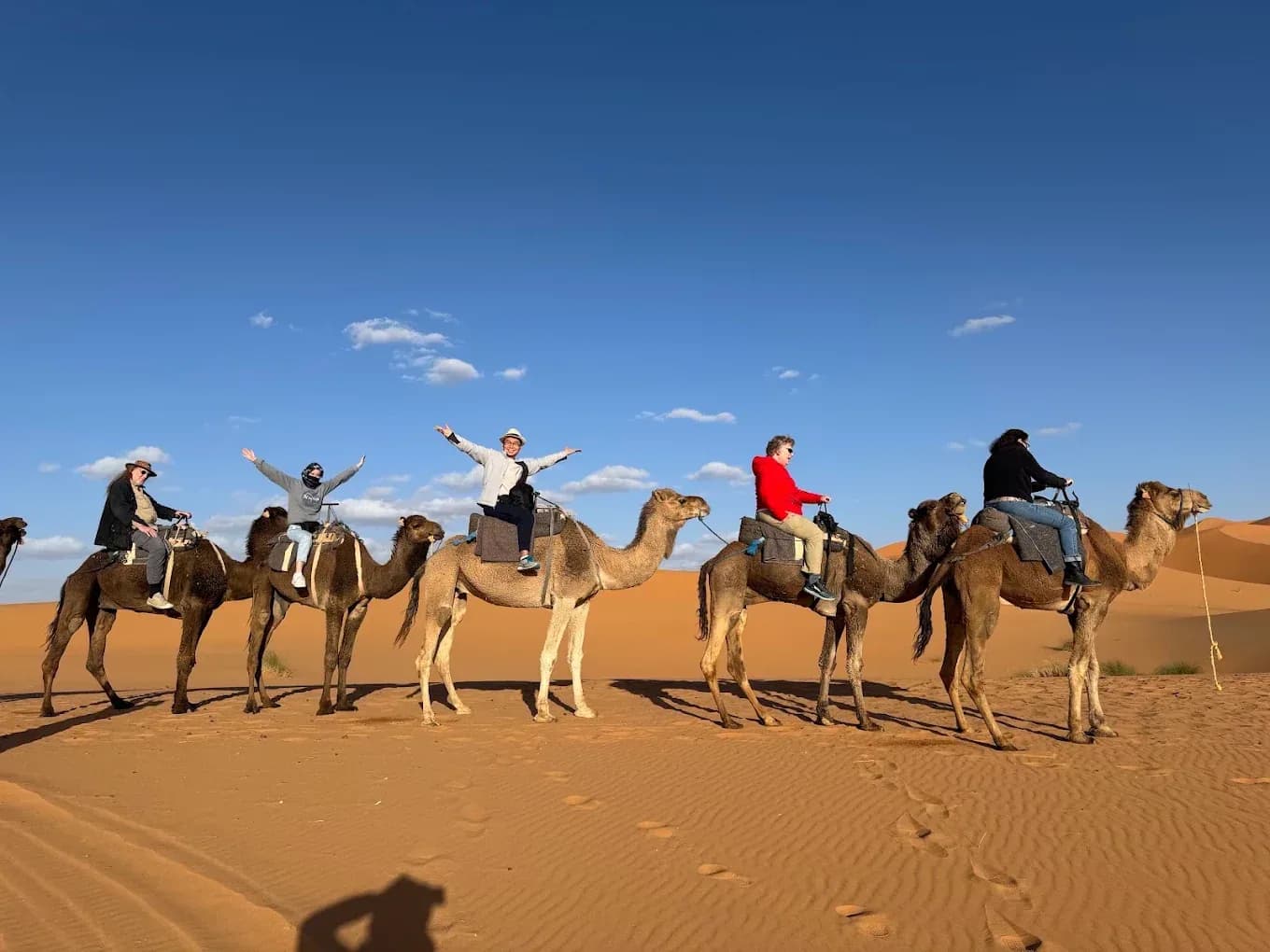
Food at this level comes to €15 to €30 per person per day, with the odd dinner in a nice restaurant. Dinner and breakfast at the camp are usually included, as is the camel ride on the 3-day trip to Merzouga from Marrakech. If you prefer a gentler pace, the 4-day route to Merzouga adds a night and spreads out the kilometres, at a slightly higher cost because there are more days of vehicle hire.
Choosing between Standard and Superior mainly changes the night in the desert and the riads. In the superior camp you have a private bathroom in the tent, which in winter is very welcome. If your budget is tight, our view is to upgrade the desert night and keep the cities at Standard.
If you only have a few days, you can add a day trip to Essaouira from Marrakech or another of our day trips, which have a fixed price and don't require booking a whole tour.
Comfortable budget, from €300 a day
A honeymoon couple or a group of friends who want the best every night. Luxury riads and hotels in Marrakech and Fez, a superior camp in Erg Chebbi, a private vehicle with a driver for the whole trip, private guides and the odd extra activity, such as a balloon flight at sunrise, a dinner with a show or a hammam with a treatment.
Here the vehicle weighs less on the bill and accommodation much more. What really pushes the price up is the night: a luxury riad in the medina can cost several times as much as a mid-range one. So at this level what makes the difference is choosing two or three key places to stay well, rather than spending the same on all of them. You'll find ideas in our luxury trips.
Tipping
Tipping, which some call baraka, isn't compulsory, but it is part of how the industry works. In restaurants with table service people leave around 10% if they enjoyed it. In cafés you round up or leave a few coins. For porters and riad staff, a few coins or 10-20 dirhams. For local guides on a half or full day, an amount per group depending on how satisfied you are. For drivers and guides on multi-day tours, an amount per day and per person, handed over at the end. For someone who lets you take their photo or shows you the way, a few coins.
Always carry small notes and coins. In the medina, paying for a tea with a large note usually ends with a hunt for change from shop to shop.
Mistakes that make the trip more expensive
Changing all your money at the airport on arrival. The rate is rarely the best and there is a limit on taking dirhams out of the country afterwards. Change just enough for the first day.
Travelling alone in a private vehicle without sharing it. It is the most comfortable option, but if you come on your own and your budget is tight, a group departure to the desert saves a lot.
Booking for Easter, Christmas or October at the last minute. Mid-range riads are the first to fill up, and what's left is either very basic or very expensive.
Paying in euros in the souks. The seller rounds in their favour.
And trying to fit too much into too few days. Every extra day on the road is another day of vehicle hire, and sometimes it is better to drop a city than to pay to spend the day in the car.
How to save without losing quality
Travel in mid or low season: accommodation is cheaper and easier to find. We help you choose dates in the best time to visit Morocco. Share the private vehicle: with four or more people, the price per person drops a lot. Eat where Moroccans eat. Book the desert as a package, with transport, accommodation, dinners and the camel ride together, which usually works out better than paying for each separately. And haggle respectfully in the souks, but not in restaurants with a menu or in shops with marked prices.
If you'd like to know what your exact route would cost, write to us with your dates, the number of travellers and the children's ages if they are coming, and we'll send you the figures for Standard and Superior. You can also browse all our trips in Morocco or keep planning with the Morocco travel guide.
Frequently asked questions
How much money do I need for a week in Morocco?
Excluding flights, allow €40 to €60 per person per day if you stay in guesthouses and travel by bus, €100 to €180 if you choose mid-range riads and private transport on the long legs, and from about €300 if you want luxury accommodation. Multiply by your number of days and leave some margin for shopping and tips.
Is it better to pay in euros or dirhams?
On the street, in dirhams. Some shops accept euros, but at an exchange rate that works against you. Hotels, riads and agencies usually quote in euros and accept card or bank transfer. For day-to-day spending, change money at authorised bureaux or withdraw from bank ATMs, and keep the receipts.
How much does a desert trip from Marrakech cost?
It depends on the number of days, the number of travellers and the camp. On our private tours the price is the vehicle with a Spanish-speaking driver per day, split between the people travelling, plus accommodation per person per night in the Standard or Superior option. That is why four friends pay quite a lot less per head than one person on their own. We'll work it out for your dates.
How much should you tip in Morocco?
It isn't compulsory, but it is expected and appreciated. In a restaurant with table service people usually leave around 10%, in a café you round up, and porters or riad staff get 10 or 20 dirhams. Drivers and guides on multi-day trips are given an amount at the end, depending on how happy you are.