What to pack for Morocco: a packing list by season
The list we send our travellers before they arrive, with the reason for each item: clothes by season, the bag for the night in the desert, the first-aid kit and what to leave at home.
Published on · 9 min read

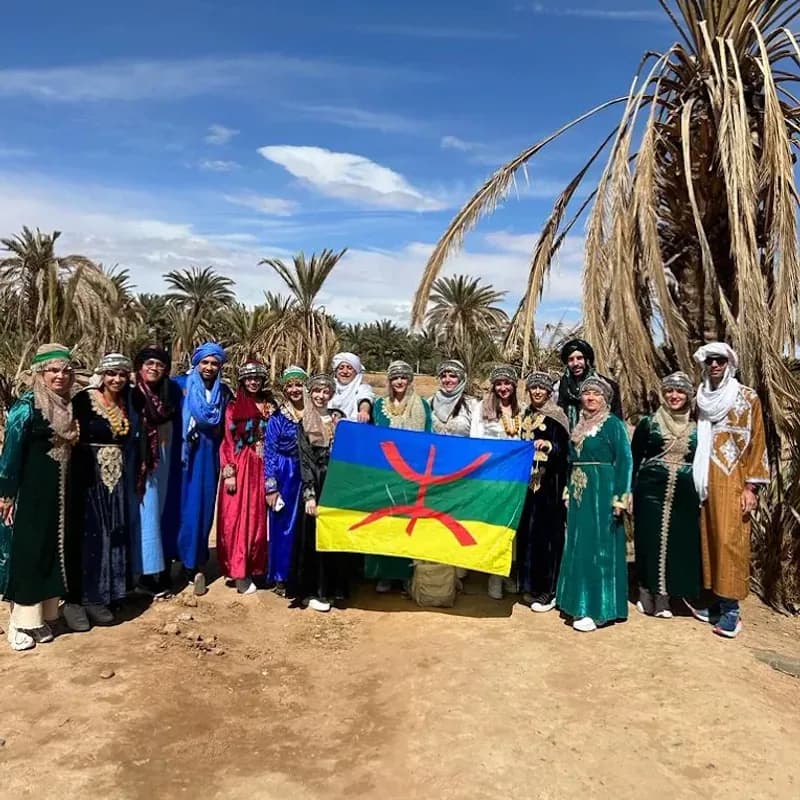
For Morocco, pack light clothes that cover shoulders and knees, comfortable shoes you have already worn in for the medinas, sun protection and a warm layer for the evenings, which are cool even in spring and autumn. If you are going to the desert, add a scarf against the sun and sand, a torch and a small backpack for the night in the camp. From November to March, a proper coat.
This is the list we send our travellers before they arrive, with the reason for each item. When you know why you are taking something, it is easier to decide what you can leave out.
Documents and money
Your passport, with at least six months' validity as a sensible rule of thumb. The Spanish DNI is not accepted for entry. Check your own case in the requirements for travelling to Morocco, because depending on your nationality you may need a visa or an electronic authorisation.
A copy of your passport, insurance and bookings on your phone and in the cloud. If you lose the original, the consulate and the police work much faster with the copy.
One debit card and one credit card, in different pockets. There are ATMs in every city, but they can be scarce in the small villages of the south, and if one card fails you have the other.
Some cash in euros or dollars to change on arrival. In the street you pay in dirhams, and the first taxi won't take a card.
A bum bag or cross-body bag worn at the front. In Jemaa el-Fna square at night or in a packed souk, it is what stops you losing your wallet.
Clothes for any time of year
Short-sleeved T-shirts and a few long-sleeved ones, in cotton or linen. A thin long sleeve protects you from the sun better than sun cream and goes down best in the villages.
Loose long trousers, long skirts or dresses below the knee. There is no compulsory rule for tourists, but dressing modestly means fewer stares in the medinas and rural areas, and it is appreciated.
A large scarf or shawl. It is the most versatile thing in your suitcase: it covers your shoulders at a religious site, protects you from the sun in the desert, from the wind in Essaouira and from the cold in an air-conditioned car.
A light jacket or jumper. Even in June, in the Atlas or at dawn in the dunes, you will wear it.
Swimwear, even if you are travelling in winter. Many riads have a small pool and almost all the hotels in the south have a large one.
Slightly warm nightwear. Riads are old stone houses and in winter they don't always have good heating.
Clothes for women
Blouses or T-shirts that cover the shoulders, without deep necklines, and loose long trousers or skirts. You don't need to cover your hair in the street. If you are worried about how people will look at you travelling alone, read customs and etiquette in Morocco.
Clothes for men
T-shirts or shirts, preferably with sleeves, and long trousers or shorts that reach the knee. Very short shorts and going shirtless away from the beach or pool draw attention.
Visiting a mosque
Most mosques in Morocco do not admit non-Muslims. The best-known exception is the Hassan II Mosque in Casablanca, which has guided tours. Go in with shoulders and knees covered and take off your shoes where you are told; a pair of clean socks in your bag saves you from walking on the cold floor.
Shoes
Comfortable trainers you have already worn in. The medinas have uneven stone paving, slopes and steps, and in Fez you can walk for several hours at a stretch. With brand-new shoes, the blisters usually arrive on the first day.
Sandals that hold your foot securely, for the heat and for the sand.
Closed shoes if you are travelling from November to March, because in the Atlas and the desert the ground is cold in the morning.
Health and hygiene
High-factor sun cream and lip balm. The sun in the south burns even in January, and the dry desert wind cracks your lips in an afternoon.
Mosquito repellent, especially in summer and near the oases and palm groves.
Hand sanitiser and tissues. Many roadside and café toilets have no paper or soap.
Wet wipes. At a standard camp water is limited, and when you come down from the dune you have sand even in your ears.
A basic first-aid kit with painkillers, anti-diarrhoea tablets, rehydration salts, plasters, antihistamines and your usual medication in its packaging with the prescription. If you take something daily, bring more doses than you need in case your flight is delayed.
Tech
Phone and charger. You will use it for the map in the medina, for photos and for messaging us.
A plug adapter if you are coming from the Americas. Morocco uses type C and E sockets, at 220 V, like European ones.
A power bank. On road days there are many hours with no socket to hand, and at some camps electricity is limited.
A camera and spare memory cards, and a bag or case that closes properly to protect it from the sand.
Useful extras
Good-quality sunglasses. The light in the south and the glare off the sand really do tire your eyes.
A hat or cap, and in summer preferably a wide-brimmed hat.
A reusable bottle, which you can refill with bottled water at your accommodation so you buy less plastic.
A foldable cloth bag for souk shopping and, if you plan to buy things, an extra bag or spare room in your suitcase. Almost everyone goes home with something: a small rug, ceramics from Fez, spices, argan oil or babouche slippers.
A small padlock for your suitcase, which stays in the vehicle for several hours at stops.
By season
Spring, March to May
Temperatures change a lot within a single day. Take light clothes for the day, a jacket for the evening and a fleece or medium-weight coat if you are going to the desert or the Atlas, where the nights are cool. In the north, in Tangier, Chefchaouen and Fez, it can rain, so add a thin waterproof.
Summer, June to August
Inland it is very hot: Marrakech and Fez often go above 38 °C and the desert above 40 °C. Very light, loose clothes in natural fabrics, because covering your skin with cool fabric protects you better than wearing very little. A wide-brimmed hat and a scarf for the back of your neck. And a thin sweatshirt, which seems absurd in August until you spend five hours in air conditioning or a night in Essaouira with the Atlantic wind.
Autumn, September to November
September is still summer in the south. October and November are mild by day and cool at night, so think in layers: T-shirt, long-sleeved shirt and jacket. From late October, a medium-weight coat for the desert and the mountains.
Winter, December to February
This is when most people get their packing wrong. The days are sunny and pleasant, but the nights are cold, and in the desert and the Atlas they hover around or drop below 0 °C. Bring a down or padded coat, thermal clothing, a hat, scarf and gloves, thick socks and warm pyjamas. A traditional riad with an open courtyard is beautiful and in January it is also cold, so warm pyjamas are not overdoing it.
To know what temperatures to expect, see our guides to the best time to visit Morocco and the weather in Marrakech.
The bag for the night in the desert
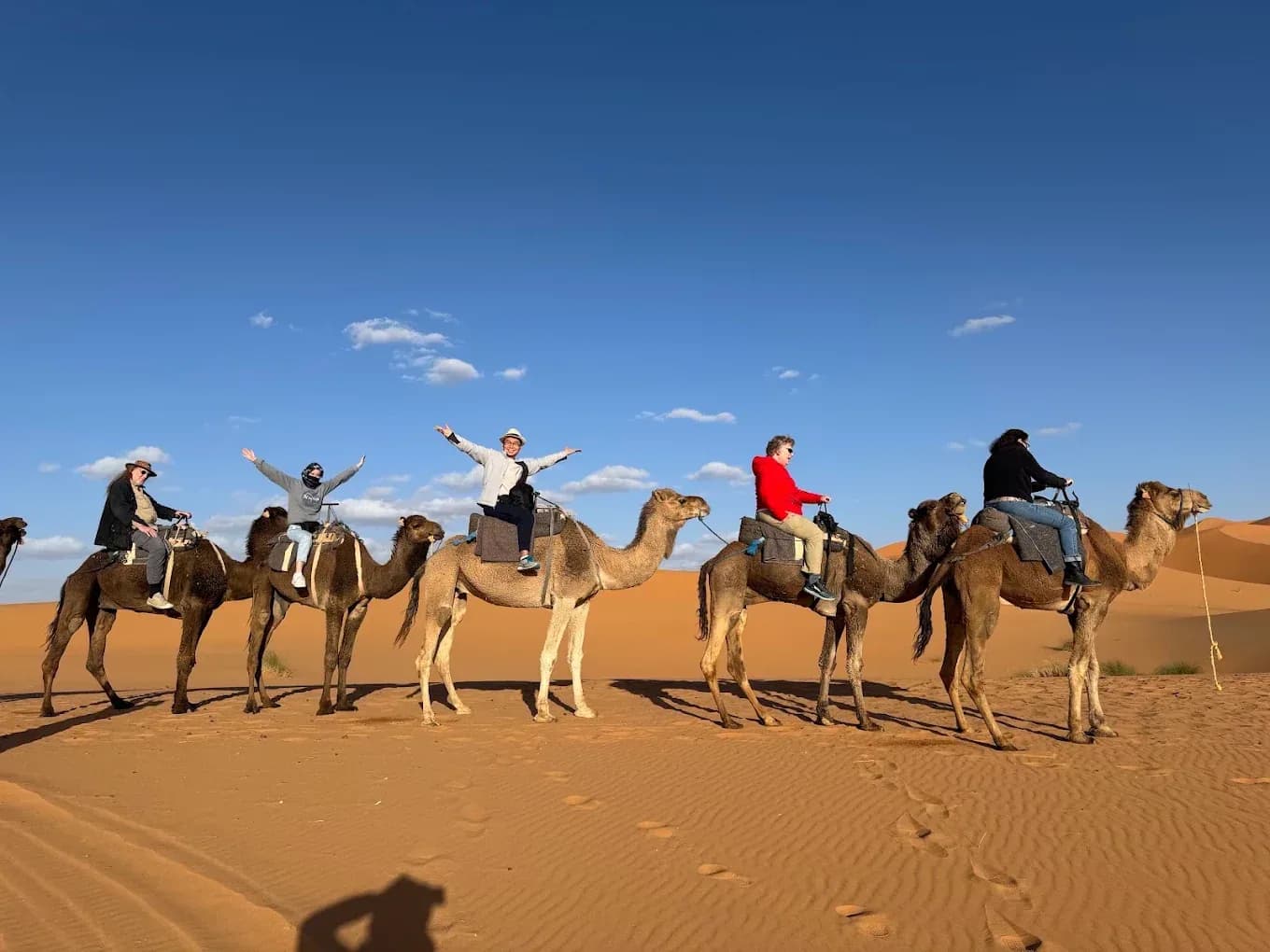
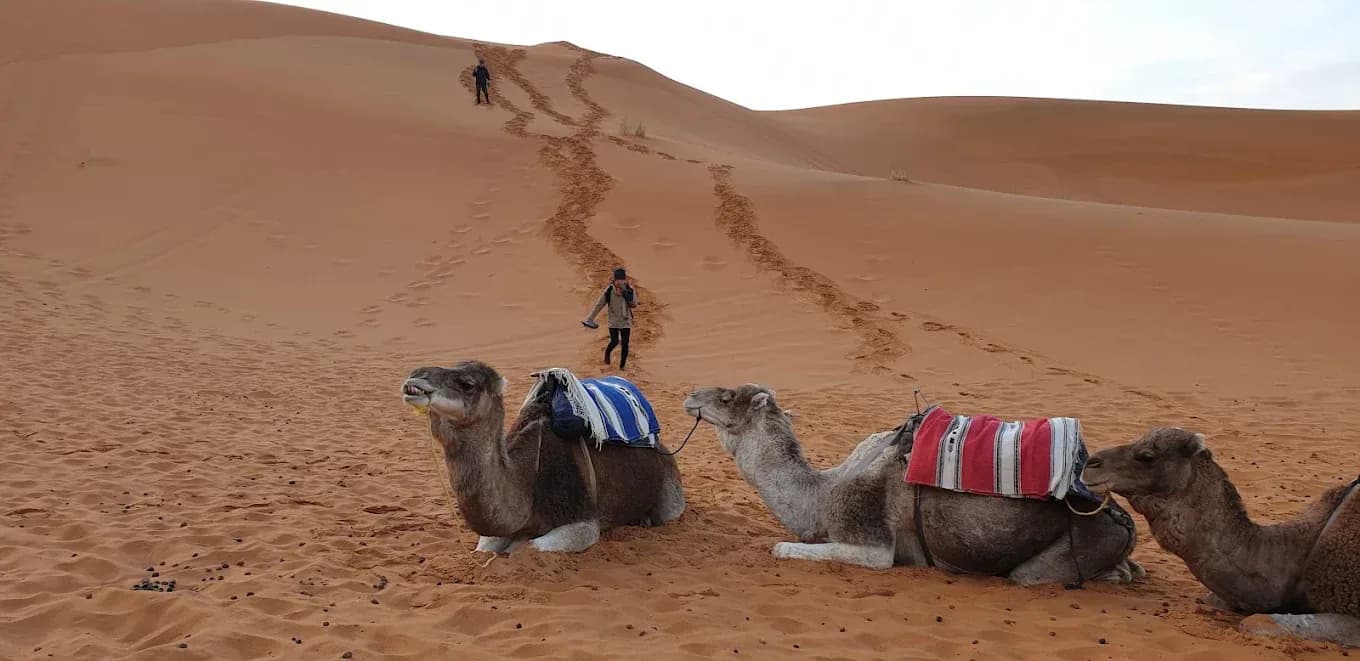
The usual thing is to leave the big suitcase in the vehicle and go into the camp with just a small backpack, because you arrive by camel and there is no room for large luggage. This is what it should contain:
- a scarf or turban; if you don't have one, you can buy one cheaply in Merzouga and they will show you how to tie it
- sunglasses, sun cream and lip balm
- a warm layer for the night, even in summer for sunrise, and a full coat in winter
- a head torch or your phone torch, to get around between the tents
- wet wipes and a small wash bag
- your charged power bank
- sandals or trainers; going barefoot in the dunes feels great, but in summer the sand burns at midday
- a case for your camera
- nightwear and a change of clothes for the next day
Pack everything in the backpack the night before, at the hotel in the Dades or the Todra. You usually reach Merzouga in the late afternoon and get on the camel almost straight away to see the sunset.
If you want to know what that night is like, read sleeping in the Moroccan desert. If you don't have a route yet, the 3-day trip to Merzouga from Marrakech is the one we are asked for most, and the 4-day version spreads the kilometres out better.
For walking in the Atlas
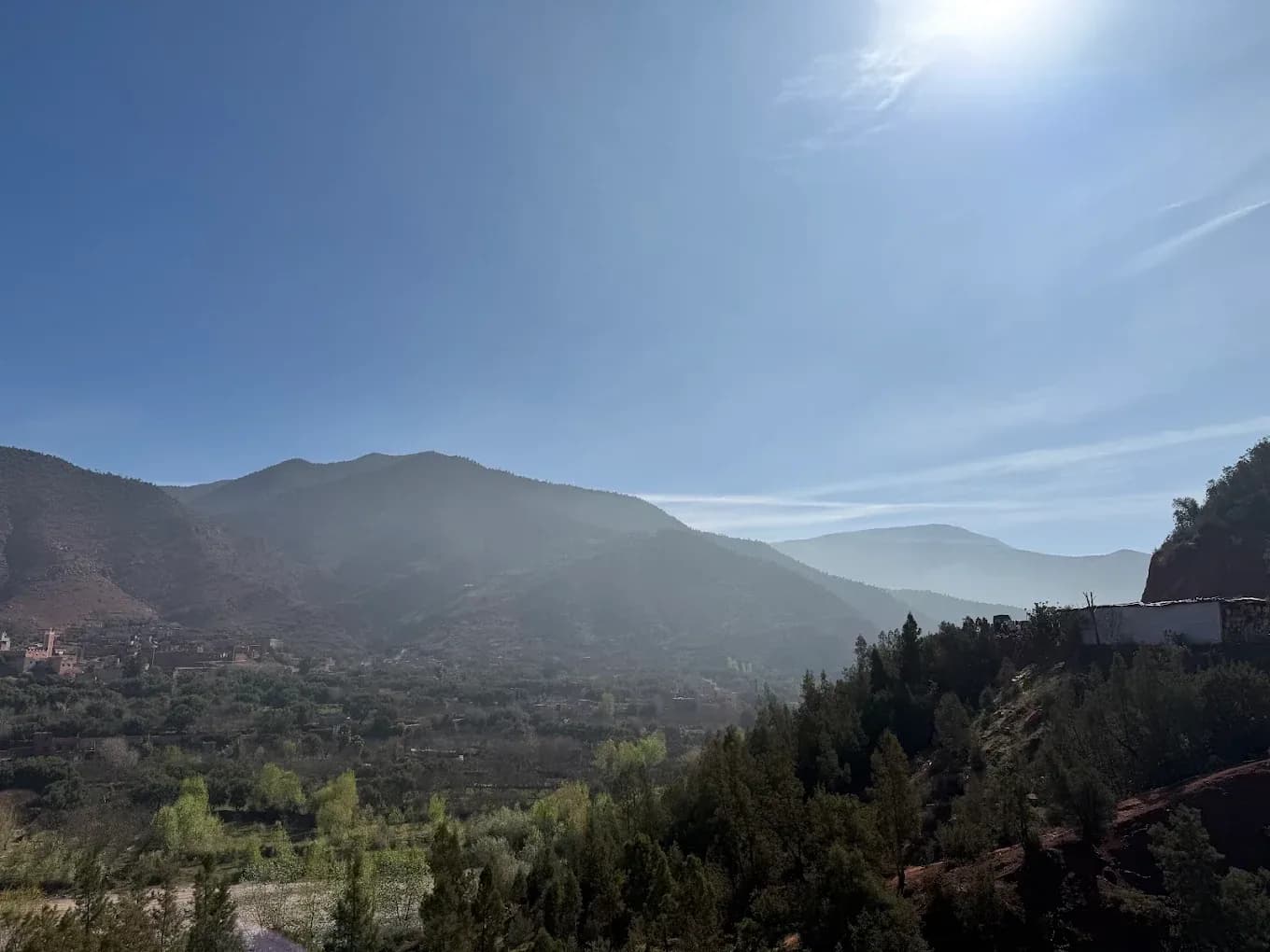
If you are going hiking in the High Atlas, for example from Imlil, bring walking boots or trail shoes you have already worn in, a daypack with a rain cover, technical layers such as a breathable T-shirt, fleece and windproof jacket, and poles if you use them at home. In winter you need winter mountain gear, and you should ask us about conditions first. You will find the options in adventure and trekking.
Depending on who is travelling
With children, add extra sun cream, a cap that fits well, snacks for the road days and a game or book for the car. If they need a child seat, tell us when you book so we can have it in the vehicle.
If you are travelling as a couple, split your clothes between both suitcases. If one is delayed at the airport, neither of you is left with nothing.
Solo backpackers are glad to travel light: cars can't get into the medinas and sometimes you have to walk ten minutes with your luggage to the riad.
And if you are short on time, say three or four days, a cabin bag is enough. What you can't leave out is the warm layer for the desert.
Packing mistakes we see
Coming in December with a thin jacket because Morocco is in Africa. A night in the dunes at 0 °C is miserable without a coat, however many blankets the camp has.
Bringing only shorts and vest tops in summer. Under the southern sun a thin long sleeve is cooler, and you will feel more comfortable in the villages.
Hauling the big suitcase all the way to the tent. It stays in the vehicle and you get it back the next morning.
Filling your suitcase on the way out and leaving no room for the way back.
What to leave at home
Your drone. Moroccan customs usually hold it if you don't have prior authorisation.
Very revealing clothes for walking around the medinas. On the beach or by the pool there is no problem.
Too many clothes. Riads and hotels have laundry services at good prices, and three or four changes of clothes are enough for a week.
Valuable rings, necklaces and watches. You don't need them, and that way you don't have to keep an eye on them in the crowds in the square.
A lot of cash. There are ATMs in every city and it is safer to take out a little, often.
If your bag is nearly packed but you don't have a route yet, look at our desert tours, go through the Morocco travel guide or write to us and we'll organise the trip with you, with Spanish-speaking drivers and guides.
Frequently asked questions
How should I dress in Morocco?
In loose clothing that covers shoulders and knees, especially in the medinas, in the villages of the Atlas and in the south. There is no compulsory rule for tourists, but you attract less attention that way and people appreciate it. On the beach and at the hotel or riad pool you can wear swimwear as you would anywhere else.
What should I wear in the Merzouga desert?
During the day, light long-sleeved clothing, a scarf against the sun and sand, sunglasses and sun cream. At night, always a warm layer, because as soon as the sun sets the temperature drops fast. From November to March add a proper coat, a hat and thermal clothes to sleep in.
Do I need a plug adapter in Morocco?
If you are coming from Spain or the rest of Europe, no: sockets are type C and E, at 220 V, like European ones. If you are coming from Mexico, Colombia, the United States or other countries in the Americas, you most likely do, and you should check on the charger that your devices accept 220 V before plugging them in.
Can I take a hard-shell suitcase to the desert?
You can bring it on the trip, but you don't need to take it to the dunes. The usual thing is to leave the big suitcase in the vehicle and go into the camp with a small backpack holding what you need for one night. Camels don't carry large suitcases comfortably, and there is not much spare room in the tent either.