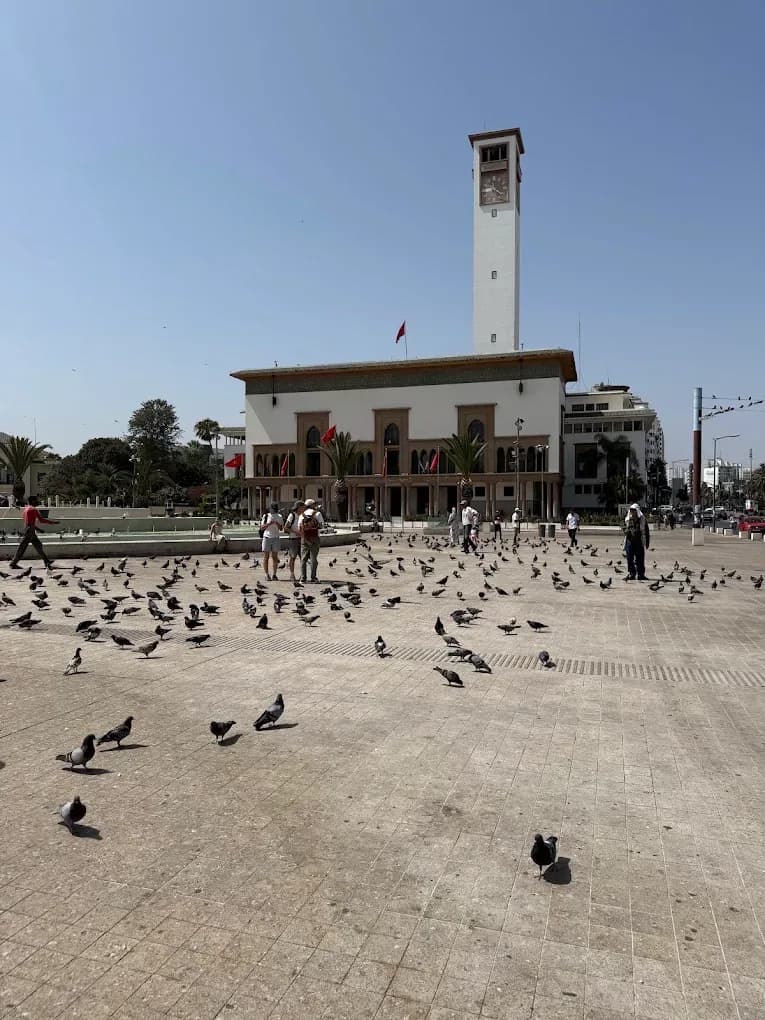
Morocco travel facts: location, language, currency and more
The questions we get before people travel to Morocco: how to pay and change dirhams, plugs, SIM cards and internet, the time during Ramadan, languages, tipping and more.
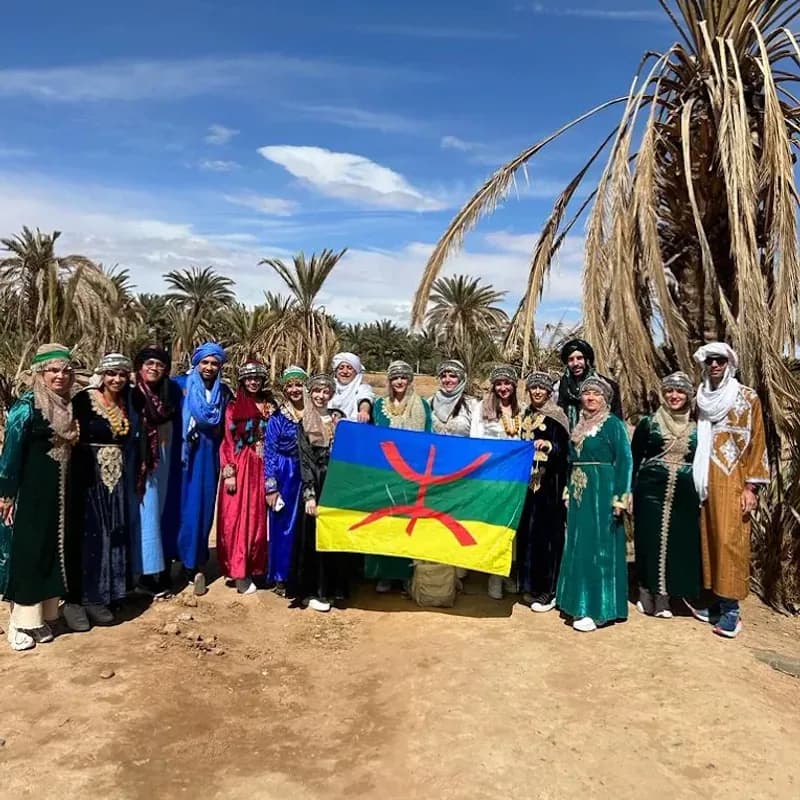
Published on · 10 min read
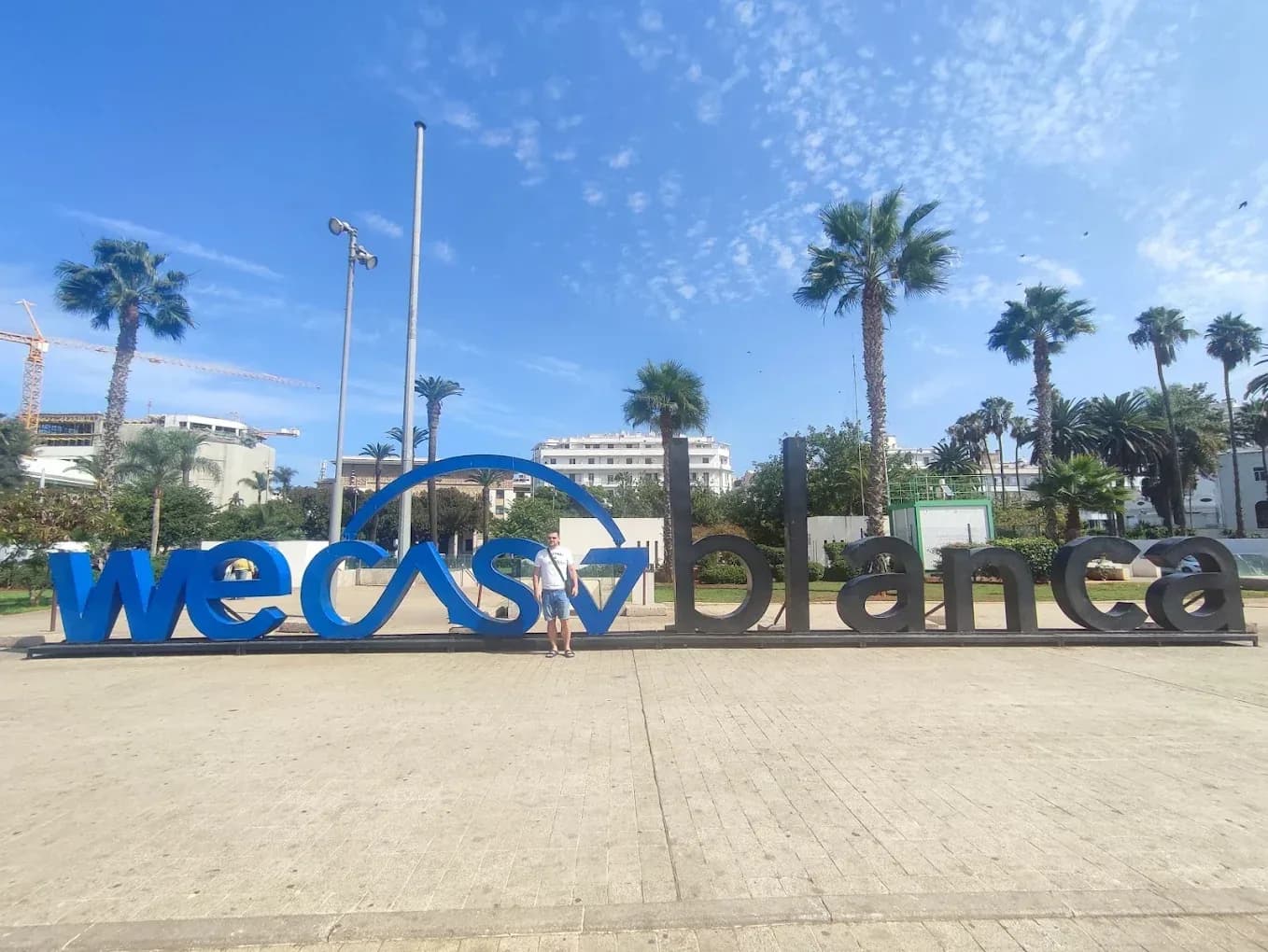
Morocco is in north-west Africa, about 14 km from Spain across the Strait of Gibraltar. The capital is Rabat, the official languages are Arabic and Amazigh, and in the street people speak Darija, with plenty of French and, in the north, a fair amount of Spanish. The currency is the dirham (MAD), sockets are European type C and E, and the usual time is GMT+1, except during Ramadan, when the country switches to GMT.
What follows are the questions we get most on WhatsApp and by email in the weeks before a trip, with the answers we give our travellers. Some of this, such as the exchange rate, the dates of the time change or the currency rules, changes over time: always check official sources before you travel.
Money and payments
Do I need to change euros or dollars before I leave?
There is no need, and you almost never can. The dirham is a regulated currency and is not normally sold outside Morocco. The usual approach is to change money on arrival: at the airport, at banks or at authorised exchange offices, which you will find in every city and which tend to give a better rate than the airport. We suggest changing just enough at the airport for the first day and the rest in town.
Recently one euro has been worth a little over 10 dirhams. Check the day's rate before you travel, because it varies.
How many dirhams can I take out of the country when I leave?
Not many. According to the rules of the Moroccan Exchange Office (Office des Changes) that we checked, travellers can bring in or take out a limited amount of dirham banknotes, in the region of 2,000 dirhams. That is why it is best not to change more than you will spend. Keep your exchange receipts: you may be asked for them if you want to change leftover dirhams back before you leave. Foreign currency can be brought in without any problem, although large amounts must be declared at customs. These rules are reviewed from time to time, so always check official sources before you travel.
Do cards and ATMs work?
There are cash machines in every city and in many tourist towns, and they take the most common international cards. Your bank may charge a fee for each withdrawal abroad, so it pays to take out medium amounts rather than lots of small ones. Tell your bank you are travelling and check the fees before you go.
You can pay by card in hotels, riads, supermarkets, large shops and better restaurants. In the souks, taxis, small shops and villages you pay in cash. On the desert route, many of the stops along the way only accept dirhams.
What are the rials I hear about in the markets?
In some markets, especially in Marrakech and the south, older people sometimes count in rials, a traditional unit: one dirham equals 20 rials. If a price sounds outrageous, ask whether it is in dirhams. Nearly always it is a misunderstanding, not an attempt to cheat you.
To work out what the trip will cost, see how much a trip to Morocco costs.
Plugs and electricity
Do I need an adapter?
If you are coming from Spain or another European country, no. Morocco uses type C and E sockets, the same as Spain, with a voltage of 220–230 V and 50 Hz.
If you are coming from the Americas, you probably do. In the United States, Mexico and much of Central America plugs have flat pins and the voltage is around 110–120 V. Most phone and laptop chargers accept 100 to 240 V (it says so on the label) and only need the adapter. Hairdryers, hair straighteners or devices without that marking can be damaged.
Is there electricity in the desert?
The camps in Merzouga have power, but in some it is limited or runs on solar panels, and there is not always a socket in every tent. Bring a charged power bank for the night in the dunes.
Internet, SIM cards and phones
Is there wifi where I'll stay?
Almost all hotels and riads have free wifi, as do many cafés and restaurants in the cities. The speed varies a lot: in a riad with thick walls the signal sometimes doesn't reach every room.
Should I buy a local SIM or use my own?
For most of our travellers a local SIM is the most practical option. The three main operators are Maroc Telecom, Orange and inwi. You buy the SIM at the airport or in shops in town by showing your passport; they are cheap and coverage is good in cities and on main roads. If your phone supports it, you can also buy an eSIM before you leave and arrive already connected.
Watch out for roaming: Morocco is not in the European Union and EU roam-like-at-home rules do not apply. Check what your provider charges before you switch on data, because surprise bills are common.
In the desert, in the mountains and on some stretches of the Atlas, coverage is weak or drops out for a while. Morocco's country code is +212. Our WhatsApp number, +212 611 24 38 01, is the same for questions before the trip and during the tour.
The time in Morocco
What time is it in Morocco?
Since 2018 Morocco has stayed on GMT+1 all year round, with one exception: the month of Ramadan. During those weeks the country temporarily goes back to GMT, one hour earlier, and returns to GMT+1 when it ends. In 2026 the switch to GMT began on 15 February and the return to GMT+1 was on 22 March. Because Ramadan moves about ten or eleven days earlier each year, the dates change, and the government announces them only a few weeks in advance. If you are travelling between January and March in the coming years, always check official sources before you travel.
What is the difference with Spain and Latin America?
With mainland Spain, the time is the same in winter and Morocco is one hour behind in summer. During Ramadan, which falls in winter in these years, Morocco is also one hour behind mainland Spain. With the Canary Islands it is the other way round: in winter Morocco is one hour ahead and in summer they match.
With Latin America the difference is several hours. Outside Ramadan, Morocco is about six hours ahead of Bogotá and Lima, about seven ahead of Mexico City and about four ahead of Buenos Aires. With Chile the difference is four or five hours depending on the time of year, because Chile changes its clocks too. During Ramadan, take one hour off all these figures. Bear it in mind when calling home and, above all, when checking the time of a connecting flight.
Languages
Will people understand Spanish?
In the north, in Tangier, Tetouan and Chefchaouen, many people speak or understand it for historical reasons and because Spain is so close. In the rest of the country you hear Spanish mainly in tourism: guides, hotels, shops in the souks. All our guides and drivers speak Spanish, so you will have no trouble communicating during the trip.
What languages are spoken?
The 2011 Constitution recognises two official languages: Arabic and Amazigh, the Berber language, which has variants such as Tarifit in the Rif, Tamazight in the Middle Atlas and Tachelhit in the south. Day to day, people speak Darija, Moroccan Arabic. French is widely used in government, universities, business and tourism, and English is increasingly common among young people.
A few words of Darija get you a different kind of smile:
- Salam aleikum, to say hello (literally, peace be upon you).
- Shukran, thank you.
- La, shukran, no, thank you, very useful in the souks.
- Bslama, goodbye.
- Inshallah, God willing, which you will hear all the time.
Tipping
Should I tip in Morocco?
It is customary and appreciated, although nobody will demand it. In cafés and simple restaurants people usually round up or leave a few coins. In restaurants with table service, many people leave around 10 % if the service was good.
You also give a few coins to the porter who carries your bags through the medina, to the attendant watching your car in the street or to the person who cleans the toilets at a petrol station. Always carry some change: it is what you need most and what is hardest to get hold of, because nobody at a small stall wants a 200-dirham note.
What about the guide and the driver?
It is not compulsory. If you were happy, you give it at the end of the service, by hand, and you decide the amount based on the number of days and how it went. What we don't recommend is tipping someone who offers to walk you through the medina when you didn't ask: it is the fastest way to have three more turn up.
Where Morocco is and general facts
What does the country look like on the map?
Morocco occupies the north-western tip of Africa. It has coastline on the Mediterranean to the north and on the Atlantic to the west, and land borders with Algeria to the east and with the Spanish cities of Ceuta and Melilla to the north. On clear days you can see the Spanish coast from Tangier.
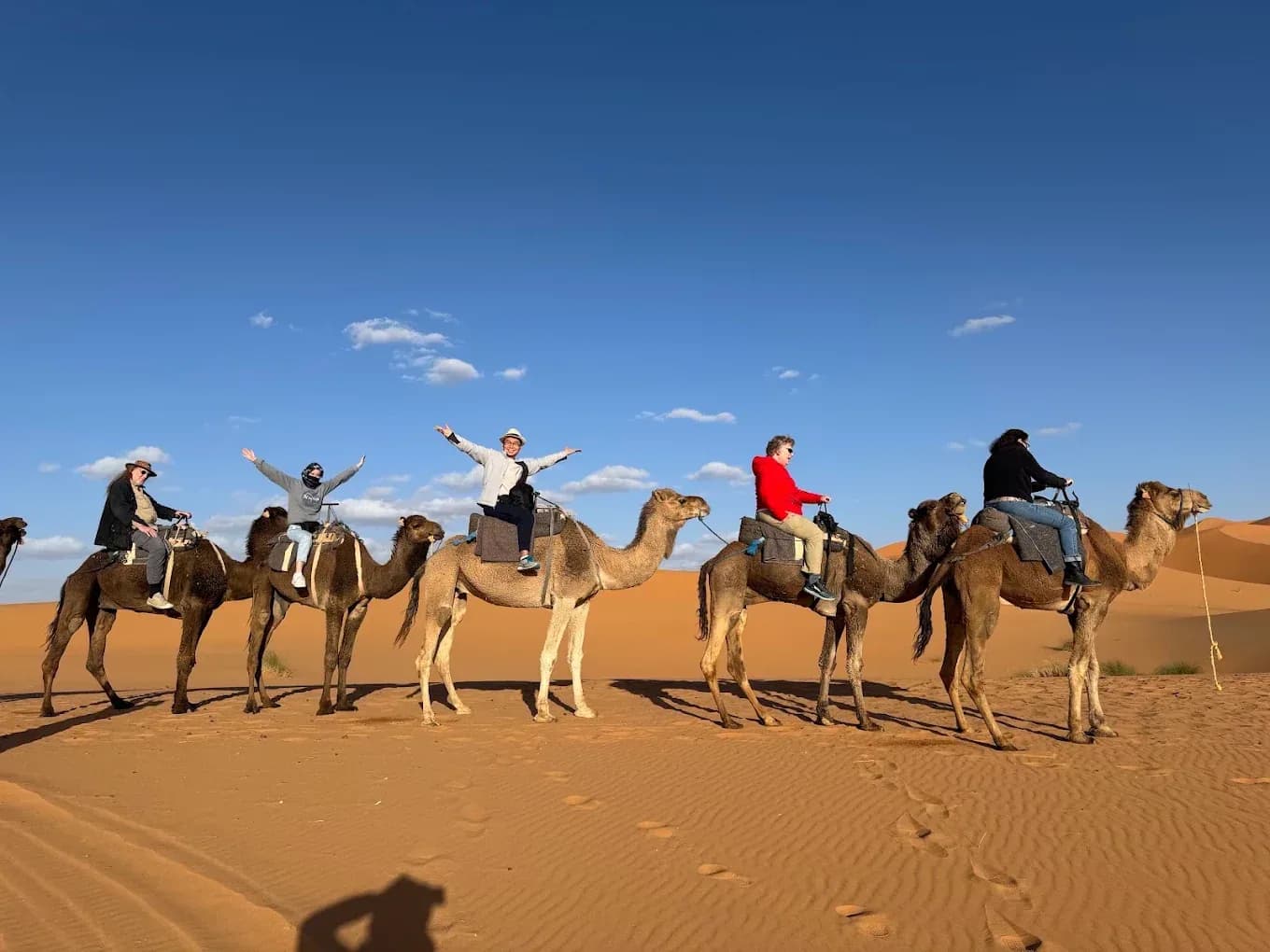
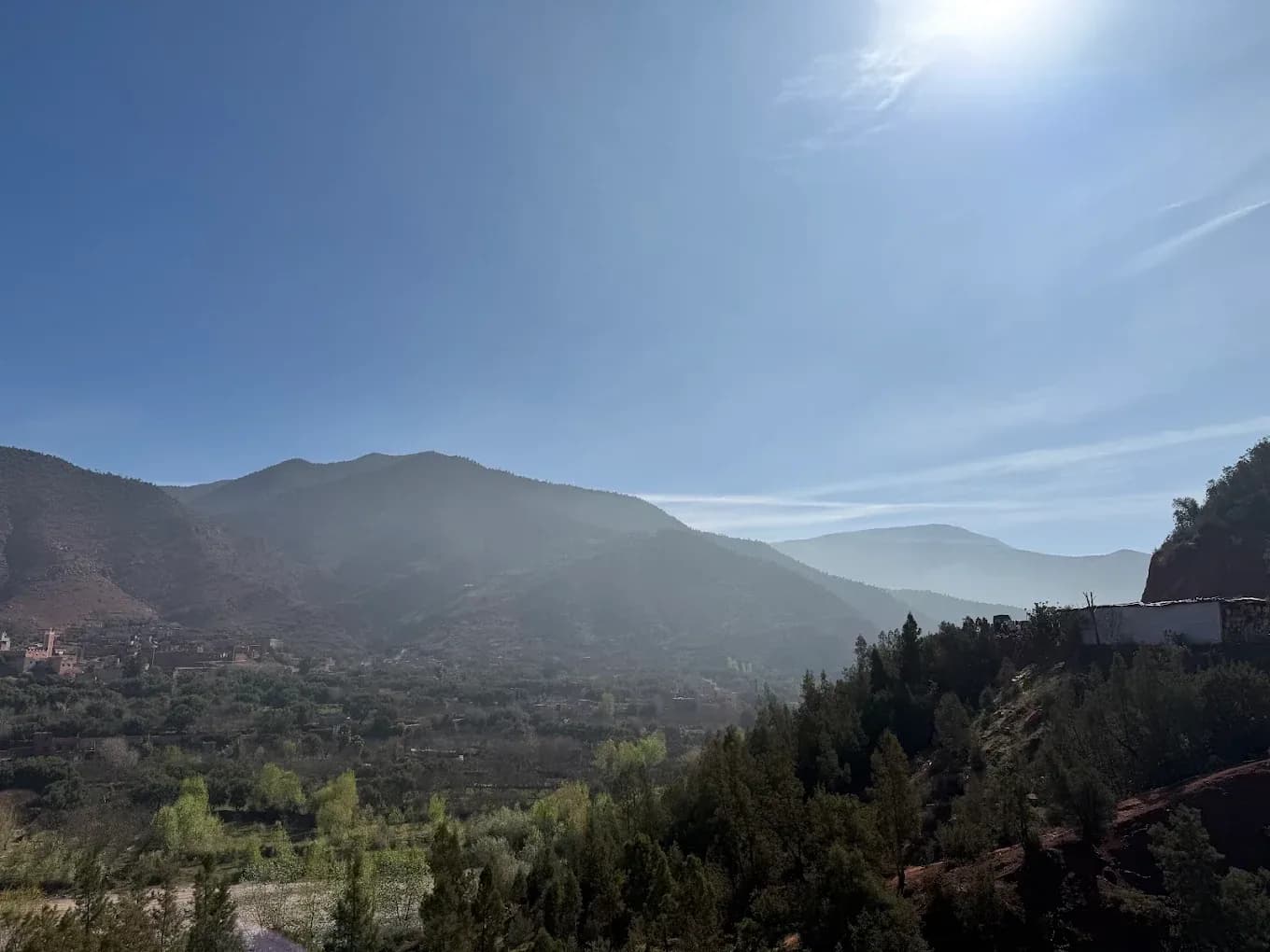
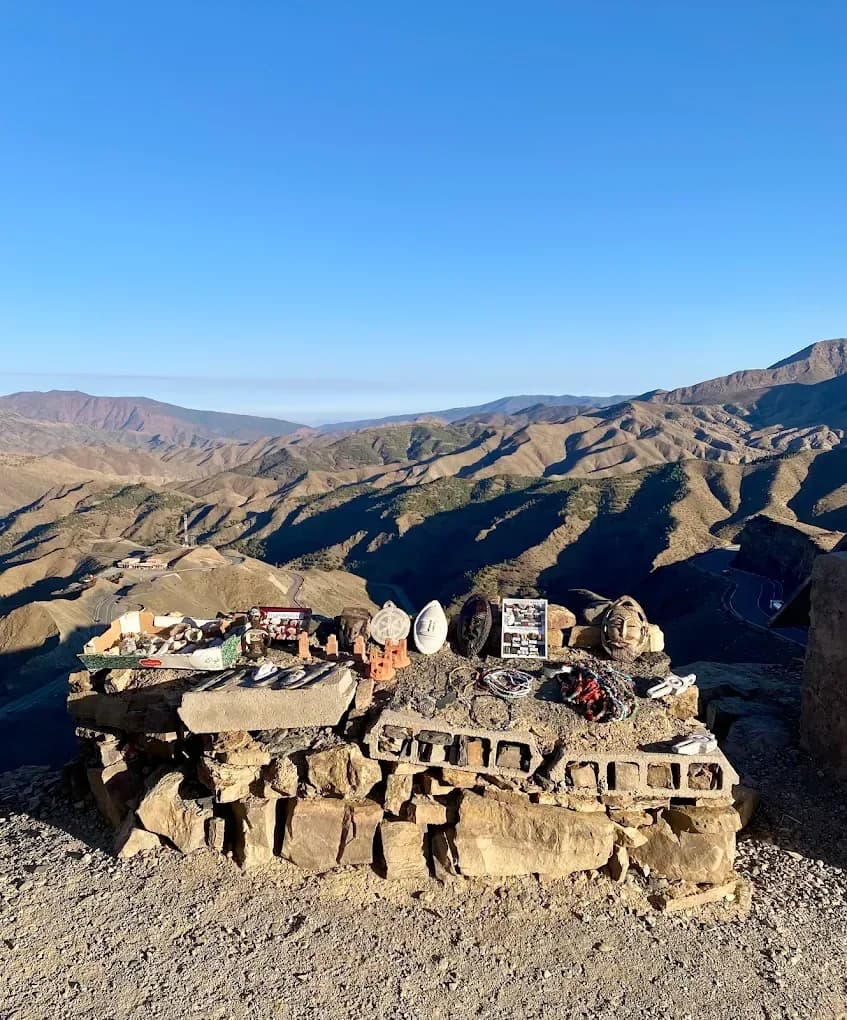
Four mountain ranges cross it: the Rif, the Middle Atlas, the High Atlas and the Anti-Atlas. The highest peak is Toubkal, at 4,167 metres, near Marrakech. To the south-east the gateways to the Sahara begin, with the great dune fields of Erg Chebbi, at Merzouga, and Erg Chigaga, near M'Hamid. That is why on a single trip you can go from the beach to snow or to the dunes, and why the climate changes so much by region; we explain it in the best time to visit Morocco.
What else is worth knowing about the country?
The official name is the Kingdom of Morocco and it is a constitutional monarchy. The capital is Rabat and the most populous city is Casablanca, where our office is. According to the official 2024 census, about 37 million people live in the country. Most of the population is Muslim, and there is a historic Jewish community as well as Christian minorities.
The cities our travellers visit most are Marrakech, Fez, Casablanca, Rabat, Tangier, Chefchaouen, Essaouira, Agadir and Meknes.
Water, health and emergencies
Can I drink the tap water?
We recommend drinking bottled water throughout the trip, and using it to brush your teeth too if you have a sensitive stomach. You can buy it in any shop and at the stops along the route.
What if I get ill?
In the big cities there are good private clinics and pharmacies in every neighbourhood, with pharmacists who usually speak French. Travel with medical insurance that covers Morocco. The emergency numbers are 19 for the police, 177 for the Royal Gendarmerie, which covers rural areas and the roads, and 15 for the fire service and ambulances.
If you are worried about safety in general, we cover it in detail in is it safe to travel to Morocco?. For passports, visas and documents, see the requirements for travelling to Morocco.
Customs and opening hours
Which days do shops close?
The official weekend is Saturday and Sunday, although the souks open almost every day and until late. Friday is the main day of prayer and some shops close at midday. Many monuments close in the late afternoon, so leave the souks for the end of the day.
What etiquette should I know about?
Ask permission before photographing people; many prefer not to appear in photos. Alcohol is served in licensed hotels and restaurants, but not everywhere. During Ramadan, be discreet about eating, drinking or smoking in the street during the day. There is more detail in customs and etiquette in Morocco.
Getting around the country
How do you travel between cities?
Traffic drives on the right. The ONCF rail network links Tangier, Rabat, Casablanca, Fez, Meknes and Marrakech, with high-speed trains between Tangier and Casablanca. The bus companies CTM and Supratours cover almost the whole country. Within cities you use the petit taxi and, between towns, the grand taxi, which you share with other passengers.
For the desert route, the valleys and the Atlas, the most comfortable option is a private vehicle with a driver, because public transport serves them poorly and with few departures. We explain it on our private driver in Morocco page. If you are coming from Spain, you will find all the boat and plane options in how to get from Spain to Morocco.
Once the practical side is sorted
The next step is the route. Browse all our Morocco tours, keep reading in the Morocco travel guide or write to us with your dates and we'll help you put the trip together with Spanish-speaking guides and drivers.
Frequently asked questions
Where is Morocco?
In the far north-west of Africa, facing the Iberian Peninsula. The Strait of Gibraltar separates it from Spain by about 14 km at its narrowest point, and the country has coastline on both the Atlantic and the Mediterranean. To the east it borders Algeria. The capital is Rabat, although the largest city is Casablanca.
What language is spoken in Morocco?
Officially, Arabic and Amazigh, the Berber language. What you will hear in the street is Darija, Moroccan Arabic. French gets you by in hotels, banks and shops, and in the north many people speak Spanish. English is spreading among young people and in tourist areas. Our guides and drivers speak Spanish.
What is the time difference between Spain and Morocco?
For most of the year Morocco is on GMT+1. That means in winter it has the same time as mainland Spain and in summer it is one hour behind. During the month of Ramadan the country switches to GMT and is one hour behind mainland Spain in winter too. The dates of the change are announced shortly beforehand.
Do I need a plug adapter in Morocco?
From Spain and almost all of Europe, no: sockets are type C and E and the supply is 220–230 V at 50 Hz. From the United States, Mexico and other countries in the Americas with flat-pin plugs you do need an adapter, and you should check that each device accepts that voltage before plugging it in.
Can I pay by card in Morocco?
In hotels, riads, supermarkets, large shops and better restaurants, usually yes. In the souks, taxis, small cafés and villages along the way you nearly always pay in cash, in dirhams. There are ATMs in every city, so you don't need to carry much money from day one.