Health and vaccinations before travelling to Morocco, region by region
Recommended vaccinations, water and food, desert heat, altitude in the Atlas, pharmacies, medical insurance and what to do if you fall ill during your trip, explained by a local agency.
Published on · 8 min read
For most travellers from Spain and the Americas there is no compulsory vaccination for entering Morocco, as of 2026. There are recommended vaccinations depending on your case, which an international vaccination centre will advise on, and a few precautions that prevent almost all problems: bottled water, care with the sun and the heat of the south, and medical insurance that works in Morocco.
In Morocco entry requirements we summarise the documents and customs side. Here we go into health in more detail, in the order you need it: what to do weeks before you leave, what changes in each part of the trip and what happens if something goes wrong. We are not doctors. What we describe is what we see every season with our travellers; for any decision about vaccinations or medication, consult a health professional.
One or two months before you leave
Book an appointment at an international vaccination centre
In Spain, the Sanidad Exterior international vaccination centres see people by appointment and in high season their diaries fill up. In Mexico, Colombia, Argentina or Chile there are equivalent services in public hospitals and travel clinics. Book four to eight weeks ahead, because some vaccines need time to take effect or several doses.
What they usually check is if your routine vaccinations are up to date, such as tetanus, measles or diphtheria, and if any others would be useful for you. The ones most often considered for Morocco are hepatitis A, which is transmitted through water and food, and typhoid, especially if you are going to eat away from the tourist circuits. For long stays, volunteering or trips with a lot of contact with animals, hepatitis B or rabies sometimes come up too. Yellow fever is not required to enter Morocco.
Don't get vaccinated on your own following lists from the internet. Each centre decides based on your age, your previous vaccinations and your route, and for that they need to know if you are only going to Marrakech or if you will also sleep in the desert and climb Toubkal.
Check your medication
If you take something daily, bring the medication in its original packaging, with the prescription or a medical report, and more doses than you need in case a flight is delayed. Keep it in your hand luggage. We have seen suitcases arrive in Marrakech two days late, and that isn't a problem with clothes, but it is with insulin.
Our list of what to pack for Morocco includes the basic first aid kit we recommend.
Take out travel insurance
The European Health Insurance Card isn't valid in Morocco, and your own country's public health system doesn't cover you there either. Travel insurance isn't a formality: it is what pays for a private clinic in Marrakech or a repatriation if needed.
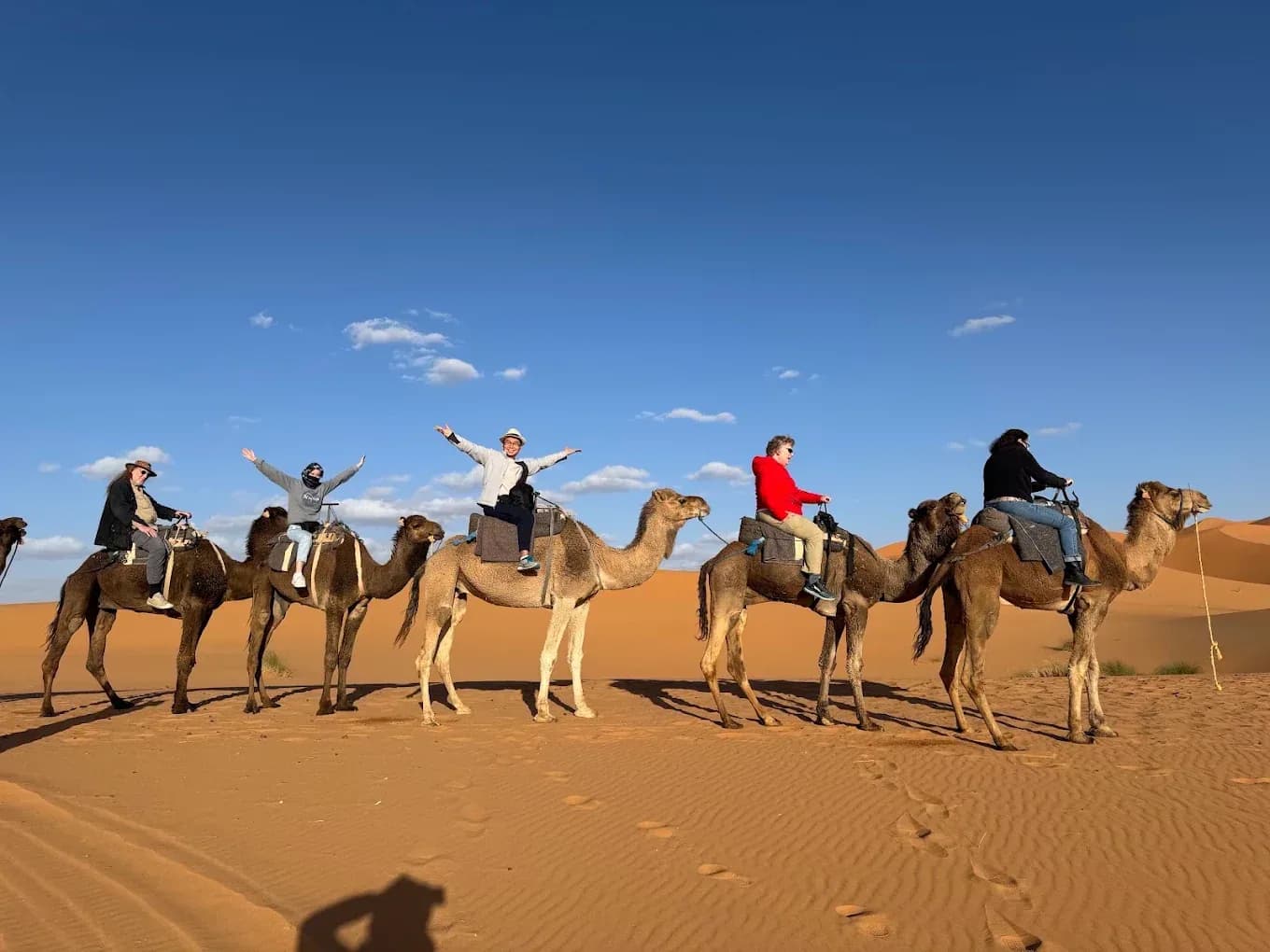
When comparing policies, look at three things. That it covers medical care and hospitalisation for a high amount. That it includes repatriation. And that it doesn't exclude the activities you are going to do, such as camel riding, quad biking or buggies in Merzouga or a mountain trek, because some cheap policies leave them out. Keep the policy and the assistance number on your phone and on paper.
In the cities
Water and ice
In the cities tap water is treated, but your stomach isn't used to it. We recommend drinking bottled water for the whole trip and, if you are sensitive, using it to brush your teeth too. A litre-and-a-half bottle costs very little in any shop.
Ice in hotels and better restaurants is usually made with filtered water. At street stalls, not always. If in doubt, order your drink without ice.
Food
The most common health problem in Morocco is traveller's diarrhoea. It usually lasts a day or two, but if it hits on the nine-hour drive to the desert, it feels long.
What works is simple. Eat hot, freshly cooked food, like tagine, harira or grilled skewers. Peel fruit yourself. Be careful with raw salads in basic places and with fresh juices from stalls where you can't see how the glasses are washed. Wash your hands or use gel before eating, because in Morocco a lot of food is eaten with bread and with your hands.
This doesn't mean not trying anything. On Jemaa el Fna we eat at the busiest stalls, where the food is cooked on the spot in front of you. We tell you what to order in Moroccan food.
If you get ill, the first thing is to drink plenty, ideally with rehydration salts, and eat rice, bread and bananas. If there is a high fever, blood, or it lasts more than two days, see a doctor.
Animals in the street
In the medinas there are lots of cats and, in some neighbourhoods and villages, stray dogs. Most are calm, but don't touch them or feed them by hand, especially if you are travelling with children. Rabies exists in Morocco. If an animal bites or scratches you, wash the wound with soap and water for several minutes and go to a medical centre the same day, even if the wound looks small.
In the desert and the southern valleys
Heat and sun
In Merzouga and Zagora in summer, midday often goes above 40 °C. But the sun burns at any time of year: in January, in the dunes, your skin goes red in an hour even when it feels cool.
That's why in summer we organise the route so the car covers ground in the middle of the day, with air conditioning, and you arrive at the camp with the sun already low. The night in the dunes is comfortable and you see sunrise before the heat starts.
Drink even if you aren't thirsty, more than you drink at home. Wear light long sleeves, a hat or a scarf on your head and high-factor sun cream. The symptoms of heatstroke are headache, dizziness, nausea and very hot skin; if they appear, get into the shade, drink water and tell the driver.
Sand, dust and eyes
The wind in the south whips up fine sand. Sunglasses and a scarf for your mouth and nose help a lot. If you wear contact lenses, bring your glasses and lens solution too, because sand and contact lenses don't get on.
Scorpions and other creatures
They exist in the south, but rarely cause a traveller any trouble. At the camp, shake out your shoes before putting them on in the morning and don't put your hands under stones. Mosquitoes appear mainly in summer and in the oases and palm groves; a repellent is enough. Morocco has been certified malaria-free by the WHO for years, so prophylaxis isn't needed, but confirm with your vaccination centre.
If you want to know what nights in the dunes are like, we cover it in sleeping in the Moroccan desert.
In the Atlas
Altitude
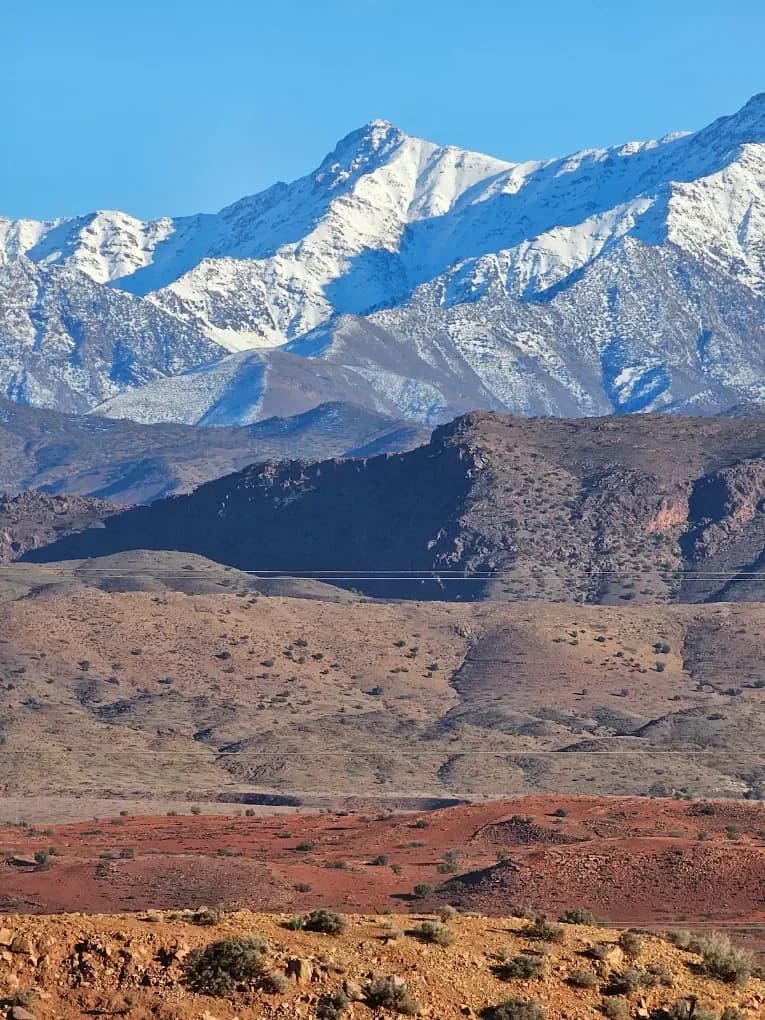
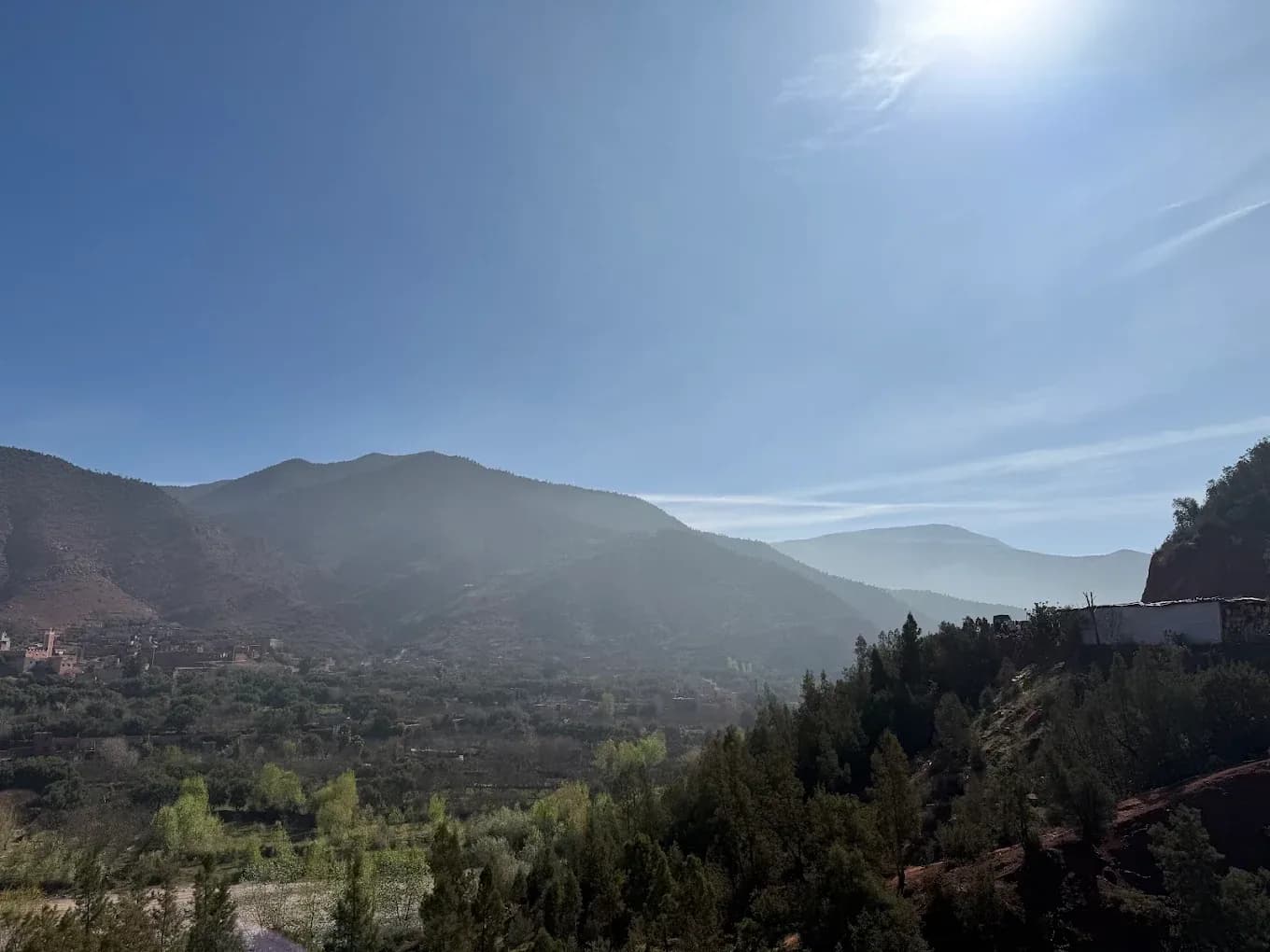
For most travellers, altitude isn't a problem. The Tizi n'Tichka pass, which you cross on the way south, is at about 2,260 metres, but you go over it by car without stopping for long. Imlil, the village where the Toubkal climb starts, is a little below 1,800 metres, and the Ourika Valley is lower still. At those heights the only thing you notice is that the slopes are more tiring.
The climb up Toubkal is a different matter. The summit is at 4,167 metres and the refuge where you sleep at about 3,200. Altitude sickness can appear there: headache, nausea, loss of appetite and poor sleep. That's why our 3-day Toubkal trek climbs in stages and not in a single day. Drink plenty, walk slowly, tell the guide if you feel unwell and don't be embarrassed to go down: when the symptoms get worse, going down is what works.
If you have heart or lung problems, consult your doctor before booking a trek above 3,000 metres.
Cold
In winter, in the Atlas and in the desert, nights drop to 0 °C or below. Many of the colds and upset stomachs we see in January have more to do with the night-time cold than with the food. Sleep warmly, in thermal layers; we explain this in more detail in travelling to Morocco in winter.
If something goes wrong
Pharmacies
There are pharmacies in every neighbourhood in the cities and in the larger towns along the route, marked with a green cross or crescent. Pharmacists usually speak French, sometimes Spanish, and are well trained: for a stomach problem, an allergy or sunburn, they are the first place to go. At night and at weekends there is a rota of duty pharmacies, the "pharmacie de garde", and the door of every pharmacy shows which one is open.
Many medicines are sold without a prescription, but don't buy antibiotics on your own without a doctor seeing you.
Doctors, clinics and hospitals
In Casablanca, Rabat, Marrakech, Fez, Tangier and Agadir there are good private clinics, with doctors who speak French and, in some cases, English or Spanish. In the villages of the south, care is more basic, and for anything serious the normal thing is to go to Ouarzazate or Errachidia or back to a big city.
Before going into a private clinic, call your insurer's assistance number. Many clinics ask for payment upfront or a guarantee from the insurer, and if the insurer handles the admission, it saves you paying in advance.
Emergency numbers
According to the official information we have checked, 19 is the police number in the cities, 177 is the Royal Gendarmerie, which covers roads and rural areas, and 15 is for the fire brigade and ambulances. These numbers can change, so always check official sources before you travel.
During a trip with us, the driver is your first contact. He knows the pharmacies and medical centres on each stretch and can call our office to reorganise the day or the rest of the trip. Our WhatsApp, +212 611 24 38 01, is the same before and during the trip.
Travellers with particular needs
With children, what we keep the closest eye on is the sun, the water and long drives. We plan routes with shorter stages, as on the 7-day family trip, and frequent stops.
If you are pregnant, consult your doctor before booking, especially if the trip includes the desert heat in summer, mountain roads or activities such as quad biking.
With diabetes, food allergies or special diets, let us know when you book. Riads and camps adapt well if they know in good time, and on the desert route there isn't always a shop nearby to sort things out on the spot.
If you are worried about the general safety of the trip, beyond health, we cover it in is Morocco safe to visit?, and the rest of the useful information is in the Morocco travel guide. If you have a specific situation, such as a chronic illness or a trip with babies, write to us before booking and we'll tell you which route and pace fit best.
Frequently asked questions
Do I need vaccinations to travel to Morocco?
For most travellers arriving from Spain or the Americas, no vaccination is required for entry, as of 2026. Recommended vaccinations are another matter, and depend on your age, your history and the kind of trip. Book an appointment at an international vaccination centre a month or two ahead and confirm there what applies to you.
Is there malaria in Morocco?
No. The World Health Organization certified Morocco as malaria-free more than a decade ago, so you don't take prophylaxis for a tourist trip. Mosquitoes do exist, especially in summer and near oases and palm groves, and a repellent prevents annoying bites. Confirm the health situation with your vaccination centre before you leave.
Is the European Health Insurance Card valid in Morocco?
No. Morocco is not part of the European Health Insurance Card scheme, and Spain's public health system doesn't cover a tourist's care there. That's why we ask all our travellers to arrive with travel insurance that includes medical care, hospitalisation and repatriation, and to save the assistance number in their phone.
Is altitude dangerous in the Atlas?
On a day trip to Imlil or the Ourika Valley, no, because you are moving between roughly 1,000 and 2,000 metres. On the climb up Toubkal, which goes above 4,100 metres, headaches, nausea or poor sleep can appear. Climbing gradually, drinking plenty and going down if the symptoms get worse is what helps most.
What do I do if I fall ill during the tour?
Tell the driver or the guide as soon as you start to feel unwell, even if it seems minor. He knows where the nearest pharmacy or clinic is on each stretch of the route and can call us to reorganise the day. Also call your insurer before going to a private clinic, because many ask for payment or a guarantee upfront.