Best time to visit Morocco: the weather month by month
April, May, October and November are the most rounded months, but each region has its moment. We go through the year month by month in the cities, the Atlas, the desert and the coast.
Published on · 10 min read
If you want a single piece of advice, come in spring, from March to May, or in autumn, from late September to November. In those months you can walk around the Marrakech medina at midday, sleep in the Merzouga dunes without being truly cold and cross the Atlas over the Tichka pass without snow. But Morocco can be visited all twelve months: what changes is the route we suggest and the clothes you pack.
We organise trips all year round from our office in Casablanca, with departures from Marrakech, Fez, Casablanca, Tangier, Agadir and Merzouga. What follows is what we tell our travellers when they write to us with a date in mind and ask whether it's a good idea.
Four climates in one trip
Before going month by month, it helps to know that on a normal tour you cross four very different zones, sometimes in two days.
The Atlantic and Mediterranean coasts, with Tangier, Casablanca, Essaouira and Agadir, have a mild climate all year thanks to the ocean. Summers are temperate, almost always windy in Essaouira, and the north has cool, rainy winters.
The inland imperial cities, Marrakech, Fez and Meknes, suffer most in summer and are best enjoyed by day in winter, with cold nights.
The Atlas, from Imlil to the Ourika Valley and the Tichka and Middle Atlas passes, has snow on the peaks in winter and cool summers, which is when walking is best.
The desert and the pre-Saharan valleys, with Merzouga, Zagora, the Draa Valley and the Todra and Dades gorges, are dry most of the year: strong heat in summer, mild days and very cold nights in winter.
Morocco month by month
January
The coldest month. In Marrakech the days are usually sunny, with highs of around 18 to 20 °C, and nights drop to a few degrees. In Merzouga you'll welcome the midday sun, but the night can be around 0 °C. The camps we work with have thick blankets, and even so we recommend sleeping in thermal clothes.
The Atlas is usually snow-covered and the Tichka can close for a few hours after heavy snowfall. When that happens, we wait or change the order of the route. If you're travelling at this time, leave a spare day at the end of the trip and don't book your flight home for the same afternoon you get back from the desert.
In exchange, there are few travellers outside the holidays, riads have more availability and from Marrakech you can see the white peaks on clear days.
February
Similar to January, with slightly longer days. Almond trees start to blossom in some Atlas valleys at the end of the month. In the north, Chefchaouen and Fez can get several days of rain in a row, so if your route starts in Tangier bring a waterproof.
In 2027 Ramadan would begin, according to astronomical forecasts, around 8 February and end around 8 or 9 March. The exact date depends on sighting the moon and is confirmed only a few days beforehand, so always check official sources before you travel.
March
You can feel spring. Temperatures rise, the northern countryside is green and the desert enters one of its best periods: warm days, cool nights and few people in the dunes. It can still rain in Tangier, Chefchaouen and Fez.
If you're coming with children in the spring school holidays, March is a good month for the 7-day family trip, which combines Marrakech, Imlil, Agafay and Essaouira with short drives.
April
For a complete first trip, April is our favourite month. The imperial cities have highs of 23 to 30 °C, the Atlas still has snow on the peaks but the main passes are usually open, and the Sahara isn't oppressive.
The problem is demand. Easter fills riads and camps weeks in advance, especially with travellers from Spain. If your dates coincide, look at the Easter in Morocco trip and write to us early: it isn't unusual for the most popular riads in Fez to have only a few rooms left by March.
May
Very similar to April, with a bit more heat at the end of the month. The Dades Valley fills with roses and the Kelaat M'Gouna area traditionally holds its rose festival around this time; the date changes every year, so confirm it before planning your trip around it.
It's also a good month for walking in the High Atlas: the valleys are green and nights in Imlil are still cool.
June
From the middle of the month the heat starts to bite inland. Marrakech easily goes above 30 °C and in Merzouga midday is already tough, although the afternoon and sunrise are still pleasant.
We like June for combining Marrakech with the coast and the Atlas. A route that works well is Marrakech, a night in the Imlil valley, and then Essaouira, which is about 2.5 or 3 hours by road and where the Atlantic wind keeps the temperature down.
July and August
High summer. Marrakech and Fez often go above 38 °C and the desert above 40 °C. Many people from Spain and Latin America only have holidays at this time, so we organise a lot of summer trips and know how to make them bearable.
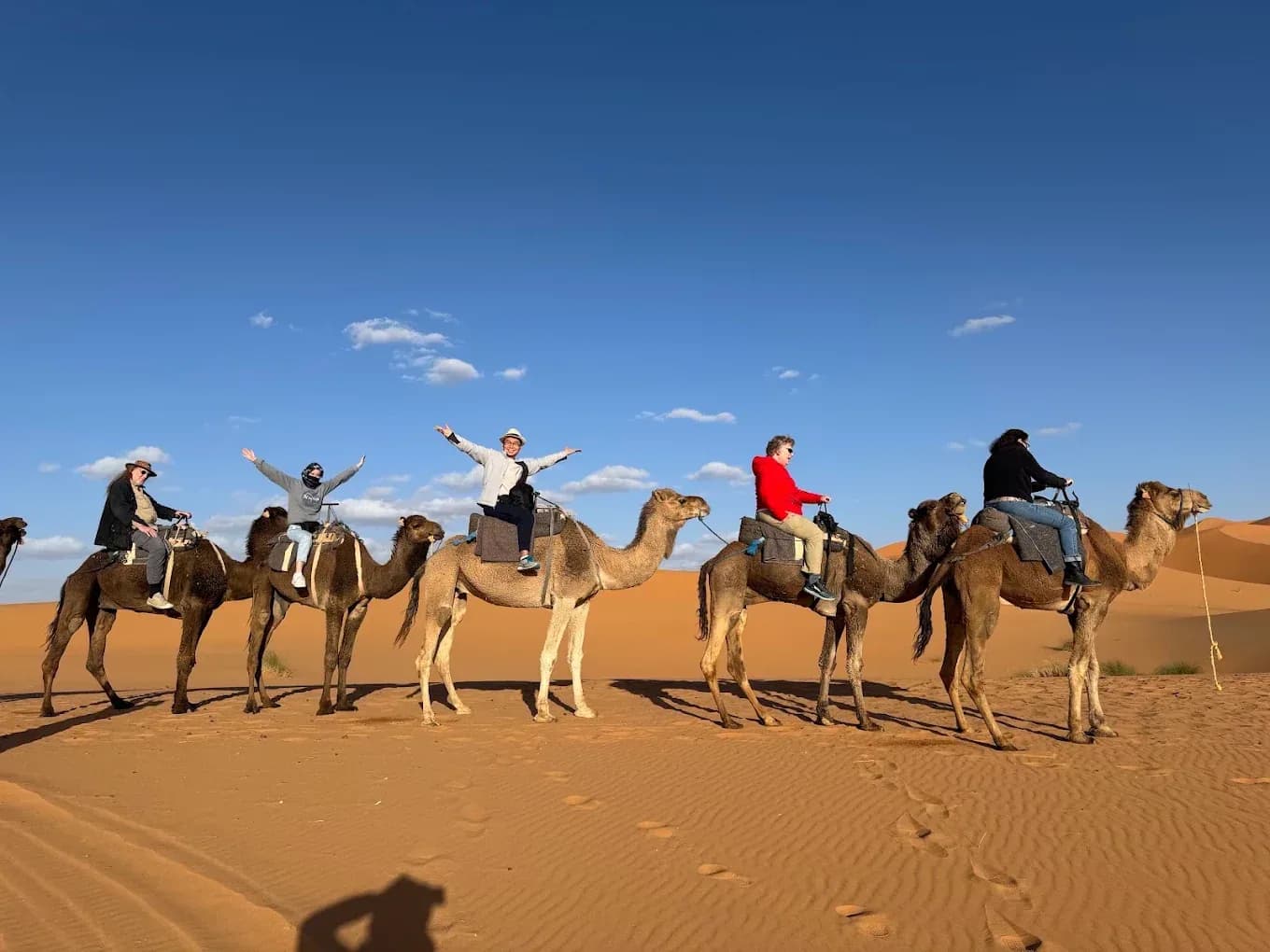
We visit the medinas first thing in the morning and late in the afternoon. We choose accommodation with a pool or a cool courtyard. We leave Marrakech early for the south and stop for a good while during the hottest hours. In Merzouga, the camel ride is at sunset and the return at sunrise; from June to August we don't go out in the middle of the day. And whenever the traveller has the days, we add a couple of nights in Essaouira or Agadir to rest.
What we don't recommend in August is the 3-day route with a direct return from Merzouga to Marrakech, which is 9 or 10 hours on the road on a hot day. With the 4-day route to Merzouga the stages are spread out better.
September
The heat eases slowly. The first half of the month can still be very hot in the south, and in the second half the desert is back in good shape. On the coast it's probably the best month of the year: the water is at its warmest and there are fewer people than in August.
October
Along with April, the best month for almost everything. Pleasant temperatures across the country, golden afternoon light for photos, few rainy days and the Sahara with warm days and cool nights. That's why it's also high season, with heavy demand for the Erg Chebbi camps.
November
The first half is very much like October, with fewer travellers. At the end of the month it starts to get cool in the mountains and desert nights already call for a winter coat. It's a month we strongly recommend to anyone who can choose: calmer prices than in October and good weather almost guaranteed in the south.
December
Sunny days and cold nights, as in January. The first half of the month is quiet, but Christmas and New Year are among the most requested periods of the year: many people want to see the year out in the dunes and the camps fill up. If that's your plan, read our New Year in Morocco guide and book months ahead. Other ideas for these dates are in events and festivals. For the rest of the winter there's more detail in travelling to Morocco in winter.
When to go by region
Imperial cities
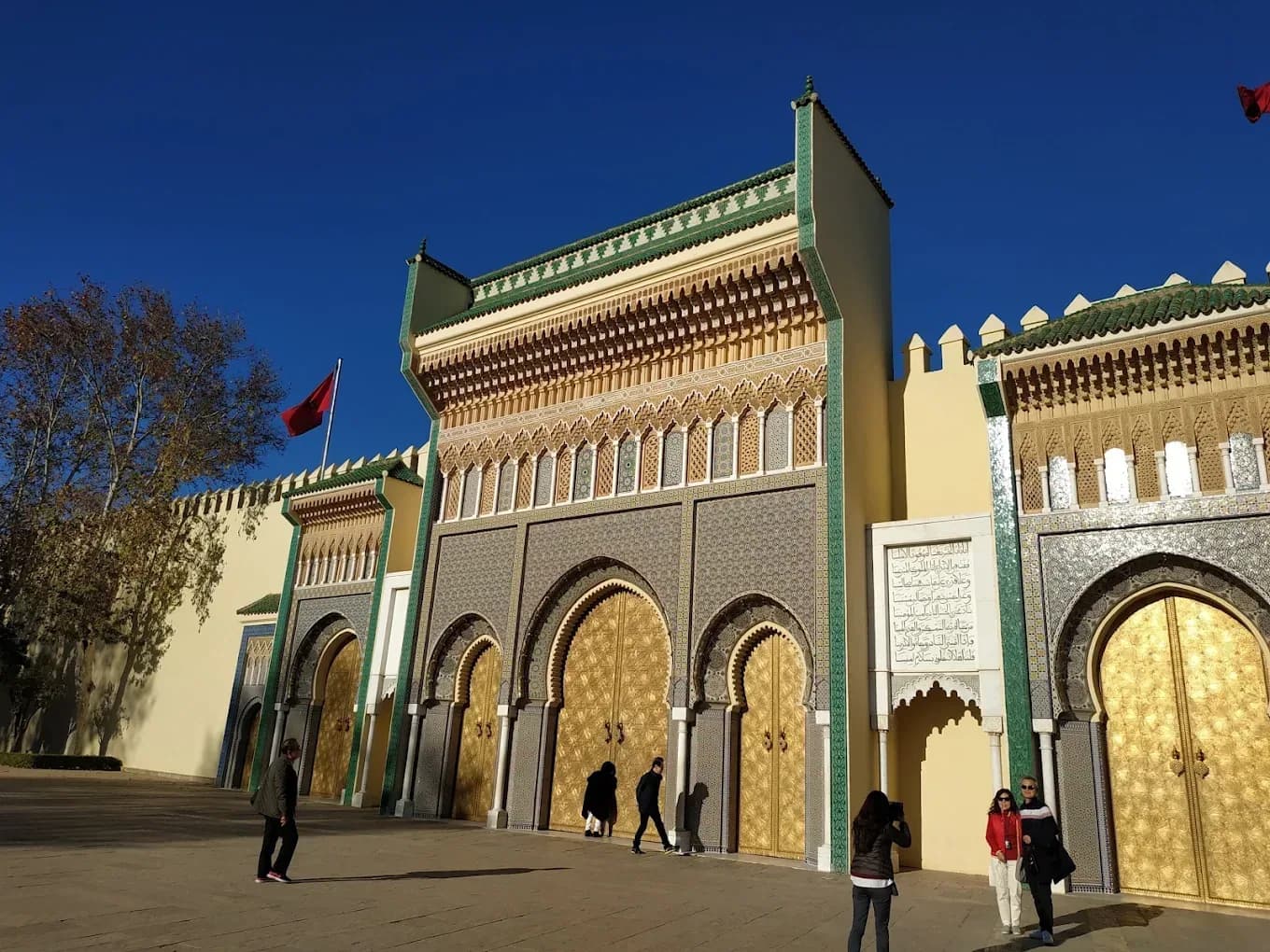
Marrakech, Fez, Meknes and Rabat are best enjoyed from March to May and from October to November. Winter is a good option too if you don't mind cool nights. In July and August you can visit them, but with a siesta built into the programme. For the details on the Red City, read our guide to the Marrakech weather. A route that links them all with the desert in the middle is the 8-day imperial cities and desert tour.
Sahara desert
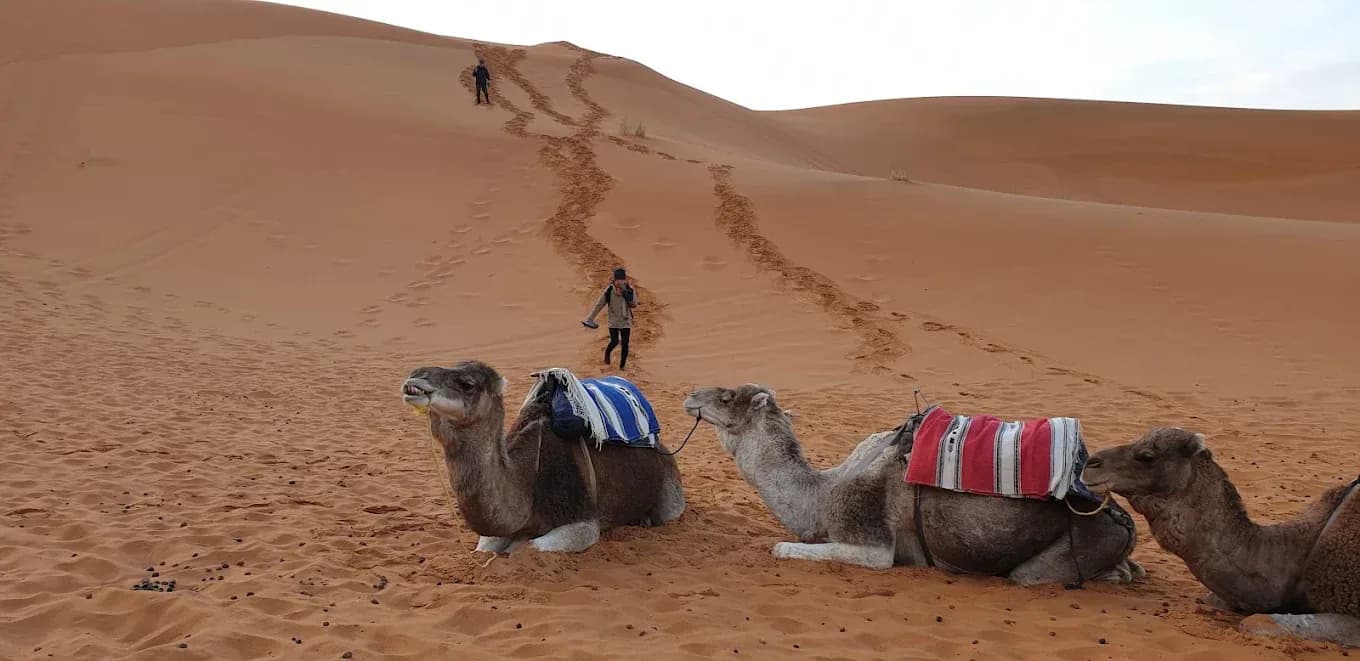
The best window runs from October to April, with March, April, October and November the most pleasant months. December and January have beautiful days and very cold nights. In summer you can go if you adapt the timings. To choose between the two big dune areas, our article Merzouga or Zagora will help, and if the night in the tent worries you, read what sleeping in the Moroccan desert is like.
Mountains and the Atlas
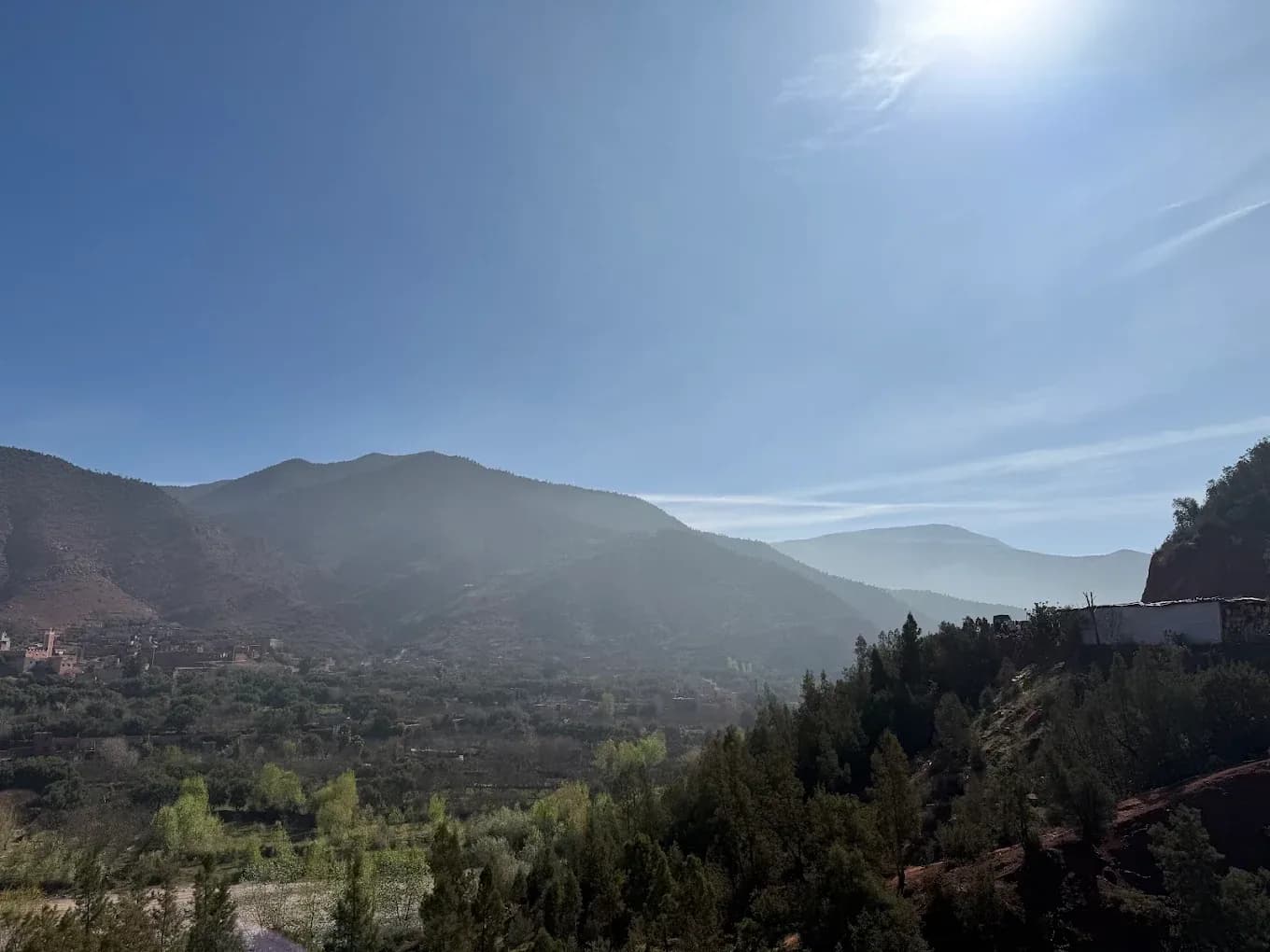
For walking, the most comfortable months are April to June and September to October. In summer the Atlas is the escape from the Marrakech heat: Imlil is about 65 kilometres away, an hour and a half by car. In winter the snowy landscapes are beautiful, but high-altitude routes require experience and equipment. Have a look at our adventure and trekking trips.
Coast
The Atlantic coast is pleasant all year. June to September is beach season in Agadir. Essaouira is known for its wind, which draws the kitesurfing crowd and in summer saves you from the inland heat. The Mediterranean north, with Tangier and Chefchaouen, is rainier in winter and lovely in spring.
Which dates we recommend depending on who's travelling
For a couple coming for the first time with a week, we suggest April, May or October, with a route from Marrakech to the desert and on to Fez. If they can't choose and they're coming in August, we'd rather shorten the desert part and add the coast than fit in two 9-hour driving days at 40 °C.
For a family with children, the calendar is set by the school holidays. At Easter and in summer we cut down the long drives and look for accommodation with a pool. In December the challenge is the cold desert night, which small children cope with worse than adults; in that case we like Agafay, less than an hour from Marrakech, instead of Merzouga.
Solo travellers have more freedom to choose shoulder season, such as March or November, when there are fewer people in the medinas and the groups on shared departures are smaller.
And people with little time, three or four days, can come in any month. Our 3-day trip to Merzouga from Marrakech runs all year; what we adjust is the departure time and the stops.
High, shoulder and low season
Demand counts too, because it changes accommodation availability and prices.
High season includes Easter, April and May, October, European bank holiday weekends, Christmas and New Year. On those dates the small riads of Fez and Marrakech and the superior camps of Erg Chebbi are the first things to sell out.
Shoulder season is March, June, September and November, and it usually offers the best balance between weather and peace and quiet.
Low season runs from January to February, outside holidays, plus summer inland. It's quieter with better availability, in exchange for cold at night or heat at midday.
Our private tours are priced as a vehicle with a Spanish-speaking driver per day, shared between the travellers, plus accommodation per person per night at Standard or Superior level. So the season shows mainly in the accommodation, not in the car.
Ramadan and religious holidays
The Muslim calendar is lunar, so Ramadan moves about 10 or 11 days earlier every year. During that month Muslims fast from dawn until sunset. For travellers it means some neighbourhood cafés and restaurants close during the day, some monuments shorten their opening hours and life shifts to the night, with the streets full after dinner.
In recent years Morocco has put the official time back one hour during Ramadan and restored it when it ends. If your trip falls in those weeks, check your flight times and always check official sources before you travel.
Hotels, riads and restaurants for travellers run as normal. We ask you to be discreet about eating, drinking or smoking in the street during the day. More advice in Morocco customs and etiquette.
Mistakes we see when people choose their dates
The most common is thinking Morocco is warm in winter because it's Africa. Every December we get travellers in the desert wearing a thin jacket. With the coat we describe in what to pack for Morocco, the night in the dunes is a different story.
The second is booking for Easter or October two weeks ahead and expecting to find the riad from the photos. Sometimes it works out, but don't count on it.
The third is packing in too much driving in summer. In July we'd rather you saw fewer places and arrived at each one with energy to spare.
And the fourth is booking flights without checking whether they fall during Ramadan or Eid. It isn't a problem, but it's worth knowing so you're not surprised by a half-closed medina at midday.
If you're still planning your trip, our Morocco travel guide brings together the practical information, from documents to budget. And if you already have your dates, write to us from the contact page with your days and what you'd like to see, or browse all our Morocco tours: we'll tell you which route best suits that time of year.
Frequently asked questions
What is the best month to travel to Morocco?
If you want to see cities, mountains and dunes on the same trip, April, May, October and the first half of November are the months that ask for the fewest compromises. You can walk around Marrakech and Fez at any time of day, the Sahara isn't punishing and the Atlas passes are usually open. The drawback is that these months are in high demand and it's best to book early.
Can you go to the Merzouga desert in summer?
Yes, on a summer timetable. In July and August midday at Erg Chebbi often goes above 40 °C, so you reach the camp at sunset, head out to watch the sunrise and spend the middle of the day in the shade or on the road with air conditioning. The night in the dunes is mild and you sleep well.
Is Morocco cold in winter?
Not very during the day: in Marrakech the sun usually shines and you can walk around in long sleeves. At night it's much colder than people expect, because in the desert and the Atlas thermometers hover around or below 0 °C and many riads have no central heating. With a good coat and thermal clothes to sleep in, winter is a very pleasant time to visit.
Is it a good idea to travel to Morocco during Ramadan?
It can be if you accept a different pace. Hotels, riads and restaurants for travellers run as normal, but many neighbourhood cafés close during the day and afternoons slow down until the fast is broken. The nights, on the other hand, are full of life. We only ask our travellers not to eat or smoke out in the street during the day.