Travelling to Morocco from Mexico: flights, entry rules and route
There are no direct flights, but with a stopover in Madrid you arrive in about 15 hours. Entry requirements for Mexicans, money, time difference, a budget in pesos and a 9-day route.
Published on · 8 min read
There are no direct flights from Mexico to Morocco, but with a stopover in Madrid you can reach Marrakech or Casablanca in about 15 or 16 hours of travel. Mexicans with an ordinary passport can enter as tourists without a visa for up to 90 days, according to the information available as of 2026. The flight is the most expensive part; once you're in the country, nine or ten days lets you see Marrakech, the desert, Fez and Chefchaouen.
Every year we welcome travellers from Mexico City, Guadalajara, Monterrey and other cities, often on a trip combined with Spain. These are the questions they ask us before booking, in the order they usually come up.
How to get to Morocco from Mexico
Flights via Madrid
This is the most used route. Aeroméxico and Iberia fly non-stop from Mexico City to Madrid, and there are also direct flights from Cancún to Madrid on several airlines. The flight to Madrid takes about 10 or 11 hours. From Madrid there are frequent flights to Marrakech, Casablanca, Fez and Tangier, with Iberia, Royal Air Maroc and low-cost airlines, taking an hour to an hour and a half.
If you buy the two legs separately, leave at least four or five hours between flights, because if the transatlantic flight arrives late the airline on the second leg has no obligation to wait for you. And if the second flight leaves from a different terminal at Barajas, allow time to get between terminals.
Other connections
You can also fly via Paris, Lisbon or Istanbul. Turkish Airlines, for example, connects Mexico with Casablanca and Marrakech via Istanbul, although it's a long detour.
Royal Air Maroc flies to Casablanca from New York, Miami, Montreal and other North American cities. For a Mexican this option has a catch: to change planes in the United States you need a US visa, even if you don't leave the airport, and for Canada a permit or visa depending on your case. If you already have them, it can be a good alternative.
As of 2026 there has been talk of a possible direct flight between Casablanca and Mexico City, but there's no confirmed date. If it does open, this section will change quite a bit.
Flying into one airport and out of another
We recommend buying your flight into one city and out of another, for example arriving in Marrakech and returning from Tangier or Fez. That way the route doesn't have to loop back to where it started and you gain a day. From Madrid there are flights to almost every Moroccan airport with passenger traffic.
Entry requirements for Mexicans
According to the information we've checked, Mexican citizens with an ordinary passport are exempt from a visa for tourist stays of up to 90 days. What you need is a valid passport; as a cautious guide, with at least six months' validity from your date of entry. On the plane or on arrival you fill in a form with your details and the address of your first accommodation.
These lists change from time to time. Before buying your flights, confirm your case with the Embassy of Morocco in Mexico or on the Moroccan Ministry of Foreign Affairs website. Always check official sources before you travel.
Check your stopover too. If you pass through Madrid and leave the airport, you enter the Schengen area. The European Union plans to require an electronic authorisation called ETIAS from visa-exempt travellers, Mexicans among them, but as of October 2026 it isn't yet in operation. Check on the official European Union website whether it applies on your travel dates.
There's more detail on documents, insurance and customs in entry requirements for Morocco.
Travel insurance
It isn't compulsory for entry, but we always ask you to have it. Your Mexican medical expenses insurance normally doesn't cover you abroad, and treatment at a private clinic or a repatriation can be very expensive. Look for one that covers Morocco, the European leg and the activities you're going to do, such as riding a camel or driving a quad bike in the dunes.
Time difference
Morocco uses UTC+1 for most of the year. Mexico City, which has had no daylight saving time since 2022, is on UTC-6. That makes a seven-hour difference: when it's eight in the morning in Mexico City, it's three in the afternoon in Marrakech. With Cancún it's six hours.
During Ramadan, Morocco has put its clocks back an hour in recent years, and the difference with the capital drops to six hours. The change is announced at short notice, so if your trip falls between February and March 2027, check the local time. We explain this in Ramadan in Morocco.
You will feel the jet lag. If you arrive at night, plan a gentle first day in Marrakech before the long driving stages.
Money and payments
The currency is the Moroccan dirham. It's not easy to buy outside Morocco and Mexican pesos can't be exchanged there. The practical approach is to bring euros in cash, which can be changed at the airport, in banks and at bureaux de change at a good rate, and a debit card to withdraw from cash machines. Dollars can also be changed, but in fewer places.
For quick sums: one euro is worth a little over 10 dirhams and, recently, between 20 and 22 Mexican pesos. In other words, 100 dirhams is roughly 200 pesos. Check the exchange rate the day before you travel, because it moves.
Tell your bank you'll be using your card in Spain and Morocco, and ask what fee it charges for withdrawals abroad. Cash machines are plentiful in the cities, but not in the desert or the mountains. Take out money in Marrakech, Ouarzazate or Fez before heading to Merzouga.
In the souks you pay in cash and haggle. Tips are expected and appreciated, as in Mexico: in a restaurant with table service you leave roughly 10%. More reference prices in how much a trip to Morocco costs.
Best time to go from Mexico
Mexican travellers tend to come at three times of year, and each has its upside and its downside in Morocco.
At Easter (Semana Santa) the weather is very good across most of the country, but it coincides with the holidays in Spain and demand is high. If you travel then, book months ahead.
In summer, July and August, the interior is very hot: in Marrakech and Fez it's common to hit around 40 °C in the shade, and in the dunes midday is even worse. You can travel, with early-morning and late-afternoon timings, a pool at your accommodation and a day or two on the coast in Essaouira.
In December the days are sunny and the desert nights very cold, and Christmas and New Year fill up early.
If you can choose, April, May, October and November are the most pleasant months. You'll find the details for each month in the best time to visit Morocco.
A 9-day route for a first trip
This is the route we suggest most to travellers coming from Mexico with about ten days in total, arriving in Marrakech and leaving from Tangier or Fez.
Days 1 and 2, Marrakech
Arrival and first night in a riad in the medina. On the second day, a guided tour of the medina, the Bahia Palace, the Ben Youssef Madrasa and the souk, and in the afternoon Jemaa el Fna square. You'll find ideas in what to see in Marrakech.
Day 3, Marrakech to the Dades Gorge
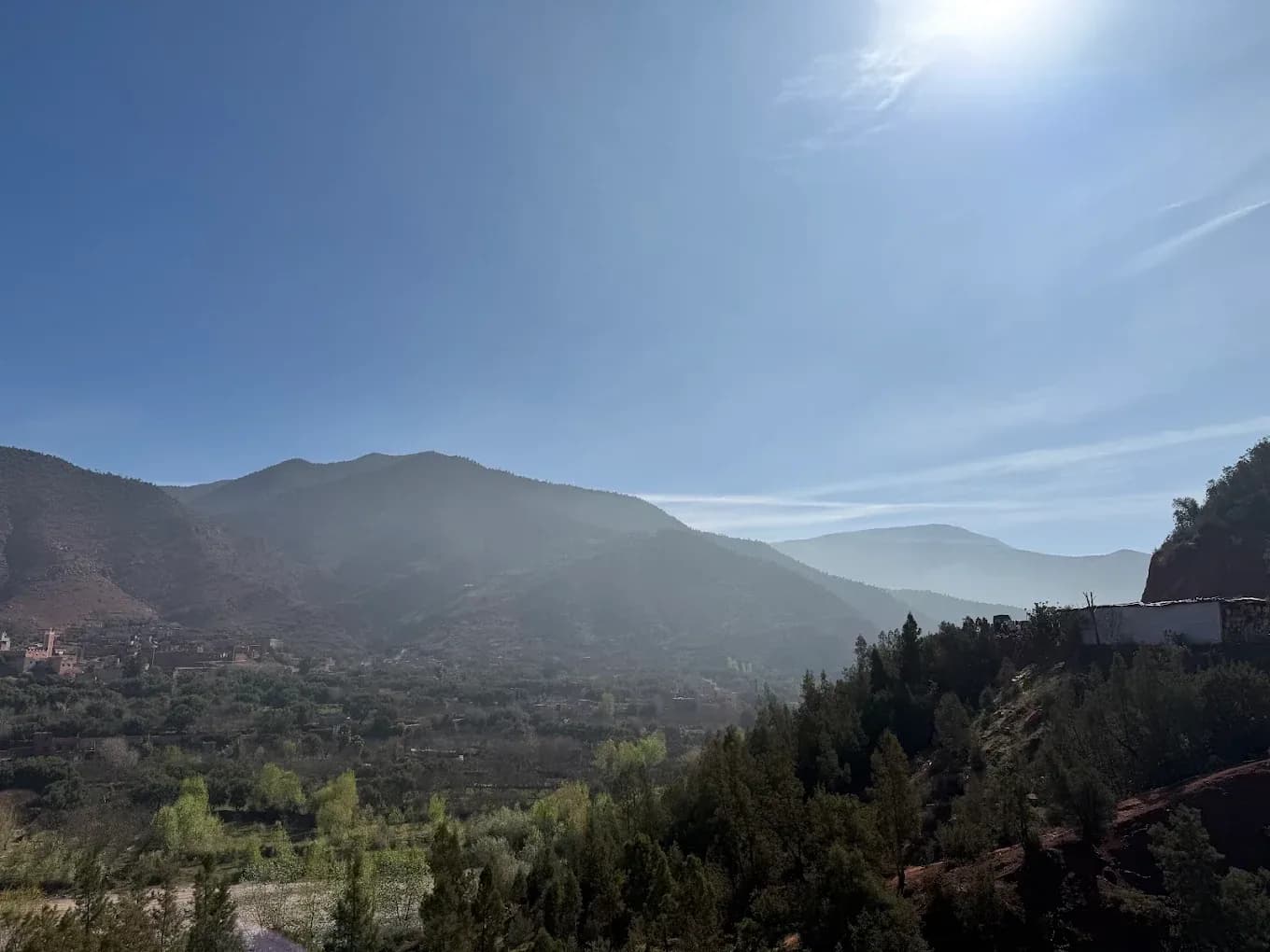
An early start over the Tichka pass, a stop at Aït Ben Haddou and a night in the Dades Valley. It's a long day on the road with landscapes very different from Mexico's.
Day 4, Dades to Merzouga
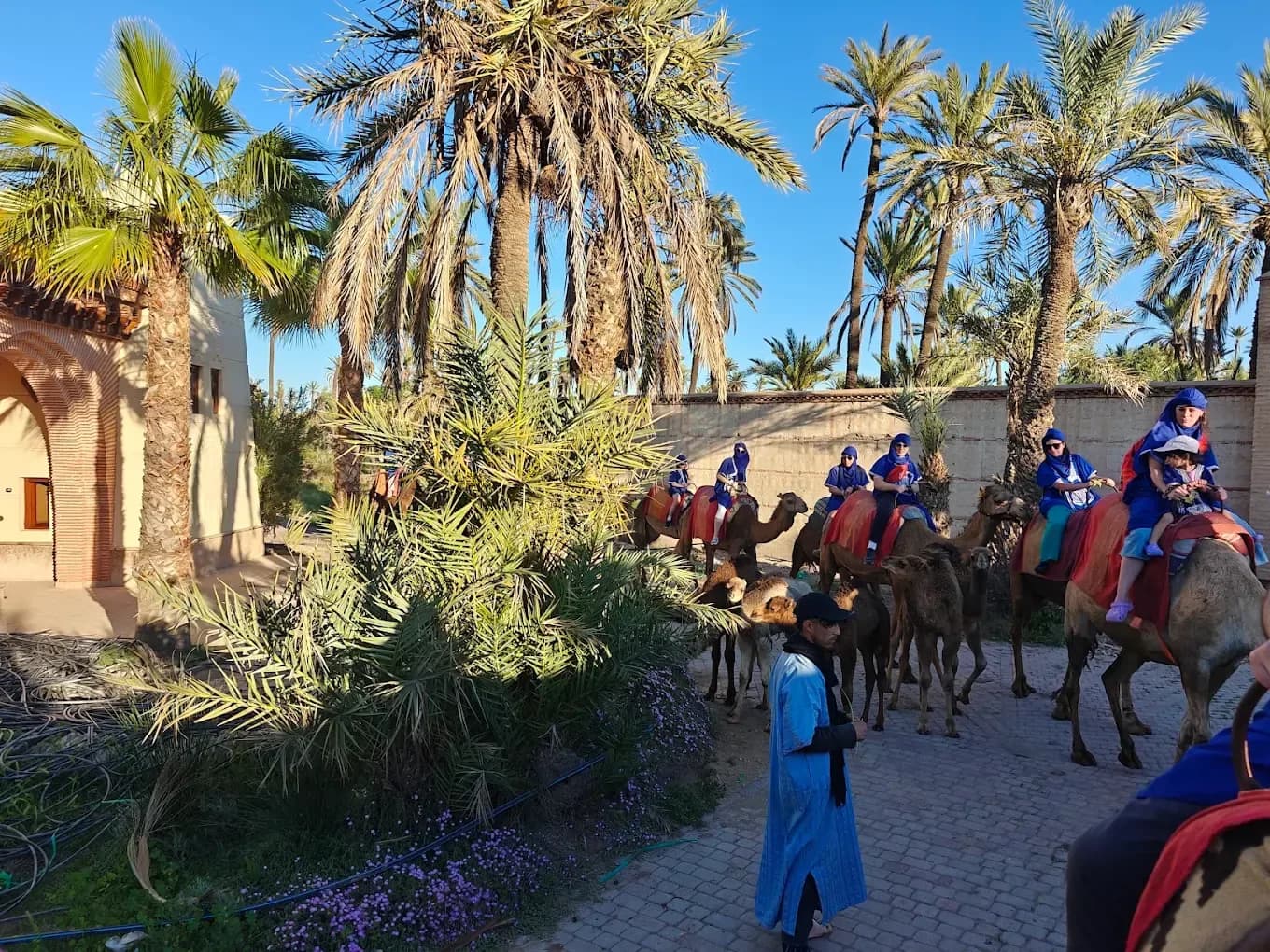
The Todra Gorge in the morning, arrival in Merzouga in the afternoon, a camel ride at sunset and a night in a camp in the Erg Chebbi dunes.
Day 5, Merzouga to Fez
Sunrise in the dunes and the drive to Fez through the Middle Atlas, with stops in Ifrane and the cedar forest. It's seven or eight hours on the road.
Days 6 and 7, Fez
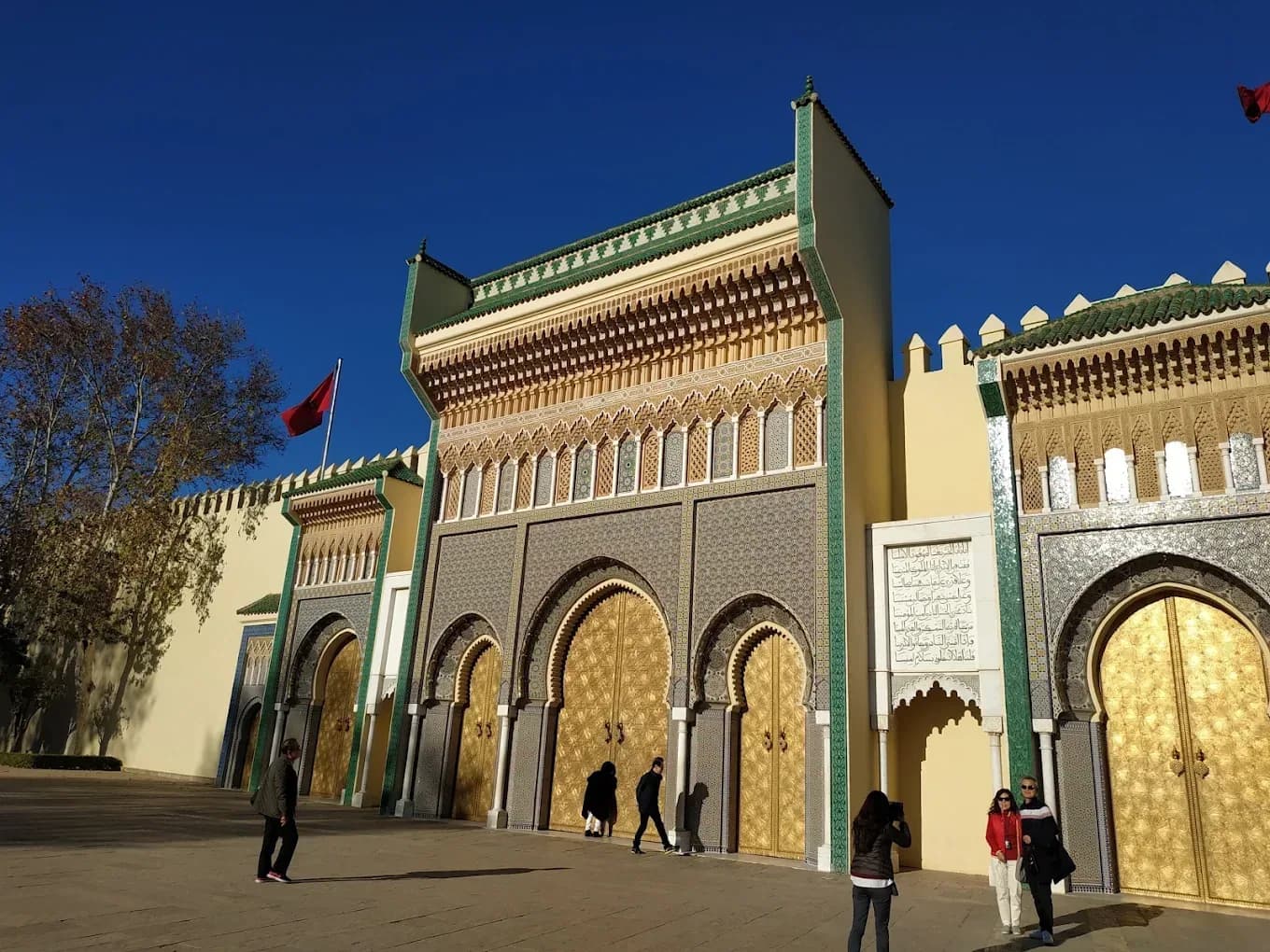
A full day with a guide in the Fez medina, taking in the tanneries, the Bou Inania Madrasa and the workshops. On the second day, Volubilis and Meknes or a rest. More details in what to see in Fez.
Day 8, Fez to Chefchaouen
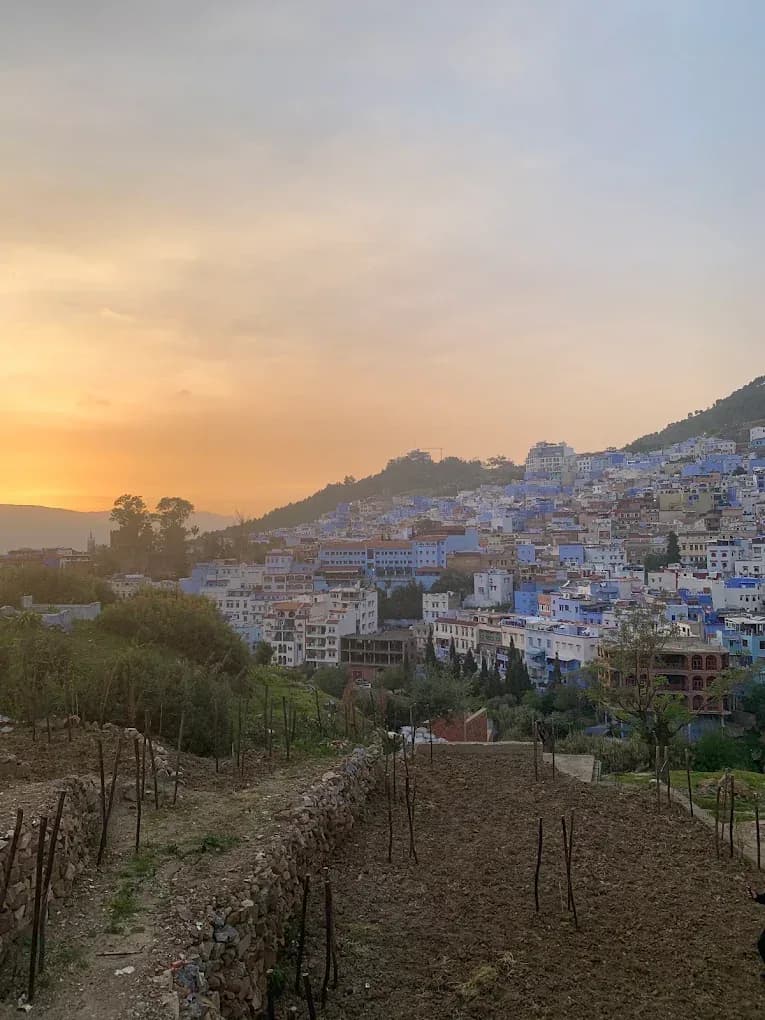
Four hours on mountain roads and an afternoon in the blue city.
Day 9, Chefchaouen to Tangier
About two and a half hours to Tangier, a walk around the medina and the flight back to Madrid from Tangier airport.
If you'd rather start in Casablanca, which usually has good connections, the 10-day tour from Casablanca follows a very similar route and includes the Hassan II Mosque. If you're a newly married couple, have a look at the 8-day Morocco honeymoon.
How much the trip costs in pesos
These are rough figures, because flights and the exchange rate move a lot.
A return flight from Mexico City to Madrid in economy, booked well ahead, is usually between about 15,000 and 28,000 pesos, more in summer and at Christmas. The return leg from Madrid to Morocco adds between about 1,500 and 5,000 pesos, depending on the airline and luggage.
Once in Morocco, staying in mid-range riads, with a private car for the south and an official guide in Marrakech and Fez, allow between about €100 and €180 per person per day, that is, between about 2,000 and 4,000 pesos. On a budget, by bus and in simple accommodation, it can come down to €40 or €60 a day, about 800 to 1,300 pesos.
On our private tours the car with a Spanish-speaking driver has a daily price shared by everyone travelling, and to that we add the cost of each hotel night per person, with two levels to choose from, Standard or Superior. So if two couples or a family come together, the price per person drops quite a bit. A child pays 3% less than an adult.
What we tell Mexican travellers
Moroccan food isn't spicy. It uses a lot of cumin, cinnamon, ginger and saffron, but chilli barely appears. If you miss it, ask for harissa, the hot pepper paste, which you'll find in many restaurants.
Don't drink the tap water, just as at home. Always bottled water.
Spanish is well understood in the north and in the tourism sector, and all our guides and drivers speak it. A Mexican accent is no problem at all.
And haggling in the souk works like in a Mexican craft market: a high opening price, patience and good humour.
For everything else, from plug sockets to language and opening hours, there's the Morocco travel guide. And once you have your flight dates, write to us and we'll put together the route from your arrival airport to your departure airport, or have a look at our cultural tours of Morocco.
Frequently asked questions
Do Mexicans need a visa for Morocco?
According to the information we've checked, no: with an ordinary Mexican passport you can enter as a tourist without a visa for stays of up to 90 days. These lists change from time to time, so before buying your flights confirm your case with the Embassy of Morocco in Mexico. Also check what the country where you change planes requires of you.
Are there direct flights from Mexico to Morocco?
No, as of 2026 there are no non-stop flights. The most common option is to fly to Madrid and from there to Marrakech, Casablanca, Fez or Tangier, which is an hour to an hour and a half away. You can also connect via Paris, Istanbul or a city in the United States or Canada, although those last two require transit documents for Mexicans.
What is the time difference between Mexico and Morocco?
Compared with Mexico City, Morocco is seven hours ahead for most of the year. Compared with Cancún, six. During Ramadan, when Morocco usually puts its clocks back an hour, the difference drops by one hour. If you live in Baja California or another state on a different time, do the sum with your local time.
Can I pay with Mexican pesos in Morocco?
No. Pesos can't be exchanged in Morocco. Bring euros, which can be changed at any bank or bureau de change, or dollars, which are also accepted for exchange though a little less easily. The most practical approach is to combine some cash with a debit card to withdraw dirhams from cash machines in the cities.
How many days do I need in Morocco coming from Mexico?
Given that you lose almost two days getting there and back, we recommend at least nine or ten days in the country. With that time you can see Marrakech, the Merzouga desert, Fez and Chefchaouen without wearing yourself out. If you have twelve or fourteen, add Essaouira or the north with Tangier and Tetouan.