Sleeping in the Moroccan desert: camps and what to expect
An afternoon and night at a Sahara camp told hour by hour, the types of tent you can choose and the answers to what everyone asks us before they go.
Published on · 9 min read
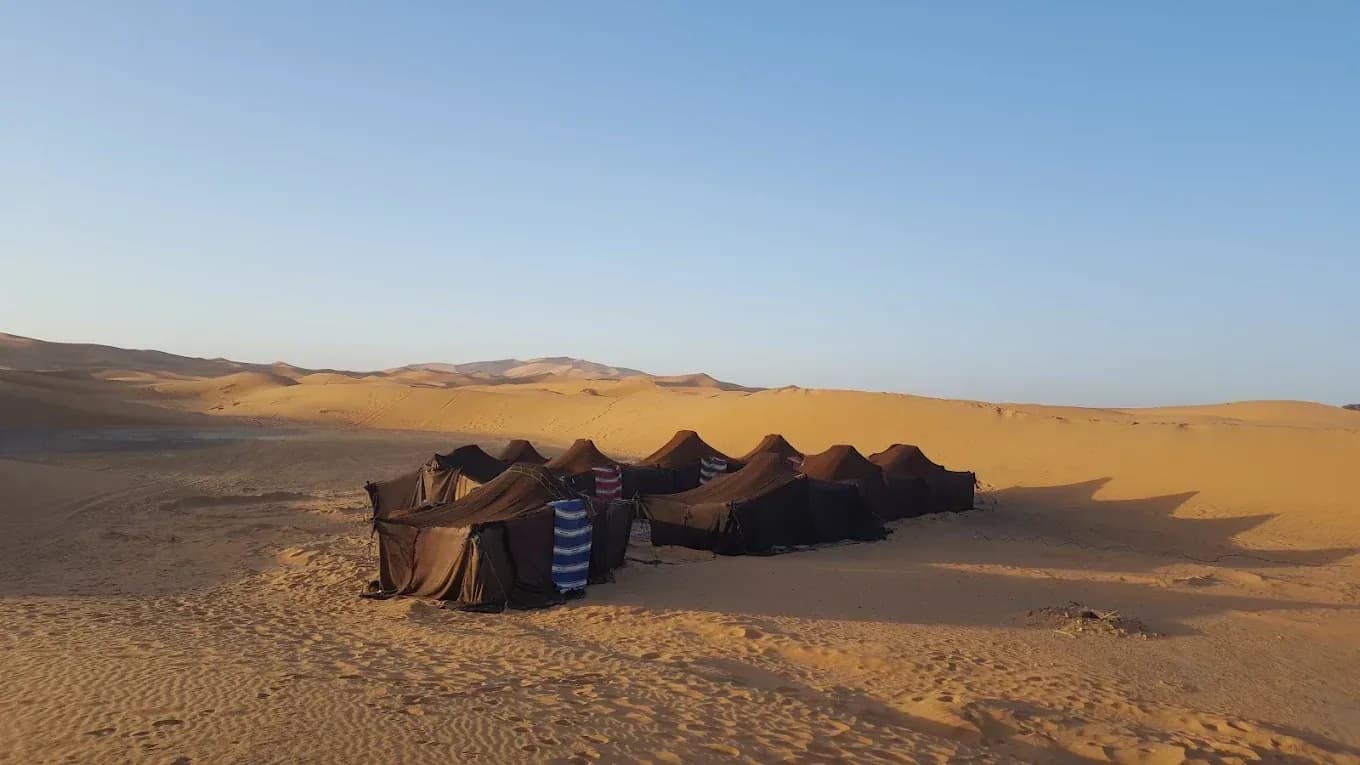
Sleeping in the Moroccan desert means spending the night in a camp of khaimas, the traditional tents, among the dunes, nearly always at Erg Chebbi in Merzouga. You arrive by camel or 4x4 at sunset, have a tagine for dinner, listen to music by the fire, sleep in a real bed and get up to watch the sun rise over the sand. What changes from one camp to another is the bathroom, the size of the tent and the level of comfort.
It's the night our travellers remember most and the one they have the most questions about before they set off. So first we describe it the way it usually goes, hour by hour, and then we go through the types of camp and the questions we get again and again. The times are approximate: the programme moves with sunset, which comes quite a bit later in summer than in winter.
Where you sleep in the desert
Most camps are at Erg Chebbi, next to Merzouga, which has the highest dunes in Morocco. There are also camps in Zagora and at the more remote Erg Chigaga. If you're torn between them, read our comparison Merzouga or Zagora?. There are camps in the Agafay desert near Marrakech too, but that's a stony desert with no sand dunes. You'll find the details for the area on the Merzouga and the Sahara desert page.
An afternoon and a night at the camp, hour by hour
Mid-afternoon, arriving in Merzouga
If you're coming from Marrakech, you arrive after the stage from the Dades Valley and the Todra Gorge; if you're coming from Fez, after seven or eight hours on the road through the Middle Atlas. We stop at a hotel or a house at the foot of the dunes. Your big suitcase stays in the vehicle and you take a small backpack with what you need for the night.
This is the moment to put on your scarf or turban. If you don't have one, you can buy one in Merzouga and the driver or the cameleer will show you how to tie it in a minute. It protects you from the sun and, above all, from sand if the wind is blowing.
An hour and a half before sunset, setting off by camel
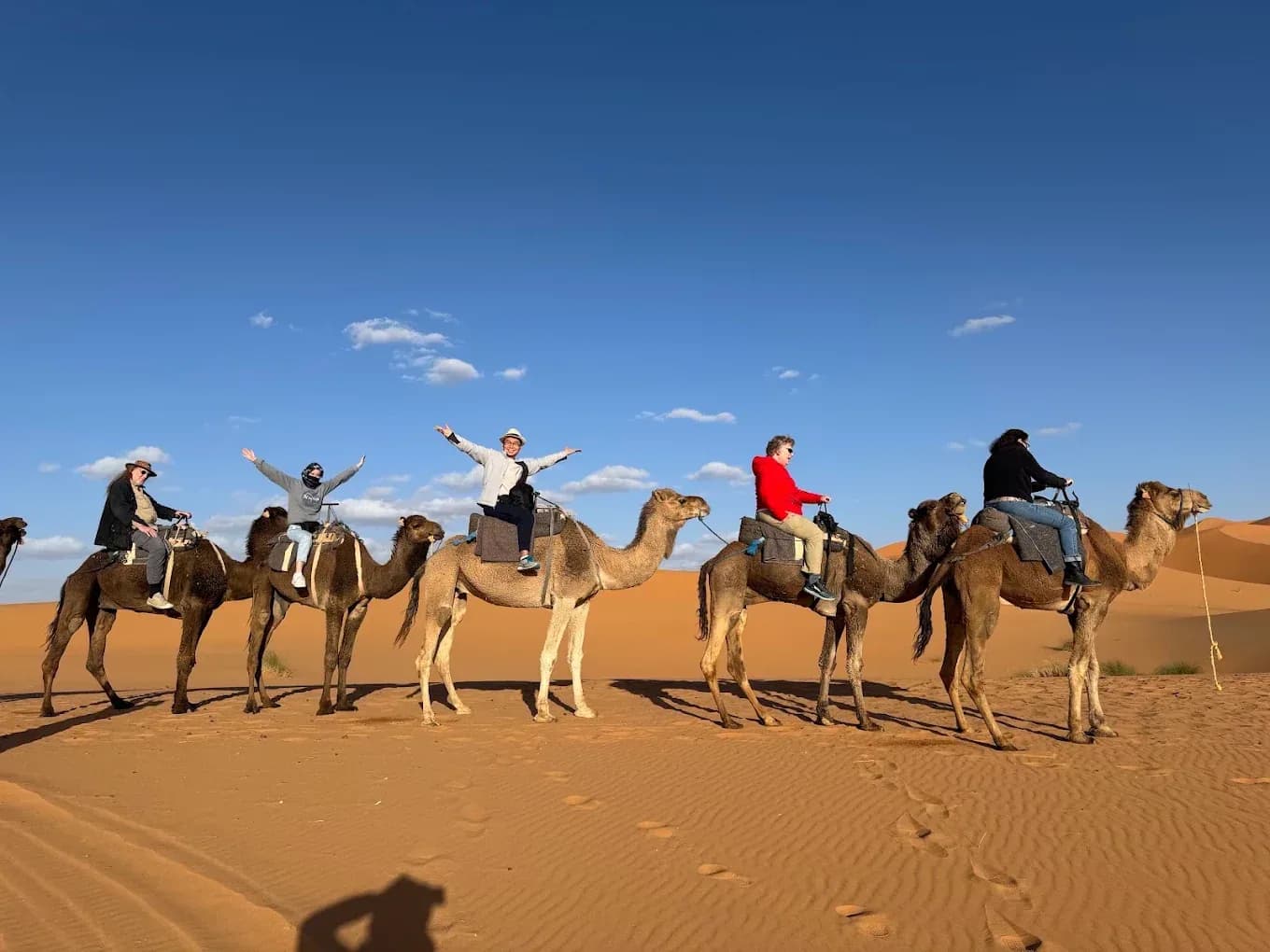
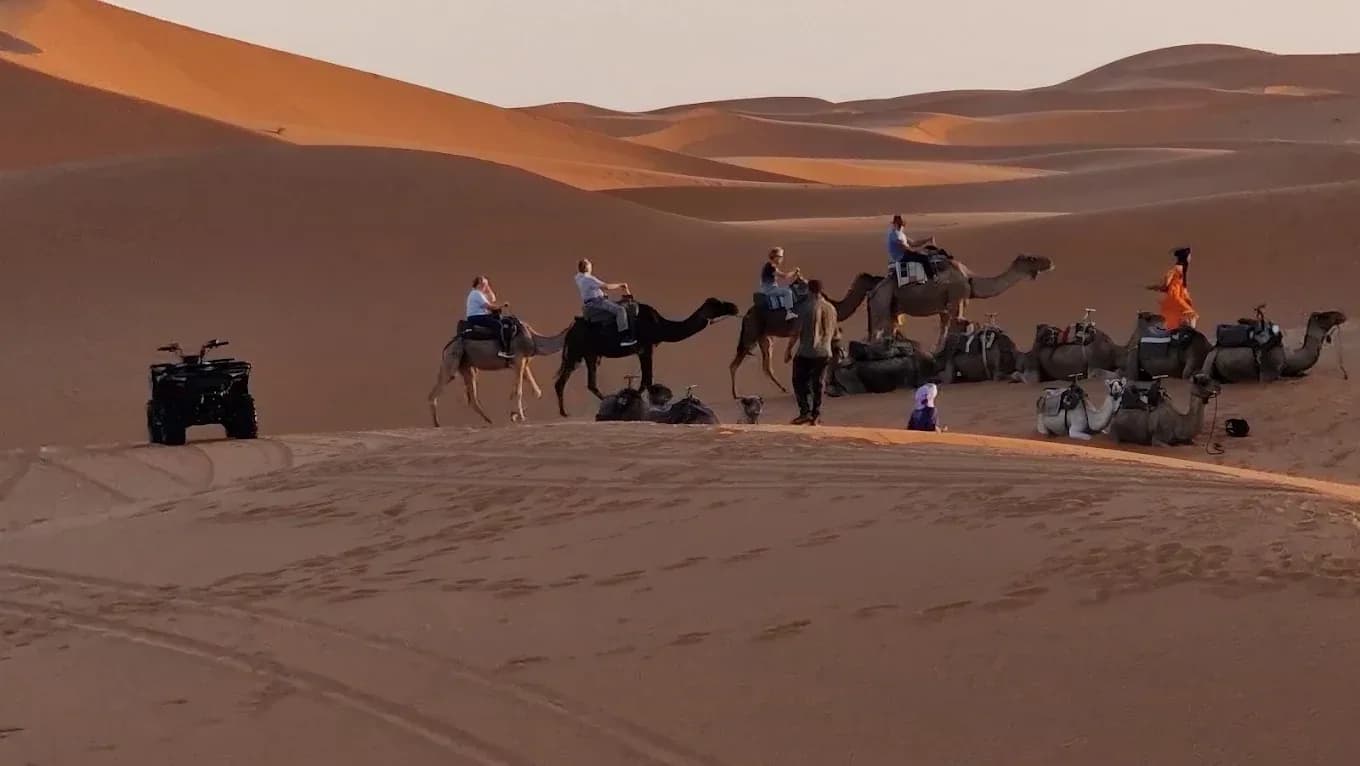
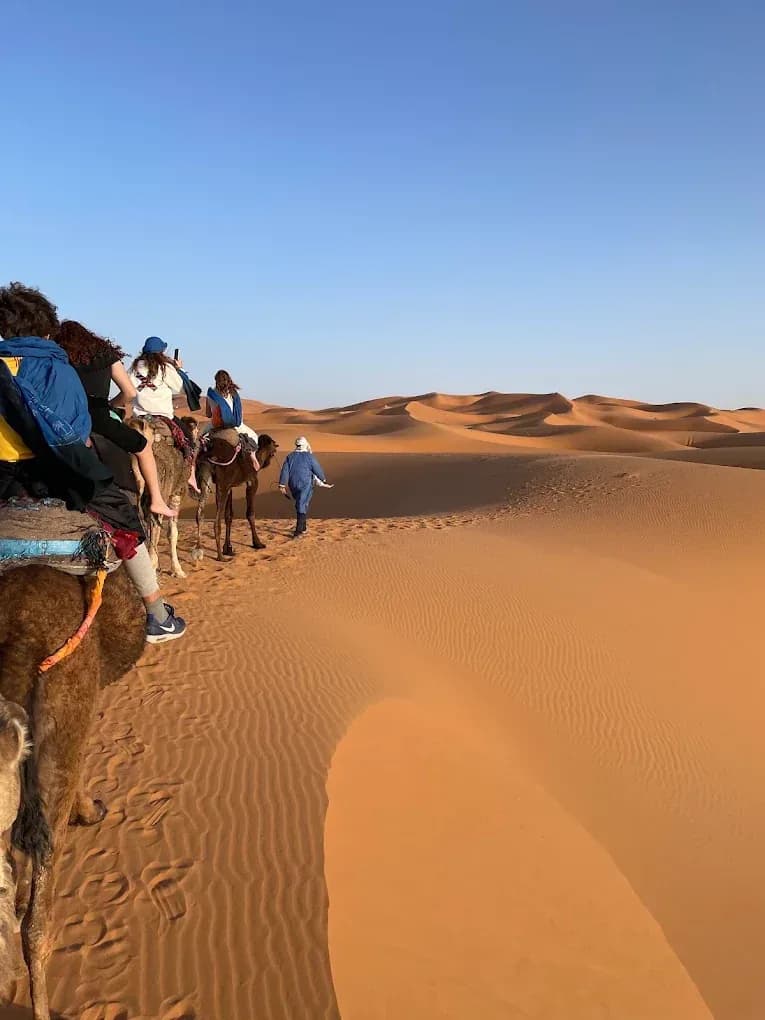
The dromedaries wait sitting on the sand. You climb on while the animal is kneeling, hold on tight and it stands up in two stages, back legs first and then the front: that's when everyone laughs. The cameleer walks in front, leading the caravan.
The ride to the camp takes around an hour and a half. You go slowly and no experience is needed, although you'll feel it in your legs the next day. We don't recommend it during pregnancy or with back injuries. If you'd rather not ride, you can get there by 4x4 or on foot.
If you're sleeping in a hotel and only want the sunset, you can book the camel ride in Merzouga, about two hours there and back.
Sunset from a dune
Halfway there the caravan stops and you climb a high dune on foot. Going up soft sand is more tiring than it looks: walk along the crest, where the sand is firmer, and rest when you need to. At the top you wait for the sun to drop behind the dunes as the colour goes from gold to orange and then pink. It's about twenty minutes nobody wants to interrupt.
At dusk, arriving at the camp
You're welcomed with mint tea, sometimes with dates or nuts. They show you your tent and you have a while to drop your bag, put on something warm and, if the camp has a shower, wash. The water comes by truck or from a well and is scarce: keep your shower short.
As soon as the light goes, the temperature falls quickly. Get your fleece out now, even if it's still warm when you arrive.
Around eight or nine, dinner
Dinner is in a large tent or outdoors if the night is fine. The usual menu is harira soup, Moroccan salads, tagine or couscous and fruit for dessert. If you're vegetarian or have an allergy, mention it when you book, not when you arrive: in the middle of the dunes there's no shop to go and get something else. Bottled water is available, although some camps charge for it separately.
After dinner, fire and drums
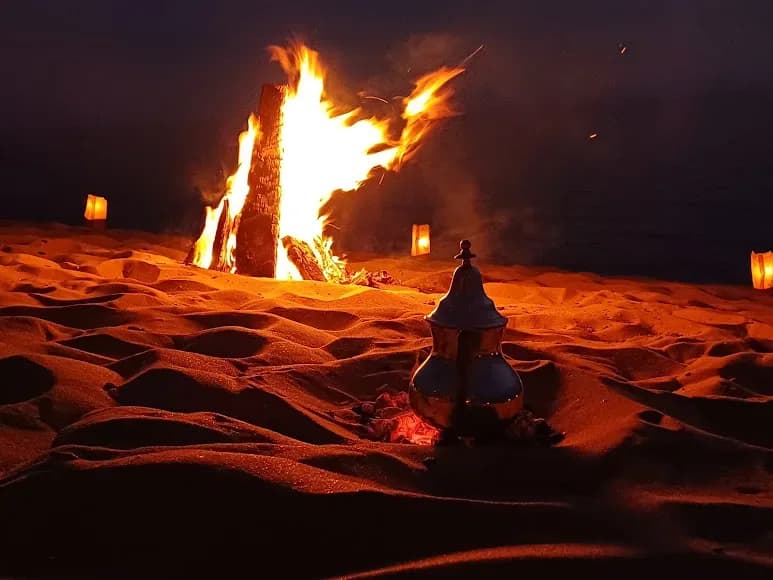
The camp staff light the fire and bring out the drums. They sing Berber and Gnawa songs, and at some point they'll pass a drum to you. It lasts as long as the mood does; nobody makes you stay.
The best part comes when the fire dies down. Walk a few metres away from the camp, switch off your torch and wait two minutes for your eyes to adjust. With no moon you can see thousands of stars and the Milky Way stretching across the sky. With a full moon you see less of the sky, but the dunes are lit up almost like daytime, and that's beautiful too. If the stars matter to you, check the lunar calendar before choosing your dates.
At midnight, bed
The tents have beds with mattresses, sheets and thick blankets. In winter use every one they give you and sleep in a hat. If your camp has its bathrooms outside, leave your head torch and shoes next to the bed: going out at night in the cold and dark is the least popular part of a standard camp.
The silence is total. Some travellers sleep better than ever; others wake up to the wind slapping the canvas. If you're a light sleeper, bring earplugs.
Half an hour before sunrise, up you get
Someone from the camp wakes you. You put on your coat and climb the nearest dune. Watching the light reach the dunes one after another is, for many people, the best moment of the whole trip, better even than the sunset.
After breakfast, heading back
Breakfast is bread, Moroccan pancakes, jam, butter, tea and coffee. Then you return to Merzouga by camel or 4x4, collect your suitcase and continue your route. If you're travelling from Merzouga to Marrakech, that day is long, nine or ten hours with stops, so leave early.
Our 3-day Marrakech to Merzouga tour and our 3-day Fez to Merzouga tour include a night at a camp with this programme, and you choose the level of camp.
Types of desert camp
Standard camp
Tents of canvas or woven wool with beds, blankets and rugs. Toilets and showers are shared, in a small building or a communal tent. There's a dining area, a fire area and, normally, electricity to charge your phone. For most travellers who don't need their own bathroom, it's a comfortable night.
Superior camp
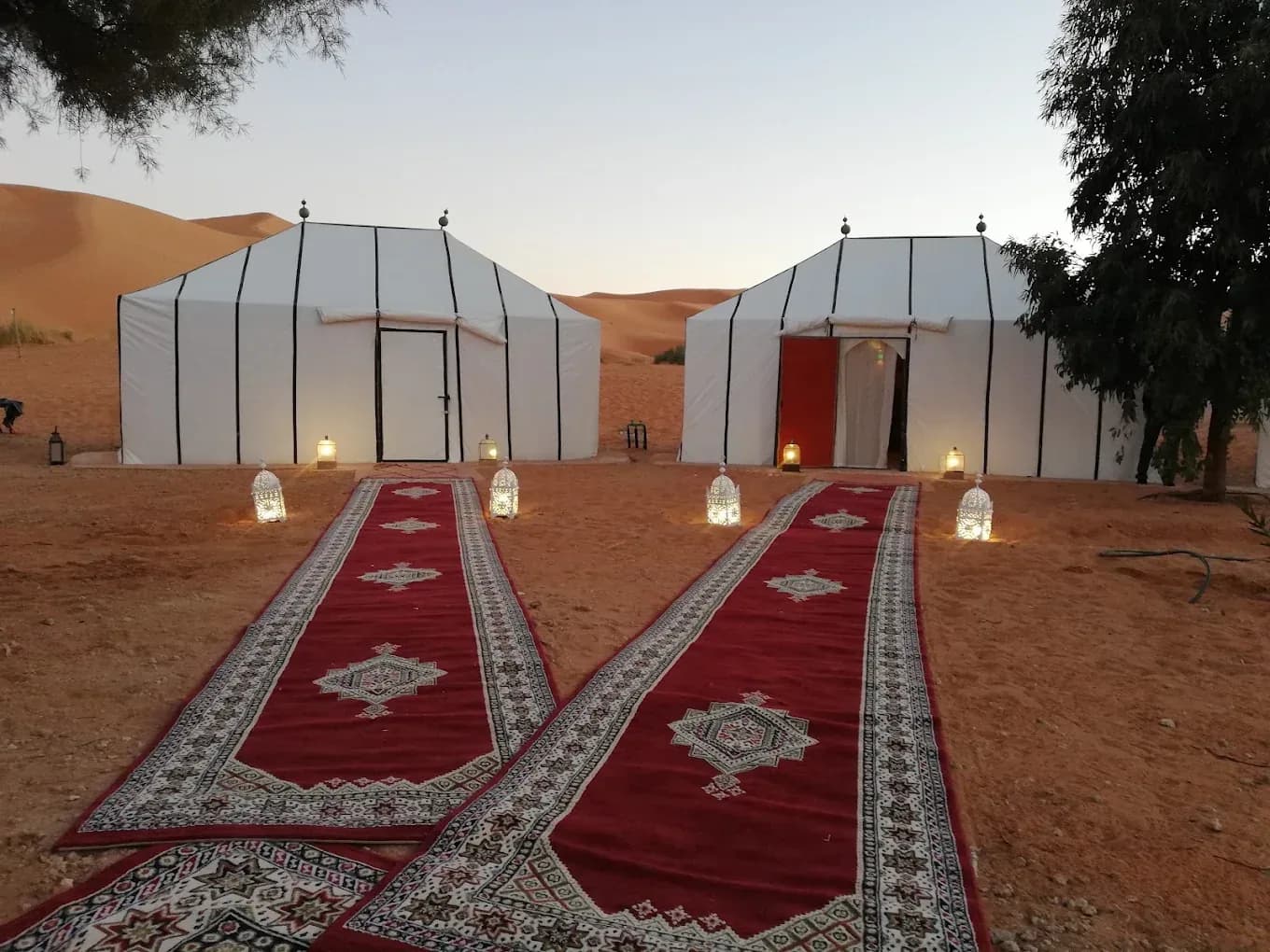
Roomier tents with better beds and, in many cases, a private bathroom inside the tent. This is the middle option we recommend most: the night is the same and the comfort is much better.
Luxury camp
Large tents, sometimes almost like suites, with a double bed, good bedding, a full bathroom with hot shower and washbasin, careful lighting and traditional decoration. The food is usually better and there are more staff. It's the usual choice on our luxury tours and honeymoons.
Bivouac or sleeping under the stars
Some travellers ask for something more adventurous: a very simple camp away from the others, or sleeping right out in the open on mattresses and blankets. On the mild nights of spring and autumn it's beautiful. We don't recommend it in winter, and in summer you have to expect some wind and sand.
What people ask us before sleeping in the desert
What are the bathrooms like?
This is the biggest difference between categories. In well-run standard camps the shared bathrooms are clean, but you'll have to leave your tent at night, in the cold, with a torch. If that worries you, choose a camp with a private bathroom.
Will I be cold?
In spring and autumn the nights are cool; between December and February they can be around zero degrees. Most tents have no heating, although some luxury camps offer heaters or electric blankets. There are always thick blankets. If you're travelling in winter, read our tips for travelling to Morocco in winter.
And in summer?
By day the heat is extreme and the sand burns. The nights are mild and many travellers drag their mattress outside the tent. In July and August we schedule the camel ride as late as possible and leave the camp very early.
Are there bugs?
Not many. Desert beetles are harmless. Snakes and scorpions are rarely seen around the camps, but don't walk barefoot at night and shake out your shoes in the morning.
Can children come?
Yes, and children usually love the camel and climbing the dunes. With little ones, ask for a camp with a private bathroom and bring warm pyjamas. On our private tours children pay 3% less than an adult. If your children get carsick, look at our family tours, which spread the driving hours out better.
What do I do the next day if I stay another night?
A 4x4 trip around the dunes: Khamlia and its Gnawa music, a nomad family, the Rissani market and the seasonal lake when it has water. That's the 4x4 trip around Merzouga, and it fits very well with a second night. The second night also lets you reach the dunes without the tiredness of the road and see two different sunsets.
Is it worth paying more for a luxury camp?
It depends on what matters to you. The sky, the dunes and the sunset are the same at every camp. What you pay for at a superior or luxury camp is comfort: your own bathroom, a better bed, more space and more attentive service. If you're travelling as a couple, in winter or with older people, the difference is very noticeable and we recommend at least a private bathroom. If you're young and flexible, a standard camp gives you the same night for less money.
And on New Year's Eve?
It's the night with the highest demand of the whole year. Luxury camps sell out first, it's genuinely cold and there are a lot of hours on the road. If you want to spend it in the dunes, book months ahead; there are more details in New Year in Morocco.
What to pack for the night in the desert
The camel doesn't carry suitcases, so pack a small backpack with this:
- A fleece or jacket, a hat and thick socks, in spring and autumn too.
- A scarf or turban for the sun and sand.
- Sunglasses, sunscreen and lip balm.
- A head torch or your phone's torch.
- Wet wipes, a toothbrush and basic toiletries.
- A power bank and a zip-lock bag to protect your camera from the sand.
- Some cash for tips or drinks.
And one more thing: don't leave any rubbish in the dunes, not even a cigarette end. The full list is in what to pack for Morocco.
Book your night in the desert
We'll help you choose the camp that best fits your budget and the way you travel, and combine it with the most sensible route for your arrival city. Have a look at all our desert tours or write to us through contact with your dates, and we'll send you a proposal.
Frequently asked questions
Do desert camp tents have a bathroom?
It depends on the level of the camp. In luxury camps and most superior ones, each tent has its own bathroom with a toilet and hot shower. In standard camps the bathrooms are shared and sit in a common area a few metres from the tents. Very basic camps may have minimal facilities, so confirm before you book.
Is it cold at night in the desert?
Colder than people expect. In spring and autumn the temperature drops a lot after dinner, and between December and February nights can be around zero degrees. The beds have thick blankets, but bring a fleece, a hat and wool socks. In summer it's the other way round: nights are mild and you sleep well.
How many nights should you spend in the desert?
One night gives you the essentials: sunset by camel, dinner, stars and sunrise. A second night lets you rest from the road and do something more in the area, such as a 4x4 trip to Khamlia and a nomad family, or climbing dunes without watching the clock. For photographers we recommend two nights.
Is there electricity and internet at the camp?
Almost all camps have electricity, often from solar panels, with sockets in the common area or inside the tent. Mobile coverage usually reaches the edge of Erg Chebbi, although it comes and goes depending on where the camp is. If there's wifi, it's slow. A power bank saves you a nasty surprise with your phone in the morning.
Is it safe to sleep in a desert camp?
Yes. The Merzouga camps are run by local families and companies who know the dunes very well, and there are always staff awake or nearby during the night. What matters is choosing a camp with a good reputation and arriving in daylight or with someone who knows the way. We don't recommend driving at night in the area.