Marrakech weather by month: temperatures and what to do
What Marrakech feels like each month: rough temperatures, rain, cold nights in the riads, summer heat and how to plan visits and day trips around the season.
Published on · 10 min read
Marrakech has a semi-arid climate: very hot, dry summers with highs of 35 to 38 °C in July and August, winters that are sunny by day and cold at night, and very little rain all year. The most comfortable months for walking around the city are March to May, plus October and November. The rest of the year works fine too if you shift your sightseeing hours and change what goes in your suitcase.
The temperatures we give here are rough averages, based on what we see every year organising trips from the city. There is always an out-of-season heatwave or a cold week nobody expected, so check the forecast a few days before you leave.
Why Marrakech is so cold at night and so hot by day
The city sits on the Haouz plain, about 450 metres above sea level, with the High Atlas to the south and the Atlantic roughly three hours away by car. The sea is too far off to soften the weather and the air is dry, so the ground loses its heat very quickly once the sun goes down.
In practice, in January you can stroll around at midday in a long-sleeved shirt and need a coat by eight in the evening. In July it's the other way round: at seven in the morning walking is pleasant, and at two in the afternoon Jemaa el Fna square is almost empty.
There isn't much rain. Nearly all of it falls between November and April, usually in short showers. Clear skies are the norm, and in winter, when the air is clean, you can see the snowy peaks of the Atlas from the medina rooftops.
Marrakech weather month by month
January
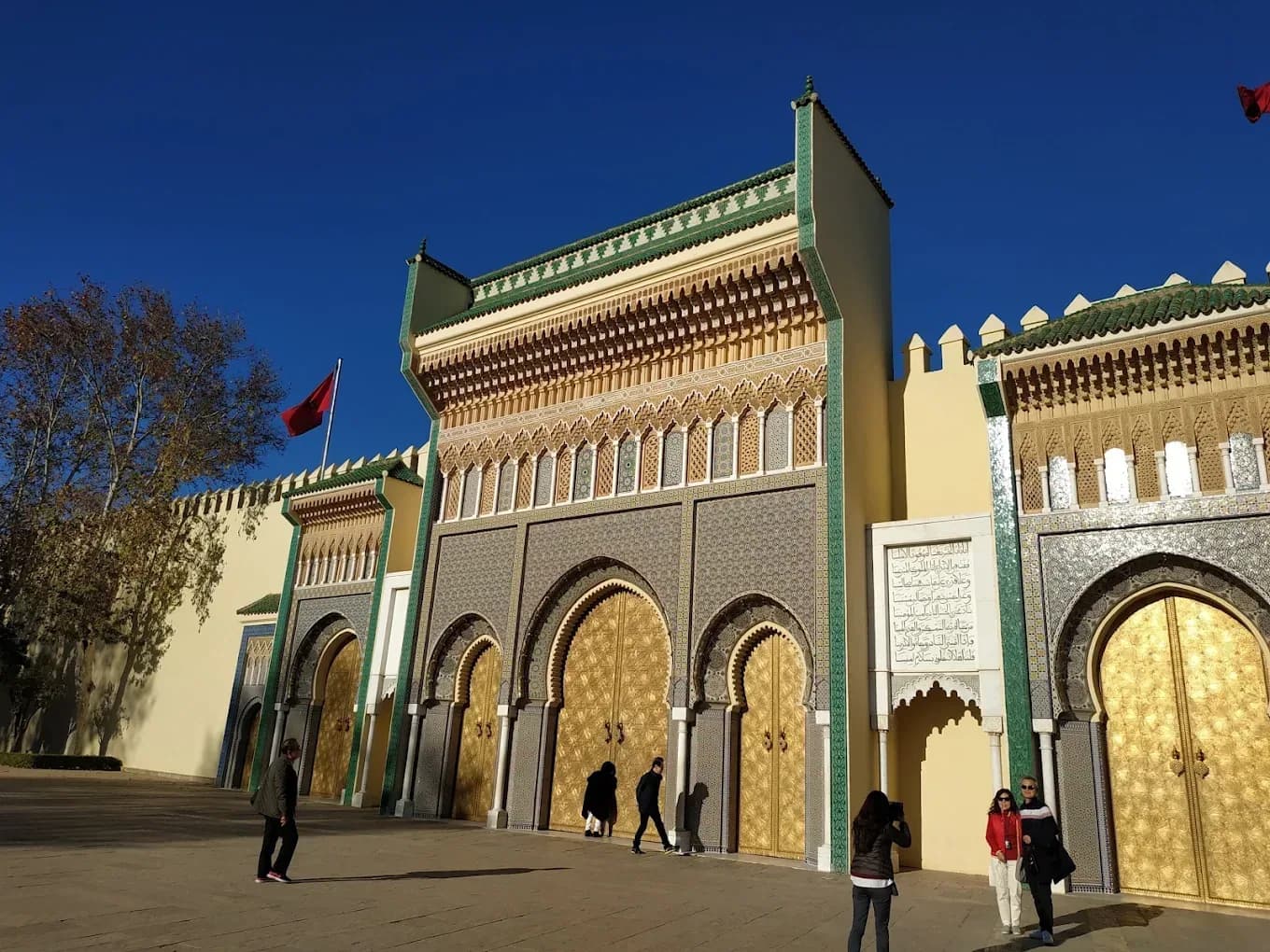
The coldest month, with highs of 18-19 °C and lows of 5-6 °C. On the street you notice it most first thing in the morning: medina shopkeepers open up in thick jackets and woolly hats, and the hot harira stalls are busier than ever. At midday, in the sun, it's very pleasant for seeing the Bahia Palace or the Ben Youssef Madrasa with few people around.
The problem is the nights inside the riad. Many have no central heating and the open courtyards chill the rooms. When we book accommodation in January we always ask whether there is heating, or at least a heater in the room, and we suggest you do the same if you book yourself.
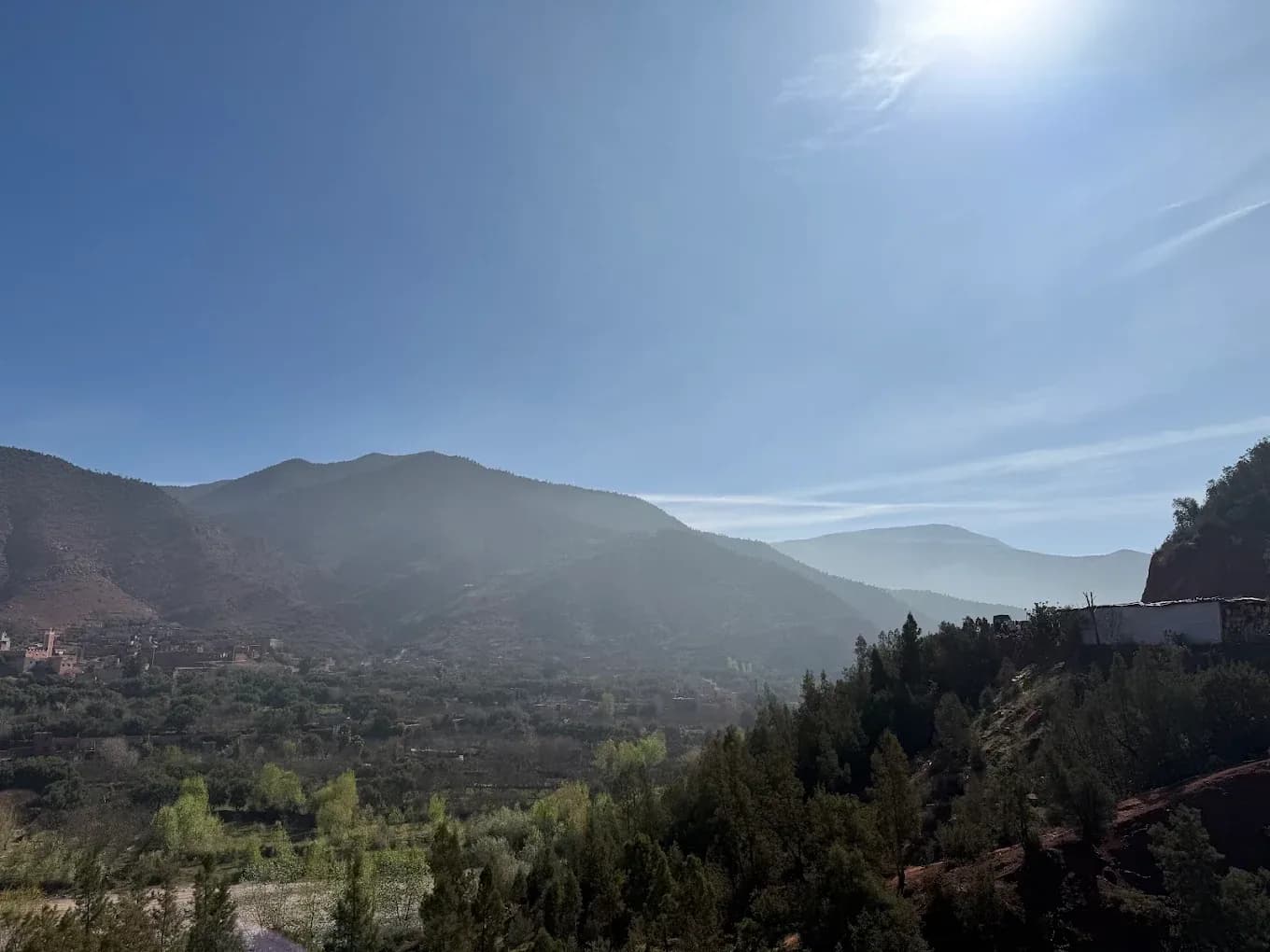
It's a good month to see the Atlas under snow. Imlil is an hour and a half away, and with the Ourika Valley and Atlas day trip you are back in Marrakech to sleep. In the desert, January nights are very cold.
February
Much like January, with slightly longer days and highs close to 20 °C. You may get a day of rain, and then the medina alleys turn muddy and the reed roofs of the souks drip. Outside school holidays there are fewer visitors and it's easier to find a room in small riads of five or six bedrooms.
In these years Ramadan falls between February and March, and it moves about ten or eleven days earlier each year. During that month shop and restaurant hours change, some places in the medina open for fewer hours during the day and the city livens up a lot after sunset. The exact dates depend on the moon: always check official sources before you travel.
March
You can feel spring: highs of 22-24 °C and milder nights, though still cool. The gardens start to flower and the avenues smell of orange blossom. For us it's one of the best months to combine the city with a desert route, because the driving days aren't made heavy by the heat. Bring something warm anyway: nights in Merzouga are still cold.
April
Highs around 25 °C, long days and very good light for photos. It's high season, especially at Easter, and you notice it at the entrance to the Majorelle Garden and in restaurants with terraces. If you're travelling then, book accommodation early and visit the gardens first thing.
May
The heat rises: highs of 28-30 °C. Mornings and evenings are still very pleasant, but at midday people look for shade under the awnings and the orange juice stalls on the square sell non-stop. It's a very good month for the desert before summer and for walking in the Atlas, where the snow has already gone from the lower valleys.
June
Summer begins. Highs go above 30 °C and by the end of the month can get close to 35 °C. From here on we schedule visits early and leave the middle of the day for resting. The nights are still pleasant for eating outside.
July
One of the hottest months, with usual highs of 36-38 °C and the odd day above 40 °C. The air is dry, so the heat is easier to bear than somewhere humid, but you need to drink water all day even when you aren't thirsty.
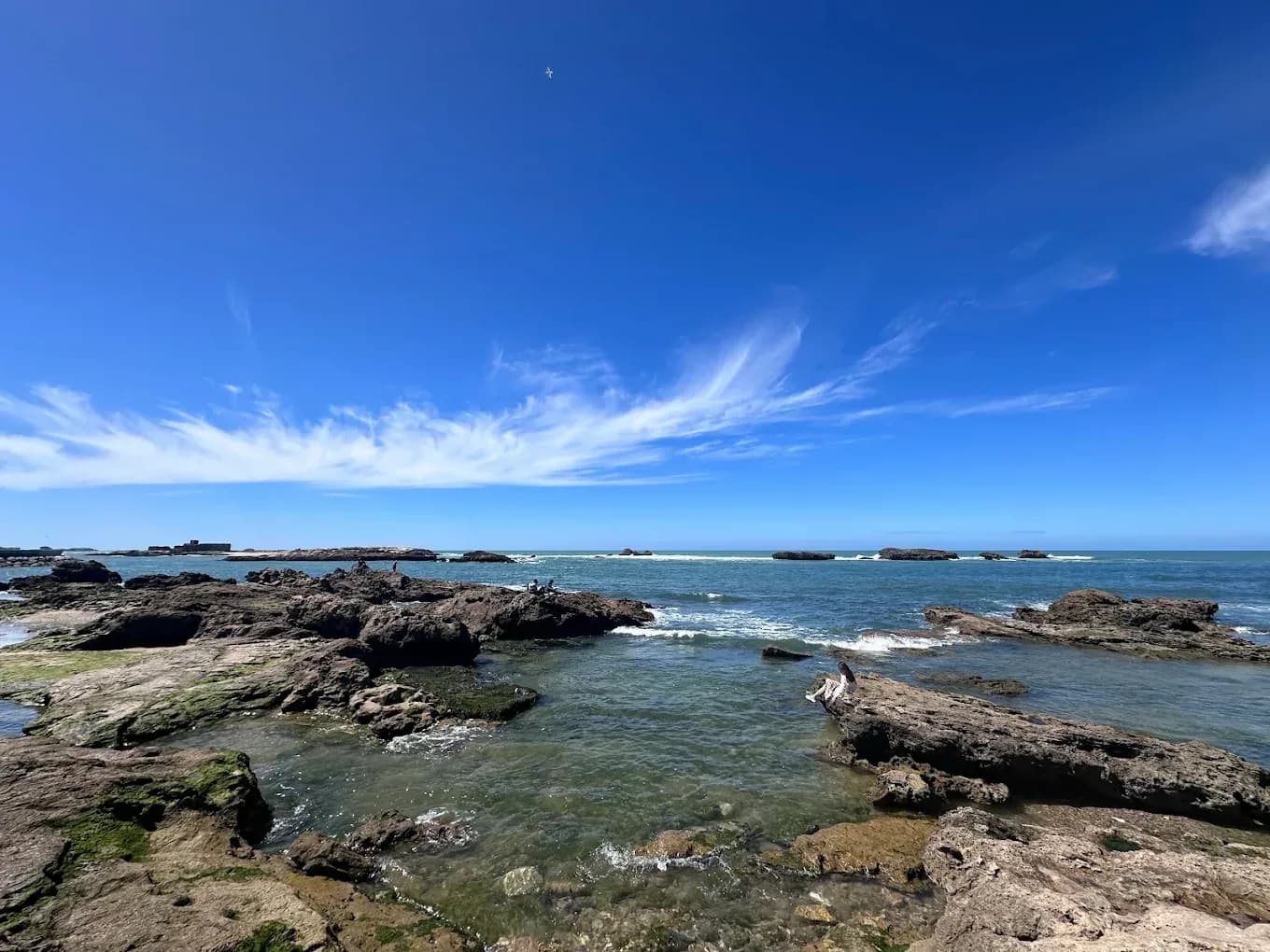
On the street, the medina empties between one and five in the afternoon. Many locals live at night and Jemaa el Fna fills up as the sun goes down. Our day trip to Essaouira from Marrakech is the escape we get asked for most in summer: the Atlantic wind keeps temperatures there much milder, and sometimes you need a sweatshirt in the evening.
August
Similar to July, with dry heat and almost no rain. It's high season for people travelling from Spain and Latin America on holiday, so riads with pools fill up earlier. The Atlas, the Ourika Valley and the Ouzoud waterfalls are the outings we suggest for finding cooler air without going far.
September
The heat starts to ease, although the first half of the month can still go above 33 °C. From the second half the weather is excellent for combining Marrakech with the desert, and nights in the dunes are mild.
October
The month we recommend most. Highs of 26-28 °C, pleasant nights and golden light in the afternoon. It works for everything: walking the souks, eating on a rooftop or taking a hot-air balloon flight at sunrise. For the balloon bring a jacket, because before sunrise the countryside is cold even at this time of year.
November
Highs around 22-23 °C and cool nights. The first rains may arrive, usually brief. There are fewer people than in October and accommodation prices tend to be easier, so it's a good option if your dates are flexible.
December
Sunny days with highs of 19-20 °C and cold nights of 6-7 °C. Christmas and New Year are high season: many travellers combine Marrakech with a night in the desert to see the year out. If that's your plan, book several weeks ahead. You'll find ideas in events and festivals.
What to plan in the hot months
From June to September the day runs the opposite way to how you'd organise it at home. When we put together a summer programme in Marrakech, the guide sets off at eight or half past eight, because the palaces and madrasas open early and at that hour the alleys are still in shade. Around one we go back to the accommodation. The afternoon is for the pool, a siesta or a hammam, and you head out again around six, when the stone of the city walls starts giving off its heat.
Accommodation matters more than at any other time of year. A riad with a small plunge pool in the courtyard, or a hotel with a garden on the outskirts, makes a big difference to a trip in August. A rooftop with no shade, on the other hand, is no use until nightfall.
Clothing helps too. Cotton or linen that covers shoulders and knees protects you from the sun better than a vest top and lets you enter religious sites without any trouble. A hat, sunglasses and sunscreen cover the basics.
For the rest, think short trips. Essaouira is about three hours away, the Ourika Valley and the Atlas less than an hour and a half, and the Ouzoud waterfalls two and a half to three hours. In all these places the temperature drops several degrees.
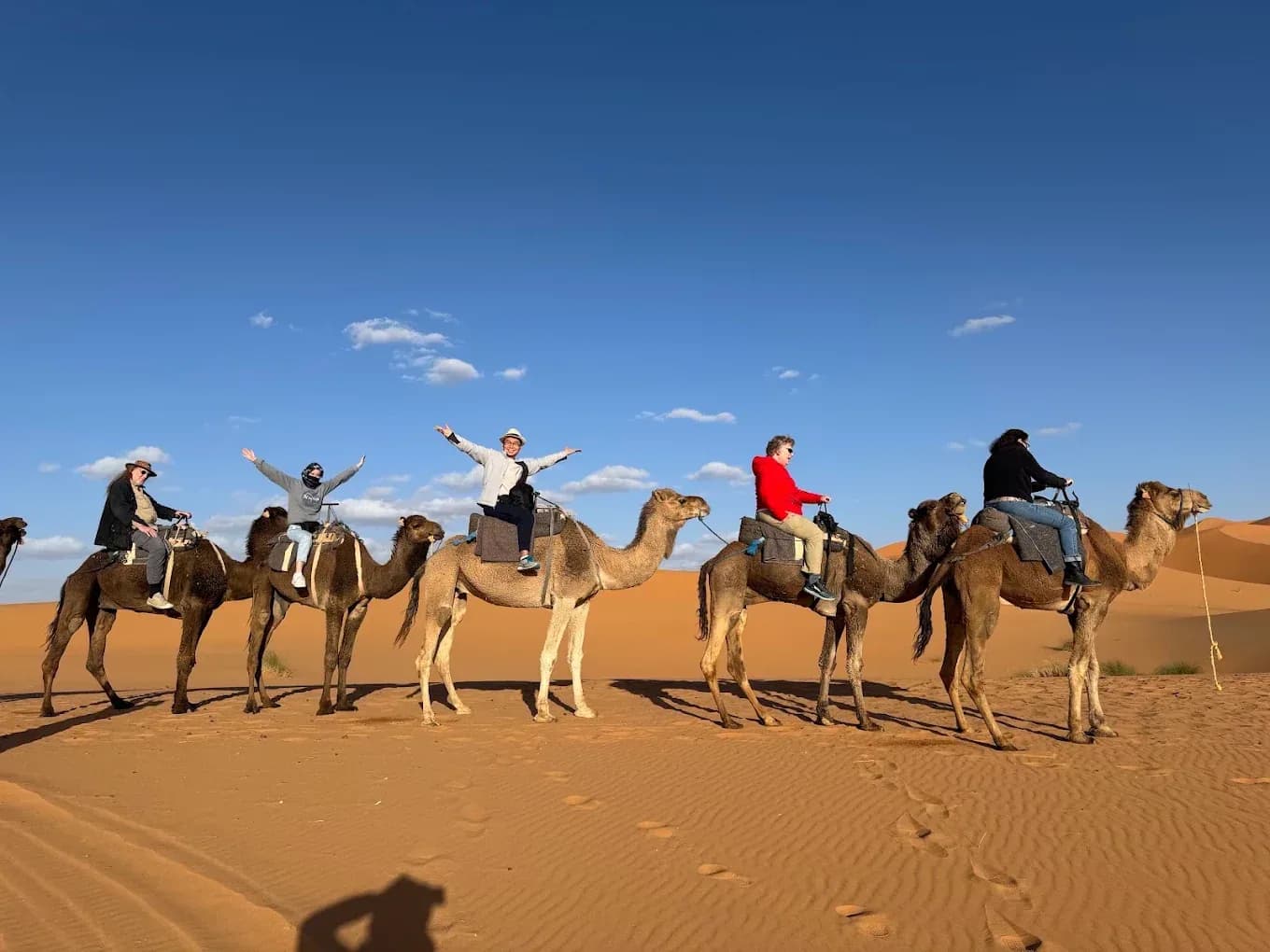
If you want to go to the desert in summer, bear in mind that Merzouga is even hotter than Marrakech. It can be done, and we do it every year, but with very early starts, stops in the shade and the camel ride late in the afternoon. Our 3-day trip to Merzouga from Marrakech runs all year and the timetable is adjusted to the season.
What to plan in the cold months
Between December and February the midday sun is deceptive. The most common mistake is going out to dinner in the same clothes you wore for the morning walk and getting back to the riad shivering. We recommend dressing in layers: a T-shirt, a jumper or fleece and a mid-weight coat you can carry in your backpack.
In riads, ask about heating and don't worry about asking for an extra blanket, because it's a normal request. Modern hotels in the new town tend to be better insulated, although you lose the atmosphere of sleeping inside the medina.
On the desert route, the Tichka pass is over 2,000 metres high and in winter there can be snow. On the odd day the road gets difficult and you have to wait or leave later, which is why it's best not to squeeze in a flight the day after getting back from the south. In the dunes, winter nights are very cold and the camps provide thick blankets; a hat and thermal clothes to sleep in help a lot. There's more in travelling to Morocco in winter.
What to do in Marrakech on a rainy or cold day
When it rains in Marrakech, the best move is to change the order of your visits, not cancel them. The palaces and madrasas have covered rooms, the small museums in the medina take about an hour each and the reed-covered souks give decent shelter. A Moroccan cooking class is another option that fits a grey afternoon well, as does a hammam with a massage.
In the evening, look for a restaurant with a fireplace or an indoor dining room and order warming dishes like harira, tanjia or a lamb tagine. We give you ideas on what to order in Moroccan food.
In mild, fine weather, by contrast, everything works on foot: the medina, the souks, the palaces and a rooftop at the end of the day. You'll find all the ideas in what to see in Marrakech and in our Marrakech destination guide.
What to wear in Marrakech by month
This is the rule we give our travellers when they ask about packing:
- From November to March, layers, a mid-weight or heavy coat for the evening, closed shoes and something warm to sleep in.
- In April, May and October, light clothes by day and a jacket or jumper for the evening.
- From June to September, cotton or linen that covers shoulders and knees, a hat, sunglasses and comfortable sandals.
The full list is in what to pack for Morocco.
How the weather changes on the way to the desert and the Atlas
Many travellers use Marrakech as a starting point for the south, and the weather changes a lot within a few hours. Crossing the Tichka, the temperature drops several degrees. On the other side, in Ouarzazate and the Dades Valley, the air is even drier. In Merzouga, the summer heat is stronger than in Marrakech and the winter nights colder.
This affects your packing: even if you travel in May, you'll want a warm layer for the night at the camp. And in July, the long drive back from the dunes, about 9 or 10 hours with stops, goes better if you leave right after sunrise.
If you want a tried-and-tested route, the 3-day trip to Merzouga from Marrakech is the shortest way to sleep in the dunes, and the 8-day imperial cities and desert tour combines Marrakech with Fez and the Sahara. For the rest of the country, see the best time to visit Morocco.
Weather mistakes we see every season
Arriving in March with summer clothes. The days are mild, but the nights still call for a jacket, and in the Atlas or the desert a good deal more.
Planning a full day of the medina on foot in July. We've seen it many times: by twelve people are exhausted and the rest of the trip suffers. It's better to split the visit over two mornings.
Thinking January is the rainy season. In Marrakech most winter days are sunny, and people who avoid those months for fear of rain miss the best light for seeing the snow-capped Atlas.
Booking a riad in winter without asking about heating. It's a simple question that saves you uncomfortable nights.
Squeezing in an early flight home straight after a winter route through the south. Snow on the Tichka is rare, but when it happens, a spare day saves you a lot of worry.
Tell us your dates
Whatever month you travel, we adapt the timings, accommodation and day trips to the weather you'll get, with Spanish-speaking guides and drivers. Contact us with your dates and we'll tell you what to expect, or carry on planning with our Morocco travel guide.
Frequently asked questions
What is the best month to visit Marrakech?
If you want the right balance of temperature, light and crowds, we usually suggest October or the second half of March. April and May also work very well, although Easter brings more visitors. From December to February the days are good and the problem is the cold at night, while July and August mean early starts and a rest through the middle of the day.
Does it rain much in Marrakech?
Not much. The city has a semi-arid climate and most of the rain falls between November and April, nearly always as showers that last a few hours. It is rare to lose a whole day of sightseeing to the weather. From June to September you normally won't see a single cloud, so an umbrella only makes sense in winter.
Is Marrakech cold in winter?
Not at midday: in January highs are around 18 or 19 °C and in the sun you can walk around in long sleeves. The cold arrives at dusk, when the thermometer can drop to 5 or 6 °C, and you feel it inside many riads because their open courtyards don't hold the heat. Bring a proper coat and winter pyjamas.
Can you visit Marrakech in August?
Yes, and plenty of people do because of the holidays. Expect more than 37 °C almost every day, although the dry air makes it easier to bear than a humid summer. We schedule visits before eleven, leave the afternoon for the pool and suggest a day in Essaouira or the Atlas, where the temperature drops quite a bit.