Driving in Morocco: car hire, roads and real-world advice
Hiring a car in Morocco is easy and the motorways are good. The hard parts are the cities, the checkpoints, the Tichka pass and driving at night. What to know before you get behind the wheel.
Published on · 9 min read
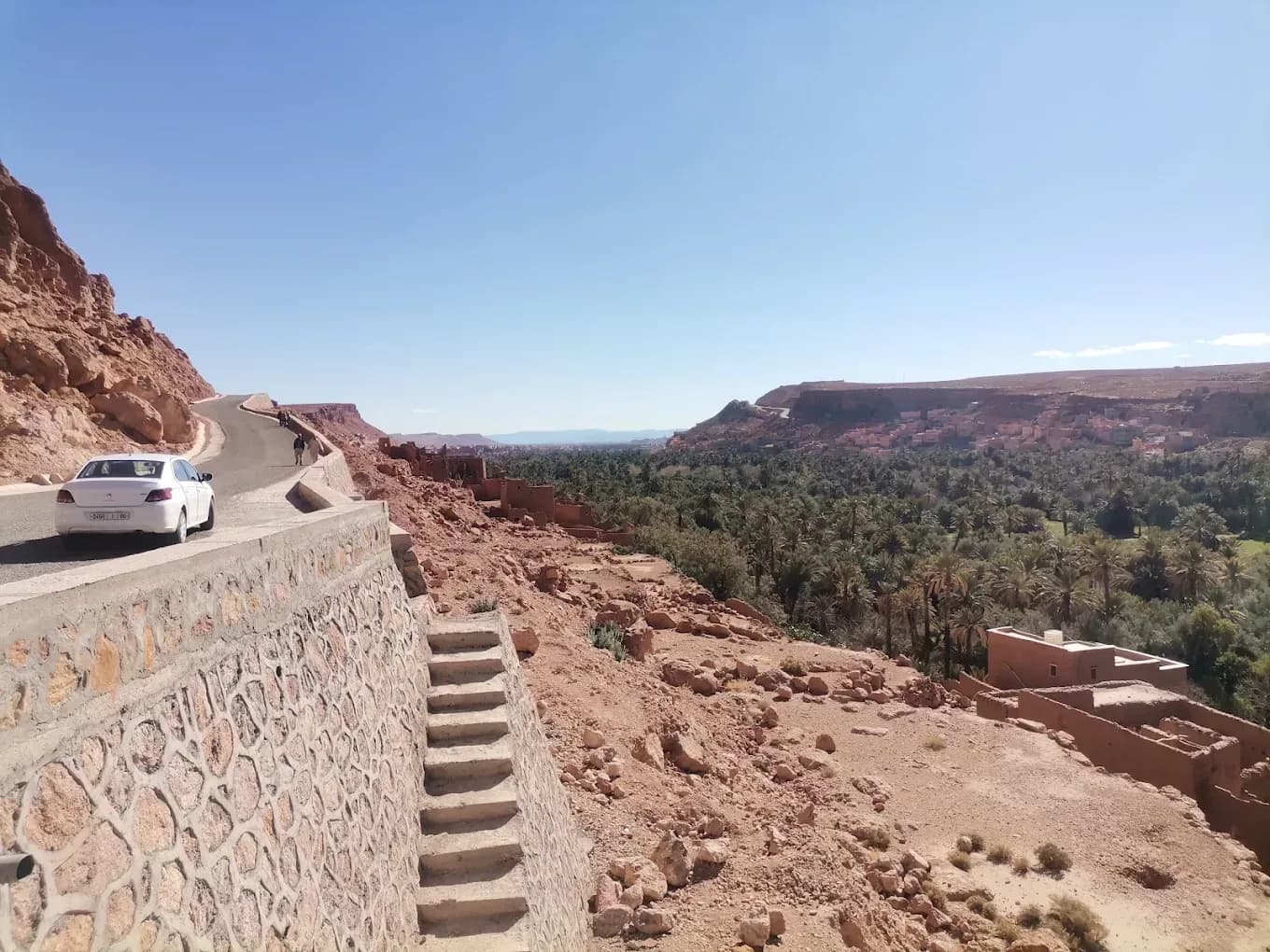
Driving in Morocco is perfectly possible and plenty of people do it without trouble: the motorways are in good condition, fuel is easy to find on the main routes and hiring a car is simple. The difficult part is something else: the traffic in Casablanca and Marrakech, the police checkpoints, mountain roads like the Tichka and the night outside the cities. If you have experience behind the wheel and don't mind driving with your full attention, go ahead.
We are telling you this from the other side of the wheel. Our drivers spend the whole year on these roads, and what follows is what we explain to travellers who ask us whether to hire a car or come with a driver.
Hiring a car in Morocco
The big international brands have desks at the airports in Casablanca, Marrakech, Fez, Tangier and Agadir, and there are many local agencies in the cities. Local ones are usually cheaper, but the condition of the car and the insurance terms vary more. A small car costs from about €25 to €40 a day in mid season, plus fuel.
Requirements for hiring
They normally ask for a minimum age of 21, and some agencies require you to have held your licence for two years or more. You'll be asked for your passport, your driving licence and a credit card in the driver's name for the deposit, which is blocked for the rental period. Many agencies won't rent with a debit card.
Your driving licence
For short tourist stays, agencies usually accept Spanish and Mexican licences and those from most countries in the Americas. We recommend bringing an international driving permit as well, because at a roadside checkpoint an officer may ask for it and it saves time. The rules on the validity of foreign licences change, so confirm with the rental company before you travel.
What to check before you set off
Take photos and a video of the car inside and out, showing the dents and scratches it already has, in front of the staff member. Check the spare wheel and the jack, and that the air conditioning works, because in July you will need it. Look at the insurance excess: with basic cover it can be high, and on mountain roads a scratch from a stone is easy to get. The clearest fuel policy is to return the car with the same level you received it with.
Basic road rules
You drive on the right, as in Spain and Mexico. Seatbelts are compulsory in the front and back, and talking on a handheld mobile phone is forbidden. For alcohol, the practical rule is zero tolerance: don't drink anything if you are driving.
Speed limits
As a guide, as of 2026, the limit is 120 km/h on motorways, 100 km/h on other roads and 60 km/h in built-up areas, with stretches of 40 km/h or less near schools and at the entrances to villages. The signs are what count, and they change often within a few metres. Always check official sources before you travel.
There are fixed speed cameras and, above all, mobile radar with officers who pull you over a few hundred metres further on. Fines are paid on the spot, and it is normal to ask for a receipt.
Stop signs and roundabouts
In Morocco, stop signs are enforced to the letter at checkpoints: you have to come to a complete stop at the line, even if nobody is coming. It is one of the most frequent fines we see travellers get. On city roundabouts, what other drivers do doesn't always match what the highway code says, so go in slowly and look in every direction.
Police and Gendarmerie checkpoints
At the entrance and exit of almost every town there are checkpoints run by the police, in urban areas, or by the Royal Gendarmerie, on the open road. You recognise them by cones or a stop sign in the middle of the road and uniformed officers.
Usually they wave you through. Sometimes they stop you, ask for the car papers, your licence and your passport, and ask where you are coming from and where you are going. Say hello, keep the documents handy in the glovebox and don't get nervous. With a checkpoint handled politely, you are on your way again in two minutes.
Motorways and tolls
The ADM motorway network links Tangier, Rabat, Casablanca, Fez, Meknes, Marrakech and Agadir, among other cities. They are toll roads and well maintained, with service areas at regular intervals. The toll is paid in cash when you exit, or with the Jawaz tag if the car has one. As a guide, Casablanca to Marrakech costs under 100 dirhams in a car; rates are reviewed periodically.
Off the motorways, national roads have one lane in each direction, an uneven hard shoulder and plenty of lorries, motorbikes, carts and pedestrians. Here the average speed drops a lot. A 200-kilometre journey on a national road can take four hours.
Mountain roads and the Tichka pass
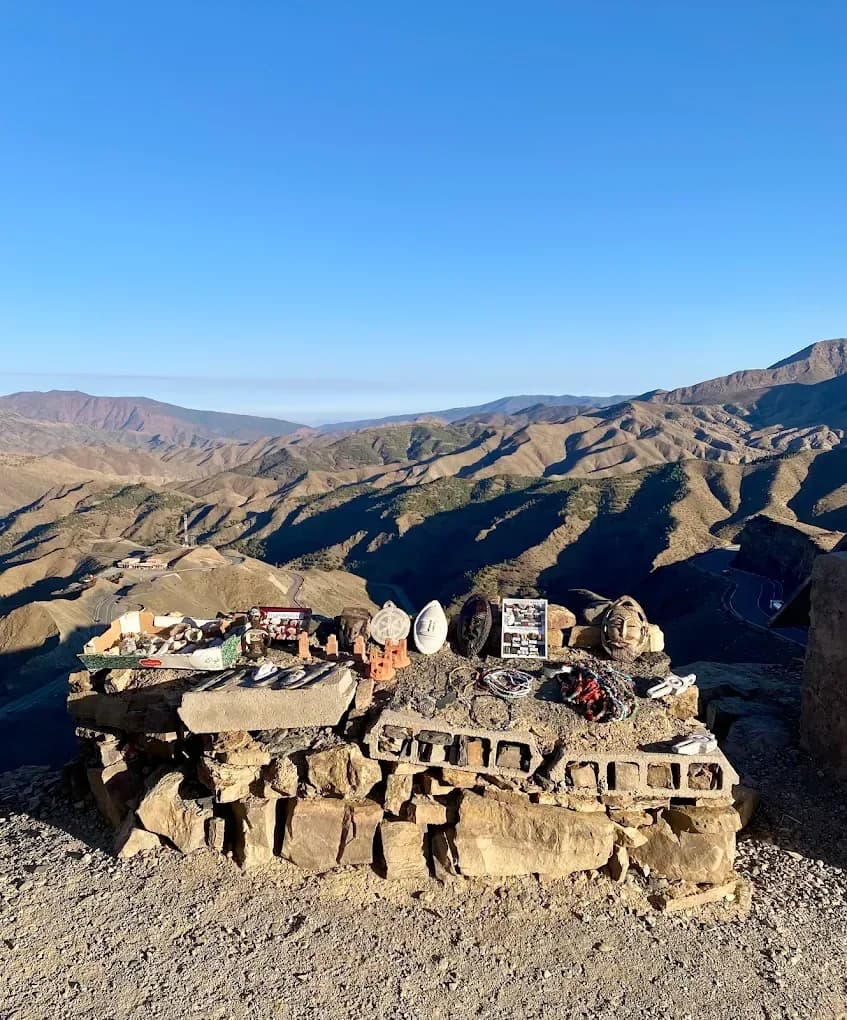
The Tizi n'Tichka pass crosses the High Atlas on the N9 road between Marrakech and Ouarzazate and reaches about 2,260 metres. It is the road you take to the desert from Marrakech, and most travellers cross it on the way to Aït Ben Haddou and Ouarzazate.
Much of it has been widened in recent years, but it still has tight bends, slow lorries on the climbs and roadworks. Allow about four hours from Marrakech to Ouarzazate with stops. In winter it can snow and close for a few hours; when that happens, the gendarmerie closes the road until the snowplough has cleared it.
Other passes you cross on the usual routes are the Middle Atlas road between Fez and Midelt, with cedar forests and snow in winter, and the climb into the Dades Gorges, with its famous zigzag bends. The Tizi n'Test, between Marrakech and Taroudant, is narrower and since the 2023 earthquake has had closures and roadworks; ask about its condition before planning a route that way.
Tips for the mountains: set off early, don't overtake on a bend even if the vehicle in front is slow, and use low gears on long descents so the brakes don't overheat.
Don't drive at night outside the cities
This is the advice we repeat most. Secondary roads have no lighting, and there are pedestrians on the hard shoulder, bicycles and motorbikes without lights, donkeys, flocks of sheep and the odd lorry with a single headlight. In the mountains you can add falling rocks. Plan your stages so you arrive before dark, especially in winter, when night falls early.
On our tours, long stages such as Marrakech to Merzouga are split over two days for this reason.
Fuel
There are plenty of petrol stations on the motorways and in the cities. Diesel is the most common fuel and most rental cars run on it. In the south, between Ouarzazate, the Draa Valley and Merzouga, stations are further apart, so fill up when the tank gets down to half. Many petrol stations take cards, but not all, especially in rural areas: carry cash.
Parking in the cities
On most city streets you'll see gardiens, attendants in high-visibility vests who watch over parked cars. It isn't an official service in every case, but it is the custom. When you leave you give them a few coins, from 5 to 20 dirhams depending on the city and whether it is day or night; ask when you arrive if you are unsure.
Driving near the medinas
No old medina allows cars inside. In Fez the riad will tell you which gate to go to, such as Bab Boujloud or Bab Guissa, and someone will be waiting there with a handcart for the luggage. In Marrakech there are guarded car parks next to the Koutoubia and at several of the medina gates. Don't trust the satnav on the last few streets: it can send you into a lane where a car won't fit. If in doubt, pull over on a main avenue and call your accommodation.
Bringing your own car from Spain
If you cross the Strait by ferry with your own car, the temporary import of the vehicle is processed at the port and registered against your passport, and the car has to leave the country with you. You need the vehicle registration document, the technical inspection card and insurance valid in Morocco, which can be your insurer's green card if it covers Morocco or a policy you buy at the port. The conditions change, so check them beforehand. Ferry routes are covered in how to travel from Spain to Morocco.
If you break down or have an accident
The first thing to do is call the rental company: the contract includes an assistance number, and they will tell you what to do and which garage to go to. Save it in your phone before you set off.
If there is an accident with another vehicle, don't move the car until the police arrive in town or the Royal Gendarmerie on the open road. Note down the emergency numbers: police, 19; Gendarmerie, 177; ambulance, 15. Confirm them before you travel. You fill in an accident report form with the other driver and, if you can't agree, the officers write up their own report. Without that document the insurer may not cover the damage.
A puncture in the south is more likely than at home, because of the stones on the tracks. Check the spare wheel before you leave the city.
Driving yourself or travelling with a driver
Driving gives you the freedom to stop where you like and change your plans. If you are travelling alone or as a couple, on a tight budget and with experience of difficult roads, it is a good option for the coast and the cities of the north.
For the southern route the sums change. There are many hours of bends, unlit roads and villages where you won't know whether a place to eat is any good. Many of our travellers who drive at home choose a driver for this part because they want to look at the landscape and not at the road. A driver like Said, Hassan, Aziz or Hamid knows the way, knows where the checkpoints are, what time the Tichka closes when it snows and where to eat well between Ouarzazate and the Dades. We explain it on the private driver in Morocco page.
An example. A couple coming for ten days can hire a car for the northern part, Tangier, Chefchaouen and Fez, which are short drives, then drop the car in Fez and start a tour with us towards the desert that ends in Marrakech, like the 4-day trip from Marrakech to Fez via the desert done in reverse. Another option is to have the driver do the whole south, as on the 5-day route through the deep south, and then hire a car in Marrakech to go to Essaouira.
On our tours, the vehicle with a Spanish-speaking driver is paid by the day and shared between the travellers, so for four people the difference compared with a rental plus fuel, tolls and parking is smaller than it looks.
What we carry in the car
If you are going to drive yourself, this is the list we give our travellers:
- Passport, driving licence and international driving permit.
- Car papers and rental contract in the glovebox.
- Dirhams in coins and small notes for tolls, gardiens and fuel.
- Water and something to eat for the long stretches in the south.
- A car charger and offline maps, because mobile coverage drops out in the mountains.
- Sunglasses and a warm layer, even in summer, for the passes.
For the rest of the trip, train and bus timetables and when to combine transport, see our guide on getting around Morocco and the Morocco travel guide.
If you are torn between driving and coming with a driver, tell us your route and we'll tell you honestly which stretches you can do on your own and which ones are better left to us.
Frequently asked questions
Do I need an international driving permit for Morocco?
For a short trip, rental companies usually accept a driving licence from Spain, Mexico and other countries together with your passport. Even so, we recommend getting an international driving permit before you leave: it is cheap, quick to arrange and avoids arguments at a roadside checkpoint. Rules on foreign licences can change, so confirm with your rental company.
Is it dangerous to drive in Morocco?
The motorways are good and quiet. The risk lies elsewhere: chaotic city traffic, overtaking on national roads, lorries on mountain passes and, above all, driving at night outside the cities, with no lighting and pedestrians, donkeys and bicycles on the hard shoulder. By day and without rushing, an experienced driver copes well.
How do you pay motorway tolls?
At the motorway booths, when you exit. Always carry dirhams in cash, because card payment doesn't work at every booth. There is also an electronic tag called Jawaz that lets you drive through without stopping, and some rental cars have one. Rates are updated from time to time; as a guide, Casablanca to Marrakech costs under 100 dirhams for a car.
Can I drive into the medina in Fez or Marrakech?
No. The old medinas are pedestrian, with streets far too narrow for a car. You park in a guarded car park by one of the gates and the riad usually sends someone with a handcart for the luggage. Ask your accommodation which gate is closest before you arrive, because the satnav can lead you into a dead end.